Pork Binagoongan (Pork in Shrimp Paste)
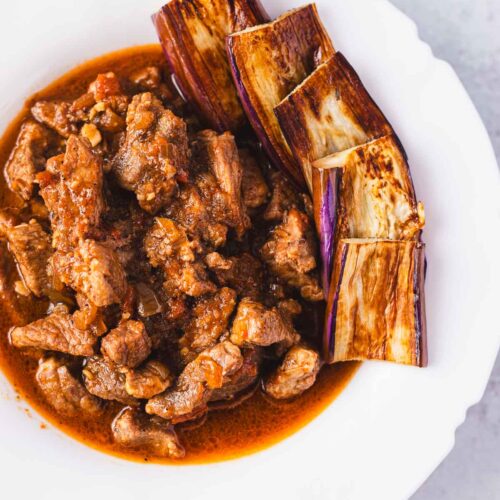
A Filipino classic made with tender pork simmered in shrimp paste, vinegar, and tomatoes, then finished with a hint of sweetness. Best enjoyed with hot steamed rice and fried eggplant on the side.
Print Recipe
Ingredients
- 1 Tbsp neutral oil (15ml)
- 450g (1 pound) pork collar (or belly/shoulder), cut into bite-sized cubes
- 1 medium onion, chopped (about 75 g)
- 3 cloves garlic, minced
- 1 medium tomato, chopped (about 100 g),
- 1 heaping Tbsp bagoong alamang (fermented shrimp paste, sautéed variety), (15–20 g)
- 1 Tbsp cane or white vinegar (15 ml)
- 1 Tbsp granulated white sugar, adjust to taste *I love using monkfruit sugar as a healthier alternative
- ground black pepper, to taste
- Optional: 1–2 red chilies, sliced
- ¾–1 cup water (180–240 ml)
- fried eggplant for serving
Instructions
- Brown the pork: Heat oil in a wide pan over medium-high. Add pork cubes in a single layer and sear until lightly browned, 6–8 minutes. Spoon off excess fat if needed.450g (1 pound) pork collar (or belly/shoulder), cut into bite-sized cubes, 1 Tbsp neutral oil (15ml)
- Sauté aromatics: Add onion and cook 2 minutes until translucent. Stir in garlic (30 seconds). Add tomato, plus about 1 tablespoon of water to help them soften. Cover the pan and cook 3–4 minutes until the tomatoes break down and turn jammy.1 medium onion, chopped (about 75 g), 3 cloves garlic, minced, 1 medium tomato, chopped (about 100 g),
- Add bagoong: Stir in the shrimp paste and sauté 1–2 minutes until its raw sharpness mellows and it clings to the pork.1 heaping Tbsp bagoong alamang (fermented shrimp paste, sautéed variety), (15–20 g)
- Deglaze with vinegar: Pour vinegar around the pan. Do not stir for 1 minute to let the acidity cook off.1 Tbsp cane or white vinegar (15 ml)
- Simmer the pork: Add sugar, pepper, and ¾ cup (180 ml) water (plus chilies if using). Stir, cover, and lower heat. Simmer gently for 30–40 minutes, until pork is tender. Add more water if the sauce dries out too quickly.1 Tbsp granulated white sugar, adjust to taste, ground black pepper, to taste, ¾–1 cup water (180–240 ml), Optional: 1–2 red chilies, sliced
- Reduce the sauce: Uncover and cook another 5–10 minutes, letting the liquid reduce to a thick, glossy sauce that coats the pork. Taste and adjust: Too salty → a little more sugar and water; Too sweet → a splash of vinegar; Needs more flavor → another spoon of bagoong, sautéed for 1 minute.
- Best enjoyed with hot steamed rice, fried eggplant or green mango on the side. Flavors deepen by Day 2. Refrigerate up to 4 days.fried eggplant for serving
Servings: 4 servings
