
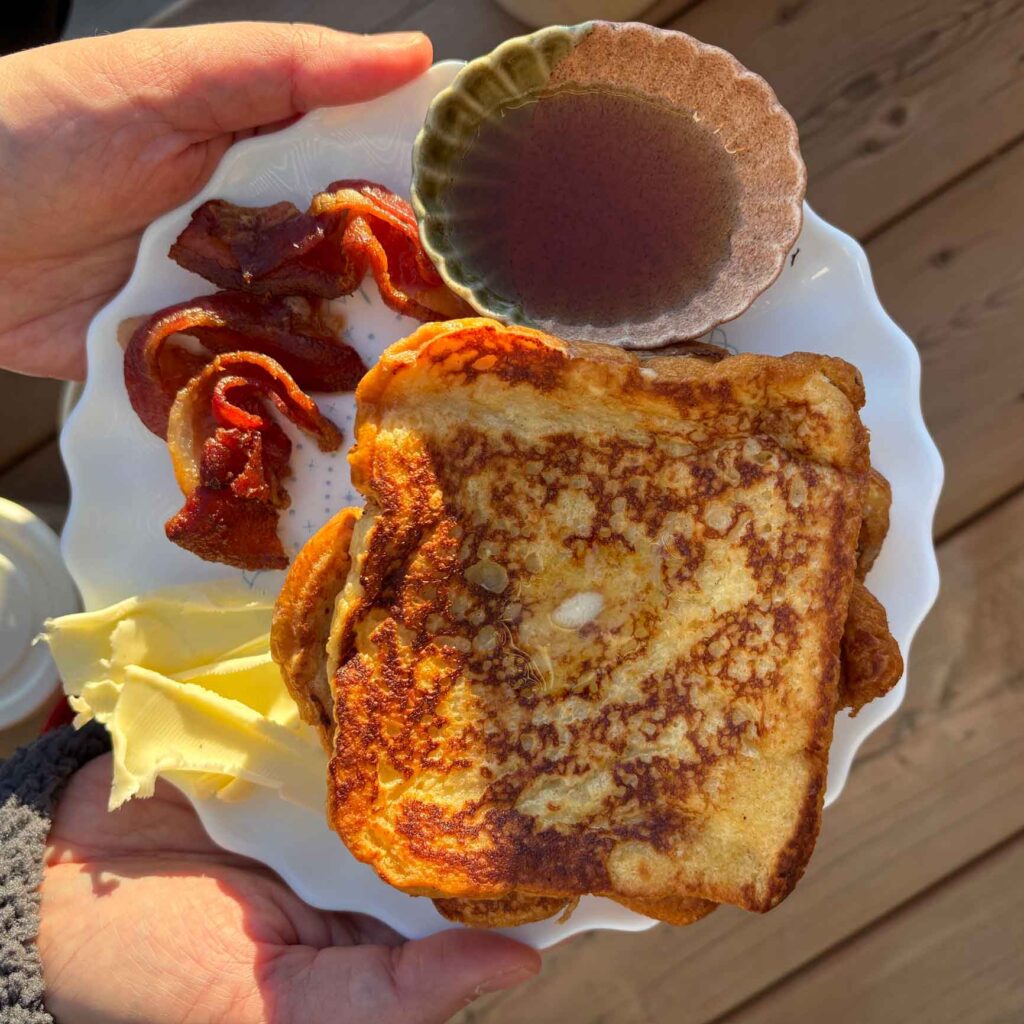
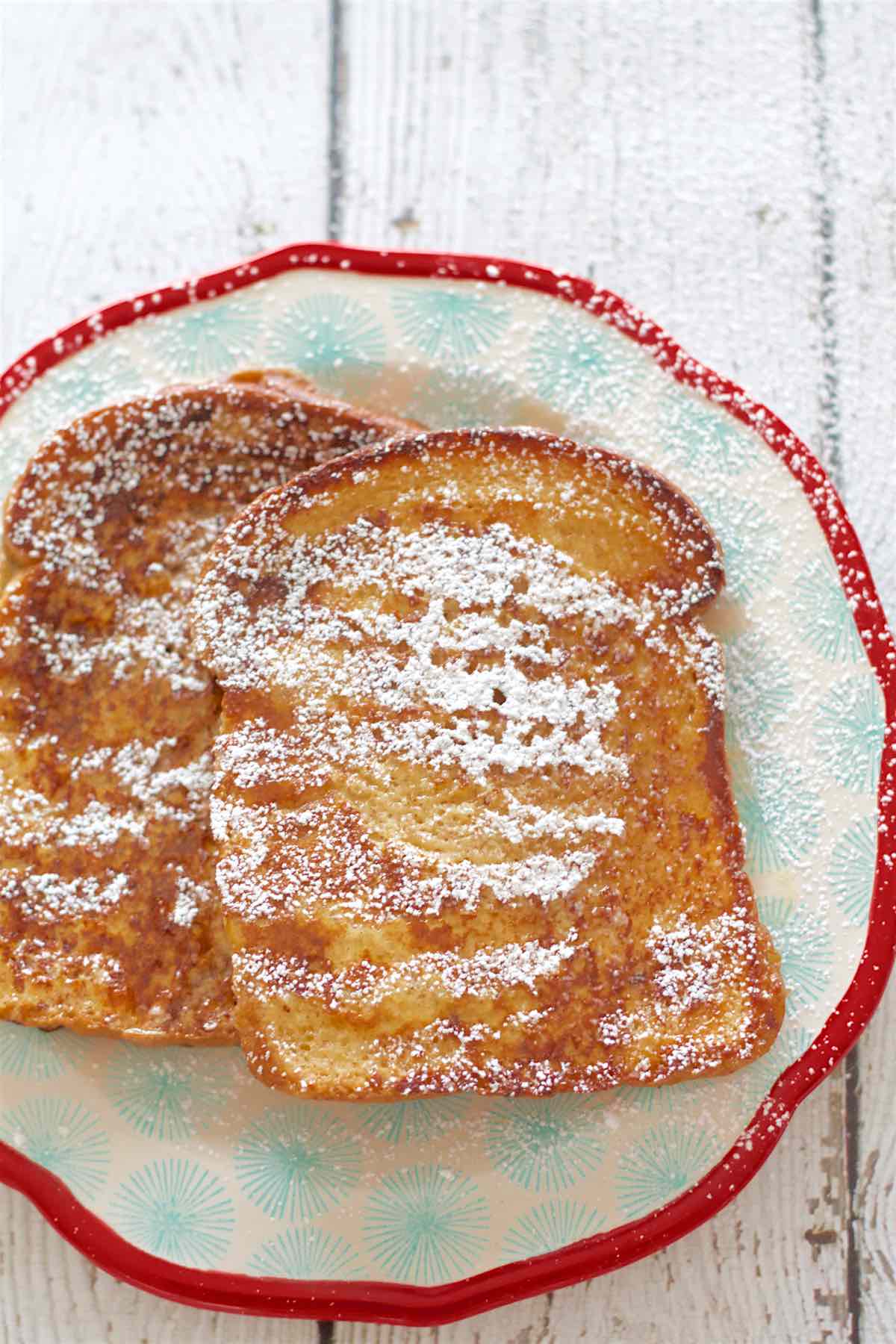
This cinnamon French toast is extra cozy, deeply spiced, and has a custardy center with a lightly crisp exterior. The secret? A small amount of flour whisked into the custard. It sounds unusual, but it makes all the difference—creating a thicker batter that clings to the bread, bakes up soft inside, and gives you that golden, structured finish without turning soggy.
Flavor & Texture Notes
- Texture: Soft and custardy inside, lightly crisp on the outside
- Flavor: Warm cinnamon, gently sweet, not eggy
- Best Bread: Brioche, challah, or thick-cut sandwich bread
- Best For: Weekend breakfasts, brunch spreads, or make-ahead batches
Why There’s Flour in the Custard (And Why It Works)
Unlike traditional French toast custard made with just eggs and milk, this recipe includes a bit of all-purpose flour—and it’s there on purpose.
The flour:
- Thickens the custard, so it coats the bread instead of soaking straight through
- Prevents soggy centers, especially with thicker slices of bread
- Creates a soft, custard-like interior with a lightly crisp outside
- Adds structure, making the French toast sturdier and more satisfying
Once cooked, the flour fully sets—so you don’t taste it at all. What you do get is French toast that feels richer, fuller, with a subtle crisp on the outside.
Tips to Prevent Mushy French Toast
Mushy French toast usually comes down to two things: too much moisture and heat that’s too low. Here’s how to get that soft, custardy center with a subtle crisp on the outside:
- Cook at the right temperature
Use medium to medium-low heat. If the pan is too cool, the bread soaks up fat instead of browning, which leads to soggy centers. If it’s too hot, the outside burns before the inside sets. You’re looking for a steady sizzle—not silence, not smoke. - Preheat the pan properly
Always let your pan fully heat before adding butter and bread. A properly preheated surface helps the exterior set quickly, creating that light crisp while the inside stays tender. - Use thick-cut bread
Thin slices absorb custard too fast and collapse. Thicker slices give the custard time to set as they cook, not melt into mush. - Don’t oversoak the bread
A quick dip is enough. You want the custard to coat the bread—not flood it. This is especially important with enriched breads like brioche or challah. - Let the custard cling, not drip
Thanks to the flour in the custard, it should lightly coat the bread. Let excess drip off before cooking so the exterior can crisp instead of steaming. - Flip once, gently
Let the first side fully set and turn golden before flipping. Moving it too early breaks the surface and traps moisture inside.
The goal is balance: enough heat to brown, enough time to cook through. When the temperature is right, that subtle crisp happens naturally—no tricks, no dryness.
Cinnamon French Toast
INGREDIENTS
- 4 tablespoons bleached all-purpose flour
- 1 cup half and half
- 2 pieces large egg
- ½ teaspoon ground cinnamon
- 1 teaspoon vanilla extract
- 2 teaspoons granulated white sugar
- 6 slices loaf bread thick slices
- 4-6 tablespoons butter
- pinch of salt
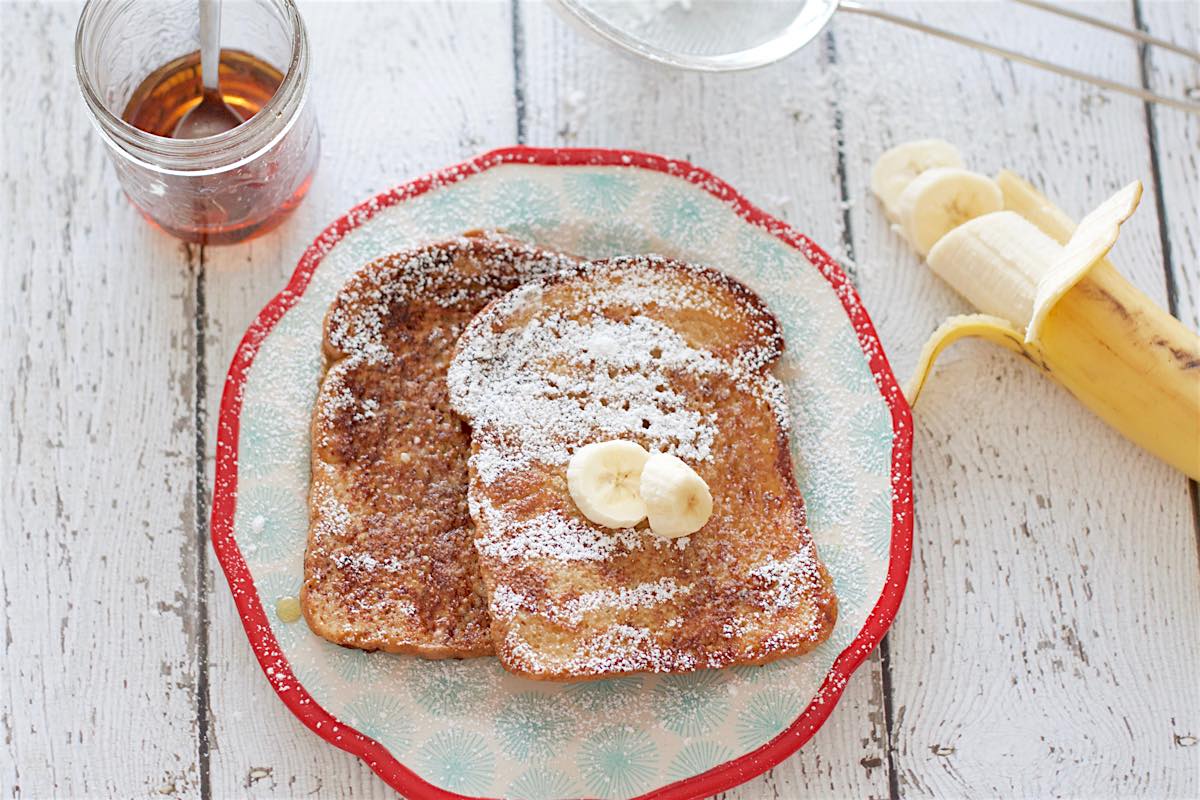
- maple syrup, powdered sugar for topping (optional)
- sliced bananas, or any fruit you like
INSTRUCTIONS
- To make the custard mixture, whisk together 4 tablespoons bleached all-purpose flour, 1 cup half and half, 2 pieces large egg, ½ teaspoon ground cinnamon, 1 teaspoon vanilla extract, 2 teaspoons granulated white sugar, and pinch of salt in a bowl until smooth.
- Heat a frying pan on the stove over medium heat. Add about 1-2 tablespoons of butter into the pan. Soak (or dip if using thinner slices) each slice of bread in the mixture. Gently lift the bread so the excess custard will drip and carefully transfer in the pan.
- After a few minutes, check to see if the bottom side of the French toast has turned golden brown. If it has, flip the French toast and continue cooking. Transfer to a plate and do the same procedure for the next batch.
- Best served warm with maple syrup, powdered sugar for topping sliced bananas, or any fruit you like.