
Have you ever followed a baking recipe exactly but still ended up with a dry cake, dense muffins, or cookies that barely spread?
The problem may be how the flour was measured.
Flour is one of the easiest baking ingredients to measure incorrectly. Depending on how you fill a measuring cup, you can accidentally add more flour than the recipe intended — and that extra flour can noticeably change the final texture.
There are two common ways to measure flour:
- By weight using a kitchen scale
- By volume using measuring cups
For the most consistent baking results, I recommend weighing flour whenever possible. If you’re using cups, the spoon-and-level method is the best way to avoid packing too much flour into the cup.
In This Guide
- Frequently Asked Questions
- The Best Way to Measure Flour: Use a Kitchen Scale
- Why Measuring Flour by Weight Is More Accurate
- How to Measure Flour With Cups
- What Not to Do When Measuring Flour
- Does Scooping Flour Really Make a Difference?
- What Happens If You Add Too Much Flour?
- Is Spoon-and-Level as Accurate as Weighing?
- Does 1 Cup of Flour Always Weigh 125g?
- Spoon-and-Level vs. Scoop-and-Level
- Why I Prefer Measuring Flour by Weight
- How to Measure Flour Correctly: The Easy Rule
Frequently Asked Questions
Does the spoon-and-level method apply to teaspoons and tablespoons?
Yes. Lightly spoon the flour into the measuring spoon, then level off the excess. Avoid packing it down.
Should I sift flour before measuring?
Only if the recipe specifically tells you to. Otherwise, measure the flour first, then sift if needed.
Can I scoop flour directly from the bag?
It’s better not to. Scooping can compact the flour and give you more than the recipe intended.
Do I need to spoon-and-level if I’m using a kitchen scale?
No. If you’re weighing flour in grams, simply add flour until you reach the amount listed in the recipe.
Is 1 cup of flour always 125g?
No. I generally use 125g for 1 cup of all-purpose flour in Bakeologie recipes, but other types of flour can weigh differently.
The Best Way to Measure Flour: Use a Kitchen Scale
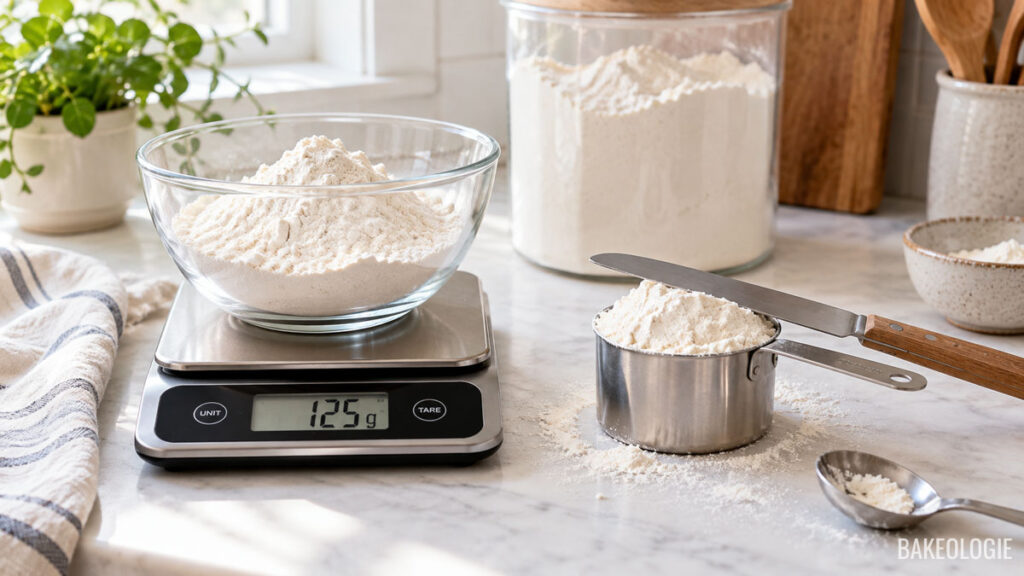
If your recipe includes gram measurements, use them.
Weighing flour removes most of the guesswork because you’re measuring the actual amount of flour rather than relying on how much happens to fit inside a measuring cup.
For Bakeologie recipes, I generally use:
125g = 1 cup all-purpose flour
You can also find my gram and volume equivalents for other common ingredients in my Baking Measurements and Ingredient Conversion Chart.
So if a recipe calls for:
250g (2 cups) all-purpose flour
the most accurate method is simply to weigh 250g.
How to Measure Flour With a Kitchen Scale
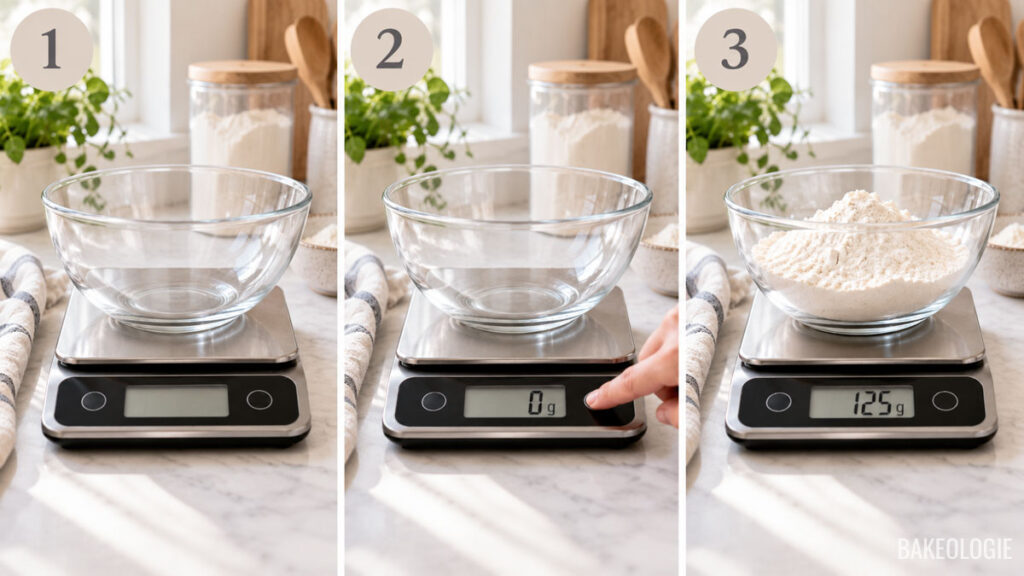
- Place your mixing bowl or another container on the scale.
- Press the tare or zero button so the display returns to 0.
- Add flour until you reach the weight listed in the recipe.
That’s it.
No measuring cups needed — and fewer dishes to wash is always a nice bonus.
Why Measuring Flour by Weight Is More Accurate
A cup measures volume, while grams measure weight.
The problem with measuring flour by volume is that flour can become compacted.
One person may fill a cup very lightly, while another might scoop directly from the flour container and pack significantly more flour into that same cup.
Both technically have “1 cup,” but they may not actually have the same amount of flour.
A gram measurement removes most of that variation.
125 grams is always 125 grams.
That’s why you’ll usually see the gram measurement listed first in Bakeologie recipes.
How to Measure Flour With Cups
Don’t have a kitchen scale? You can still measure flour successfully with cups. The key is to avoid dipping the measuring cup directly into the flour.
Instead, use the spoon-and-level method:
Fluff → Spoon → Level
Step 1: Fluff the Flour
Give the flour a quick stir with a spoon to loosen it.
Flour settles and becomes compacted while sitting in its bag or storage container, so fluffing it first helps loosen it before measuring.
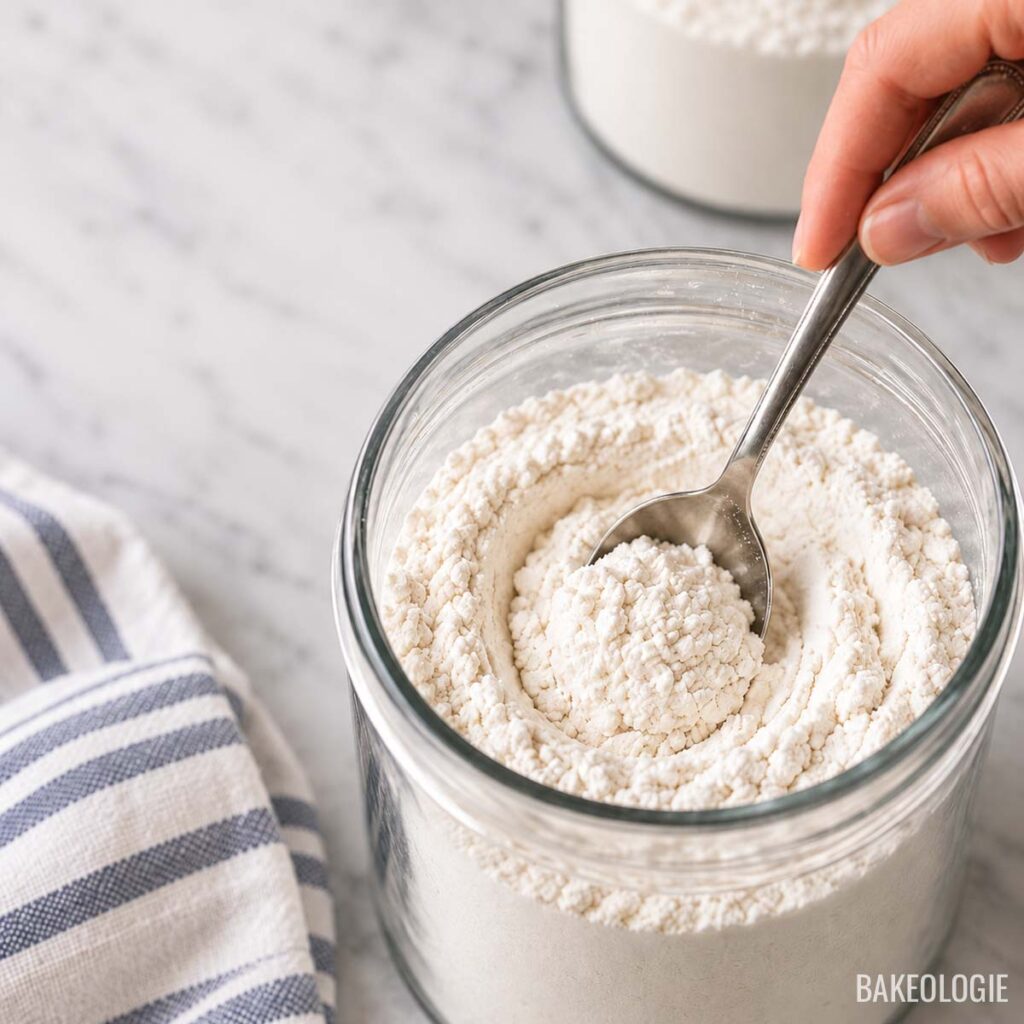
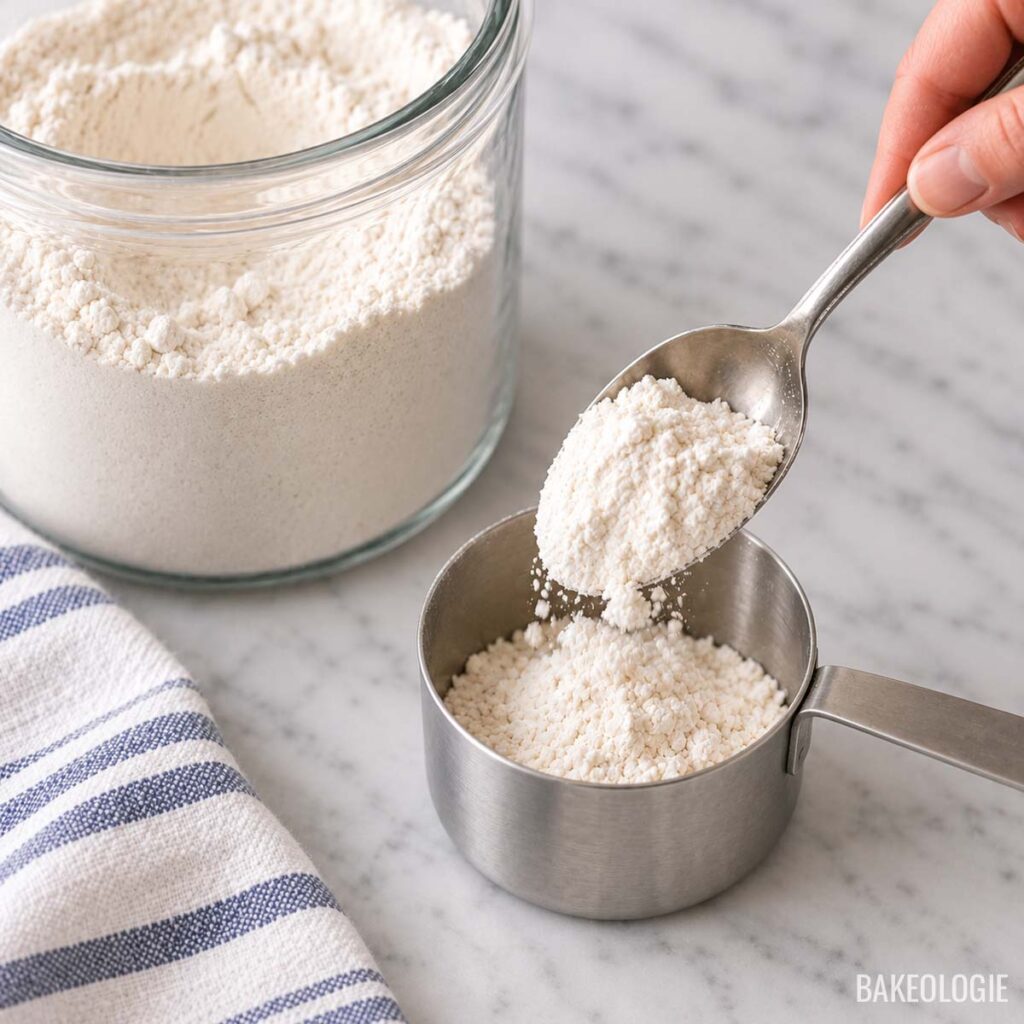
Step 2: Spoon the Flour Into the Measuring Cup
Use a regular spoon to gently transfer the flour into a dry measuring cup.
Let the flour fall naturally into the cup.
Don’t press it down, shake the cup, or tap it against the counter.
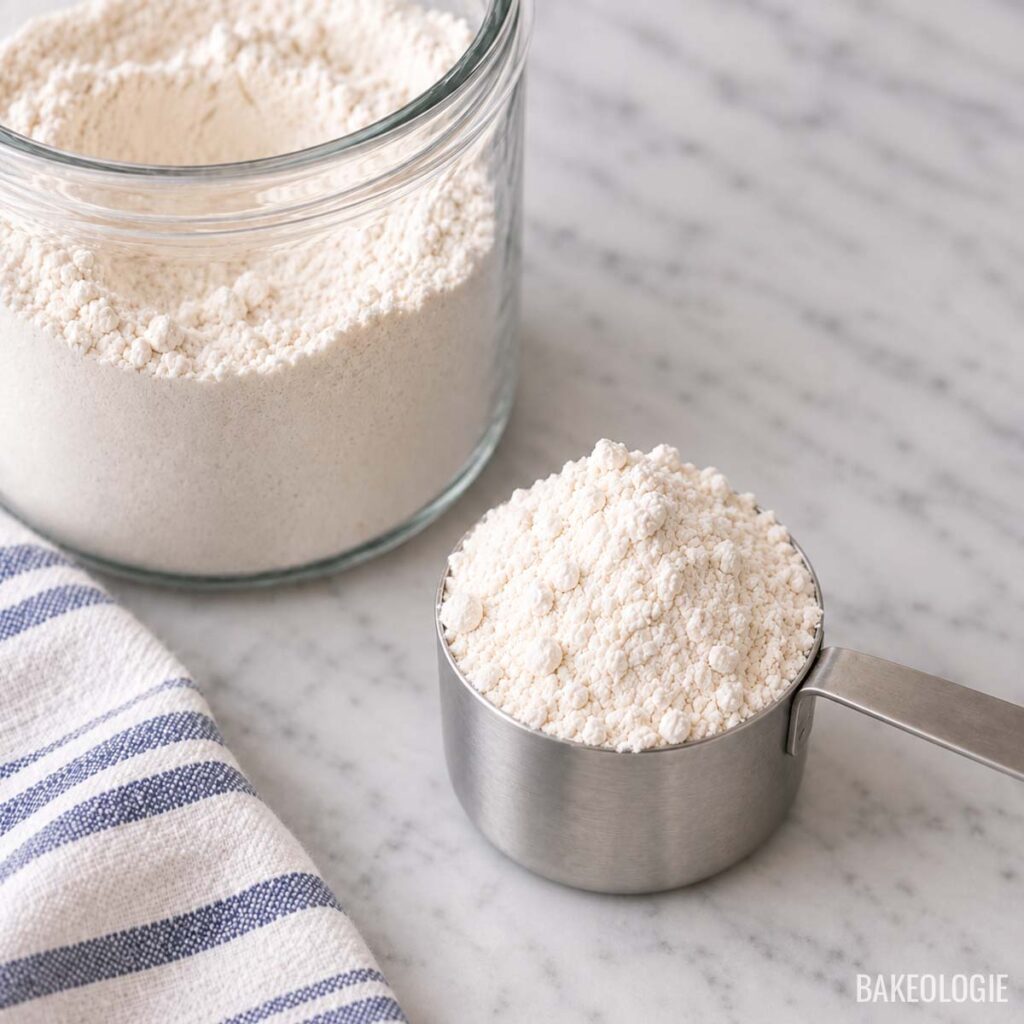
Step 3: Slightly Overfill the Cup
Continue adding flour until you have a small mound sitting just above the rim of the measuring cup.
Do not pack the flour down.
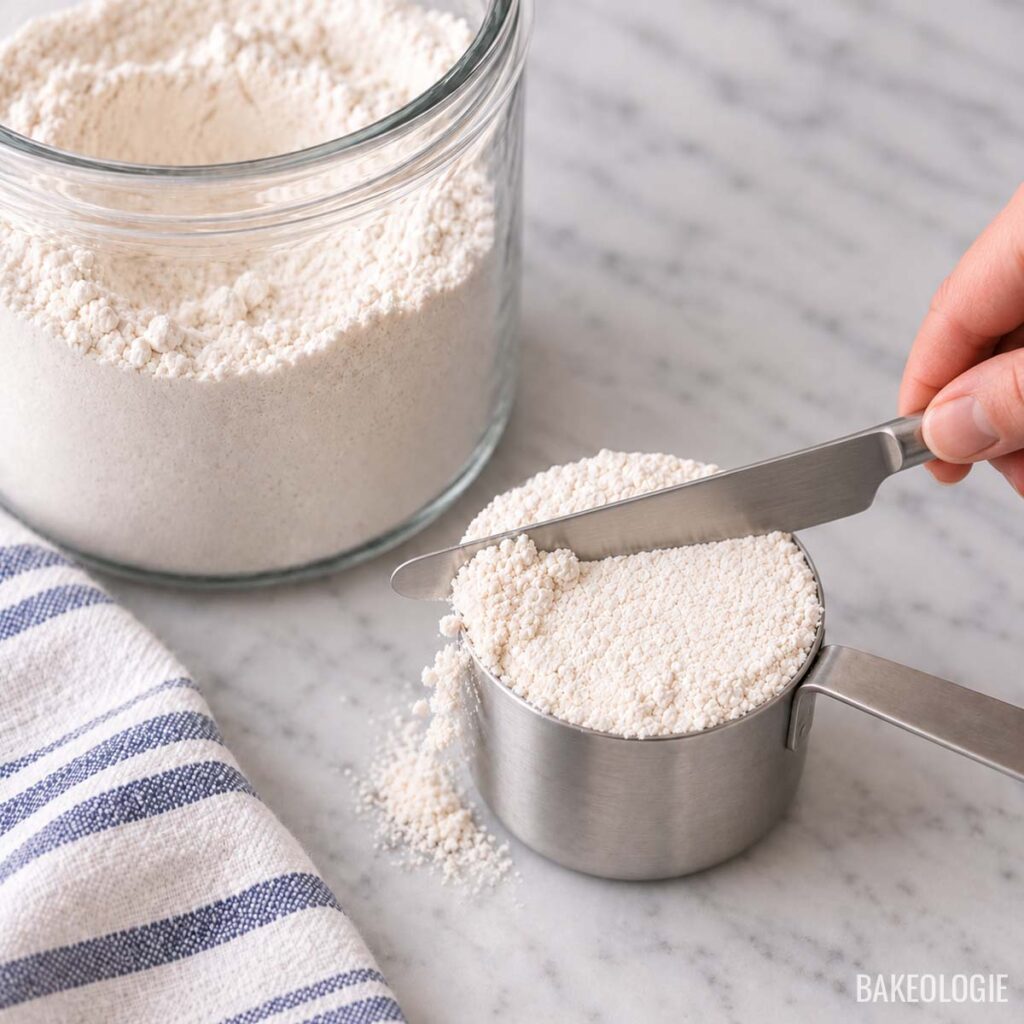
Step 4: Level Off the Excess
Use the straight edge of a knife or spatula to sweep across the top of the measuring cup.
Let the excess flour fall away.
You should now have a level cup of flour without compressing it.
What Not to Do When Measuring Flour
One of the easiest ways to accidentally add too much flour is to use the measuring cup itself as a scoop.
Avoid:
- Dipping the measuring cup directly into the flour
- Packing flour into the cup
- Pressing the flour down with a spoon
- Shaking or tapping the measuring cup to make more flour fit
Does Scooping Flour Really Make a Difference?
Yes — and sometimes more than you might expect.
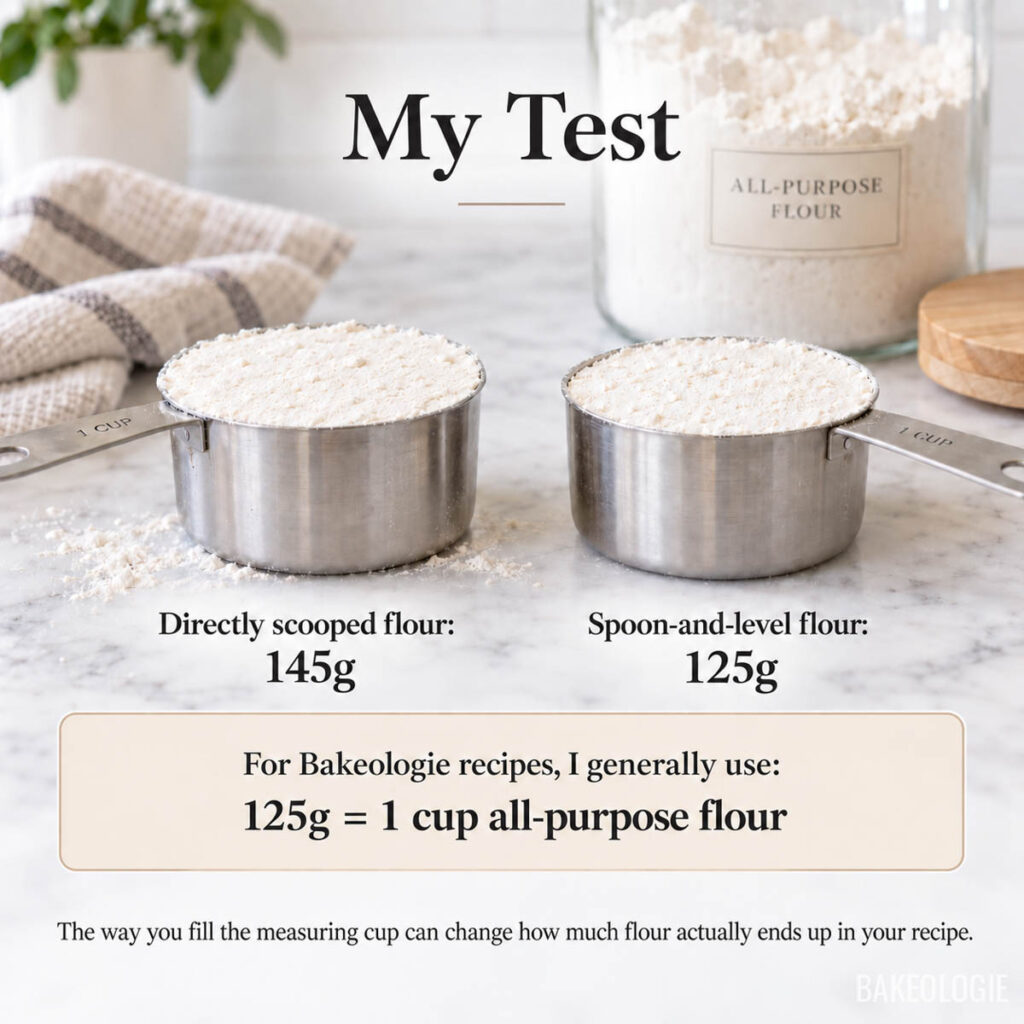
I tested 1 cup of all-purpose flour measured two different ways.
My Test
Directly scooped flour: 145g
Spoon-and-level flour: 125g
That’s a difference of 20g of extra flour in just 1 cup.
For Bakeologie recipes, I generally use:
125g = 1 cup all-purpose flour
That 20g difference may not sound like much, but it can add up quickly.
If that same 20g difference happened with every cup, a recipe calling for 2 cups could end up with about 40g extra flour — or about 60g extra in a 3-cup recipe.
That’s enough extra flour to noticeably affect the texture of many baked goods.
This is why the way you fill your measuring cup matters. Scooping directly from the container can compact the flour and give you more than the recipe intended.
What Happens If You Add Too Much Flour?
Baking relies on the balance between dry and liquid ingredients.
Adding extra flour changes that balance.
Depending on the recipe, too much flour can make:
- Cakes dry or dense
- Muffins heavy instead of light and tender
- Cookies spread less and become thicker or cakier
- Brownies and bars drier than intended
- Doughs unusually stiff or difficult to mix
So if you’ve ever thought, “But I followed the recipe exactly!”, it may be worth checking how you measured the flour.
Is Spoon-and-Level as Accurate as Weighing?
Not quite.
Spoon-and-level is the method I recommend when measuring flour with cups, but there can still be small differences from person to person.
Someone may spoon the flour more heavily than someone else, or fluff the flour differently.
A kitchen scale removes most of those variables.
So my order of preference is:
Best: Weigh the flour in grams.
Next best: Use the spoon-and-level method.
Avoid: Scooping directly from the flour container.
Does 1 Cup of Flour Always Weigh 125g?
No.
The 125g per cup measurement is the standard I generally use for all-purpose flour in Bakeologie recipes, unless I specify otherwise.
Different types of flour can have different weights per cup.
Cake flour, bread flour, whole wheat flour, almond flour, and other specialty flours should not automatically be treated as 125g per cup. Whenever a recipe provides a gram measurement, follow the weight listed in that specific recipe.
If you need to convert other baking ingredients between grams, cups, tablespoons, and teaspoons, check out my Baking Measurements and Ingredient Conversion Chart for a quick reference.
Spoon-and-Level vs. Scoop-and-Level
You may sometimes see the term “scoop and level.”
That wording can be confusing because it sounds like you should scoop the flour directly out of the container with the measuring cup.
For my recipes, when measuring flour by volume, use the spoon-and-level method instead:
Fluff → Spoon → Level
This helps avoid accidentally packing extra flour into your measuring cup.
Why I Prefer Measuring Flour by Weight
When I was learning to bake, switching to weight measurements was one of the things that made my results much more consistent. Baking already has plenty of variables — ingredient temperature, mixing, oven temperature, and pan size — so removing one source of uncertainty makes things much easier. Plus, weighing ingredients usually means fewer measuring cups to wash!
How to Measure Flour Correctly: The Easy Rule
For the most consistent results:
If the recipe gives you grams, weigh the flour.
If you’re using measuring cups:
Fluff → Spoon → Level
Don’t scoop the measuring cup directly into the flour.
Don’t pack the flour.
Don’t tap the cup.
A kitchen scale is the most reliable way to measure flour, but if cups are what you have, measuring carefully can still make a big difference in your baking results.