

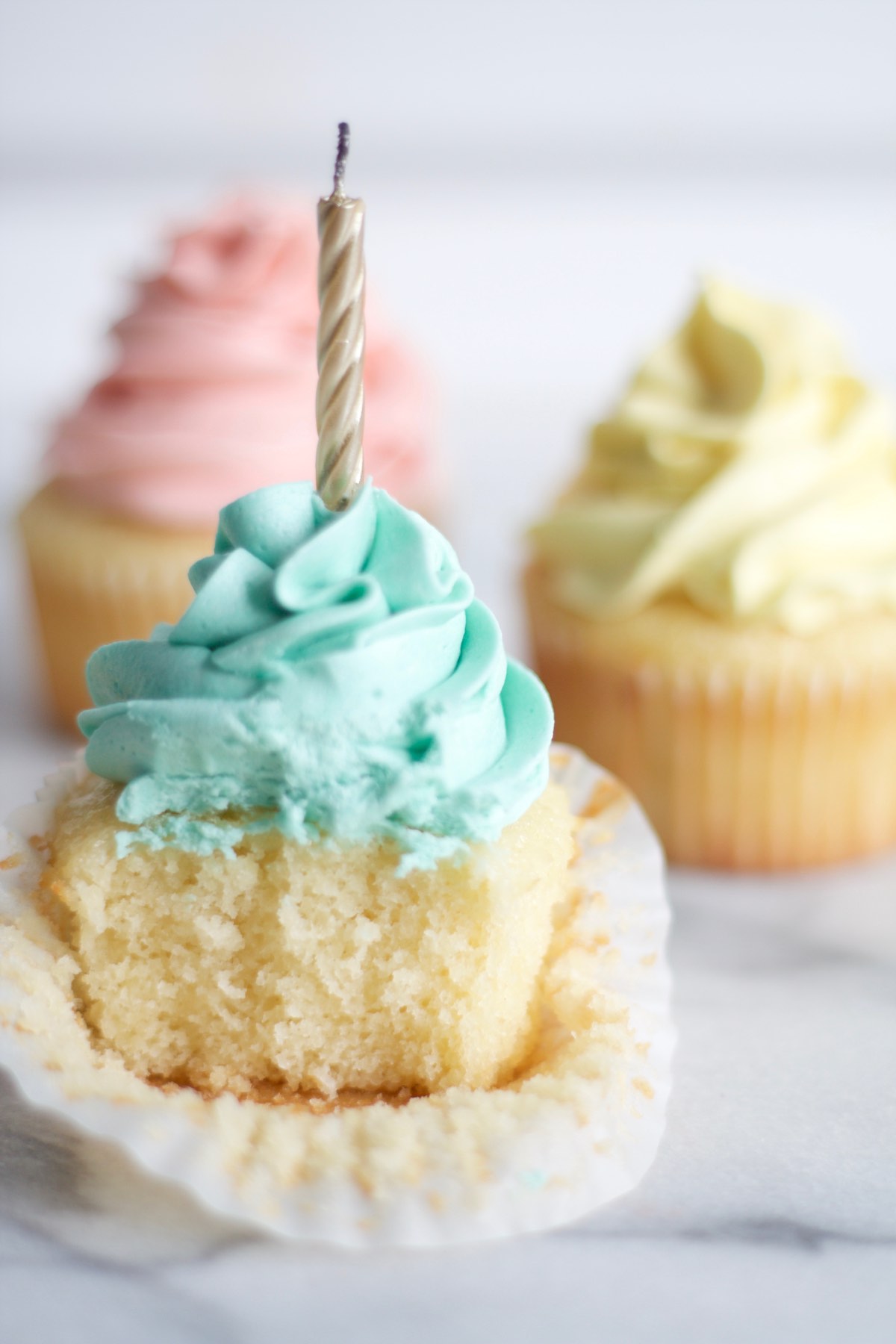
Luscious and refined – This Swiss Meringue Buttercream is my favorite frosting because it’s smooth, silky, and not tooth-achingly sweet! It can be used on a variety of cakes and cupcakes as it can easily be flavored. For this recipe, I am using vanilla, but chocolate, espresso powder, fruit purees, caramel, and lemon zest are excellent alternatives too!
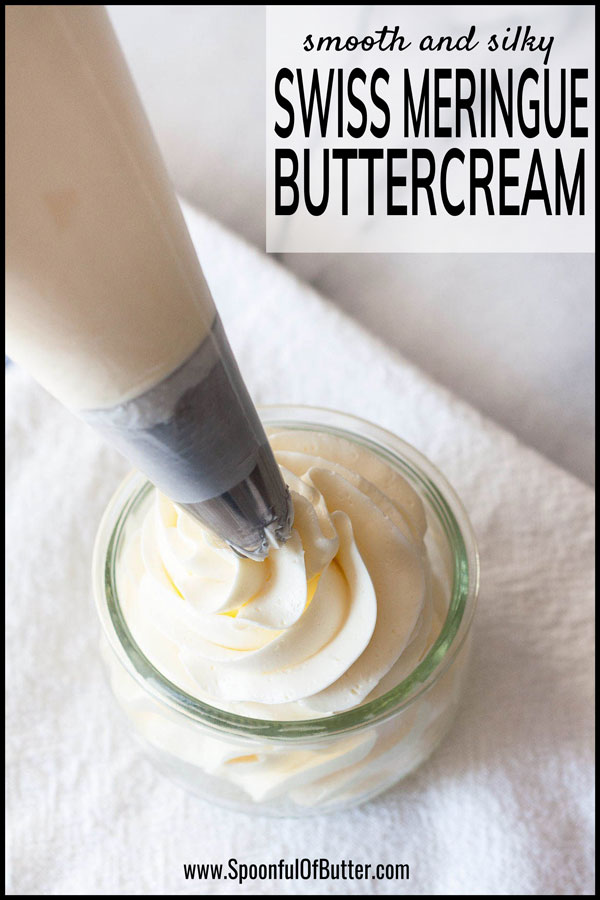
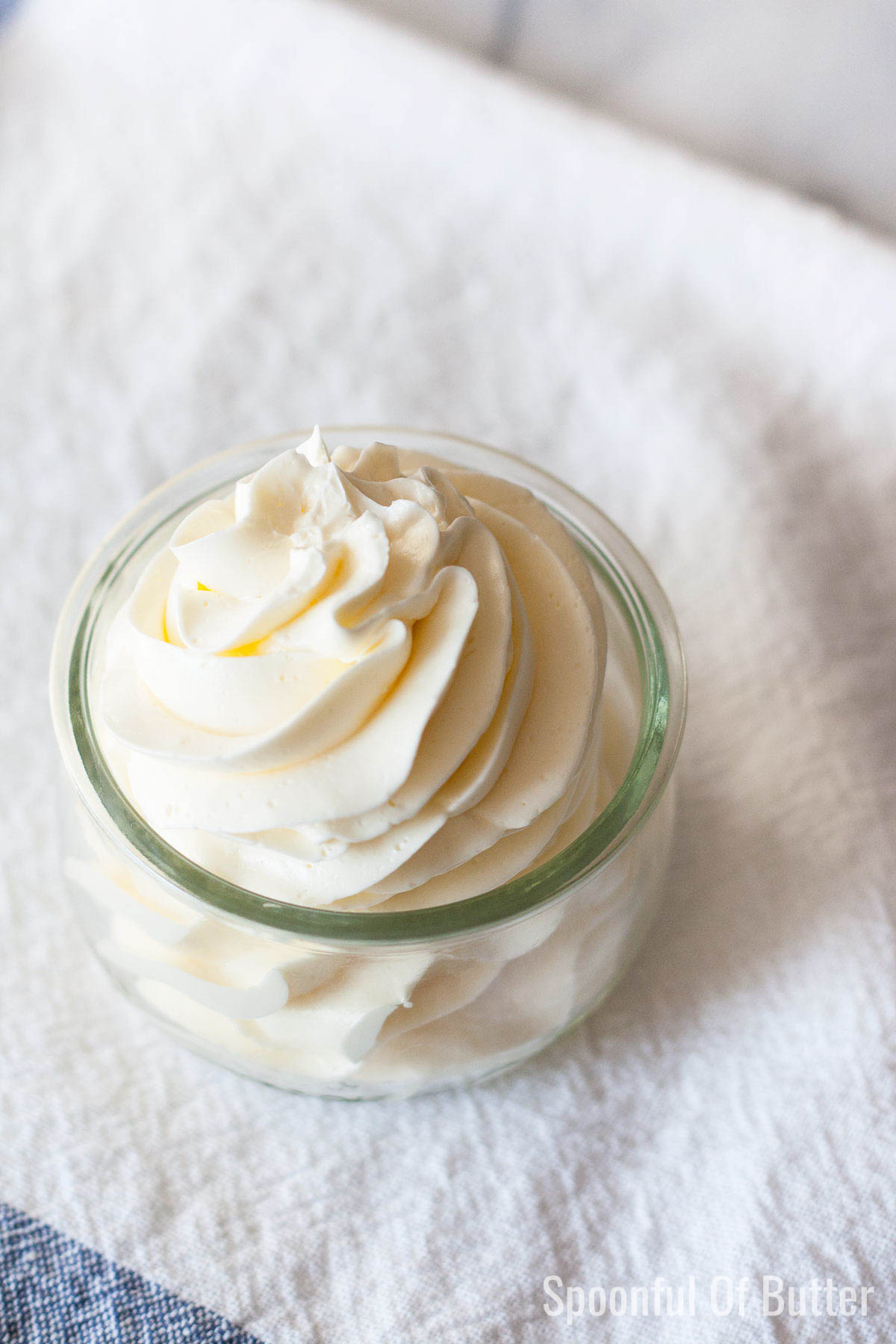
Swiss Meringue Buttercream is made by whipping a mixture of egg whites and sugar that has been gently heated in a double boiler until the sugar dissolves and the eggs are cooked. Cubes of room temperature butter are then gradually added to the meringue, then the flavor ingredients.
For this recipe, I am using vanilla, but chocolate, espresso powder, fruit purees, caramel, and lemon zest are excellent alternatives too! Just like crepes it may seem initimateding to make, but it’s actually doable once you’ve tried it! I highly suggest using a candy thermometer so you don’t have to guess if the egg whites are cooked and all the sugar has dissolved. You would know it’s ready when your thermometer hits 160 F / 70 C.
How to Add Fruit Purée (Like Raspberry) to Swiss Meringue Buttercream
Want to turn this into a fruity buttercream? Raspberry is one of the best (and most popular!) options — but there’s a right way to do it so your buttercream stays smooth and stable.
How much fruit purée should I add?
For this full batch of buttercream, start with:
- 2–4 tablespoons (30–60g) fruit purée
This gives a nice, balanced flavor without affecting the texture.
You can go up to:
- ¼ cup (60g) for a stronger flavor — but anything beyond that may make the buttercream too soft.
The key step: reduce your purée
Fruit contains a lot of water, which can make buttercream curdle or turn soupy. To avoid that:
- Blend fresh or frozen raspberries
- Strain to remove seeds
- Simmer on the stove until thick and jam-like
- Let it cool completely before using
This step concentrates the flavor and keeps your buttercream stable.
When to add it
Add the purée at the very end, once your buttercream is fully whipped and smooth.
What if my buttercream looks curdled?
Don’t panic — this is very fixable!
If it looks separated or too soft:
- Chill the bowl for 10–15 minutes
- Then re-whip until smooth
It almost always comes back together.
Optional: boost the color
Raspberry purée can give a soft, muted pink. If you want a brighter color, you can add:
- A tiny drop of pink food coloring (optional)
Flavor Variations
Once you’ve mastered this Swiss meringue buttercream, you can easily customize it into different flavors. Think of this as your base recipe — from here, you can turn it into chocolate, coffee, fruit-flavored, and more.
Chocolate Swiss Meringue Buttercream
To make a chocolate version, melt about 170–200g dark or semi-sweet chocolate, then let it cool until just slightly warm (not hot). Add it to the buttercream at the very end and whip until fully incorporated. The result is smooth, rich, and not overly sweet.
Coffee (Espresso) Buttercream
For a coffee flavor, dissolve 1–2 teaspoons instant espresso powder in 1 teaspoon hot water, then let it cool. Add it in at the end and mix until combined. This gives a subtle coffee flavor — you can adjust to taste depending on how strong you like it.
Raspberry (or Other Fruit) Buttercream
To make a fruit-flavored buttercream, add 2–4 tablespoons (30–60g) of reduced fruit purée (see notes above for how to prepare it). Always add it at the end once the buttercream is fully whipped. Reducing the purée is key to keeping the texture stable.
Matcha Buttercream
For a matcha version, sift 1–2 teaspoons matcha powder to remove lumps, then dissolve it in a small amount of warm water or milk (about 1–2 teaspoons). Let it cool, then mix it into the buttercream at the end. This gives a subtle earthy flavor and a beautiful natural green color.
Lemon Buttercream
Add 1–2 tablespoons fresh lemon juice plus 1 teaspoon lemon zest at the end. For a stronger flavor without adding too much liquid, you can also mix in a bit of lemon curd.
Tips & Troubleshooting Swiss Meringue Buttercream
- The egg whites should be free of any bits of yolk. I always crack the egg and extract the egg whites in a separate bowl, then once I have a clean (not a bit of yolk) egg whites I pour it into another bowl together with the other egg whites. This is to ensure that if ever there is an egg yolk in it (and this has happened a lot to me!), I would not contaminate the other egg whites and don’t have to start all over again.
- The metal and mixing bowls should be completely dry and clean before use. Ensure that there are no traces of grease.
- The water in the double boiler should be in a simmer. The boiling water should not start the bottom of your metal bowl.
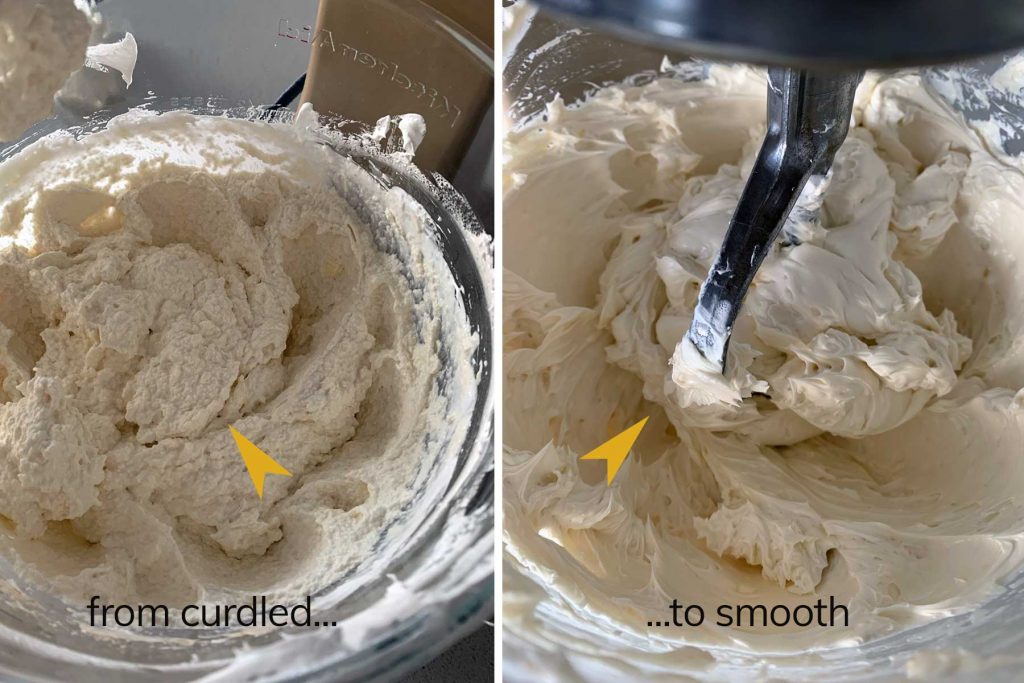
- After adding all the butter the frosting might look curdled. This is okay! Just continue mixing for another 5 mins at medium-low speed (I used speed 4 for my Kitchen Aid mixer) and watch it turn from curdled to silky smooth.
How To Store Swiss Meringue buttercream
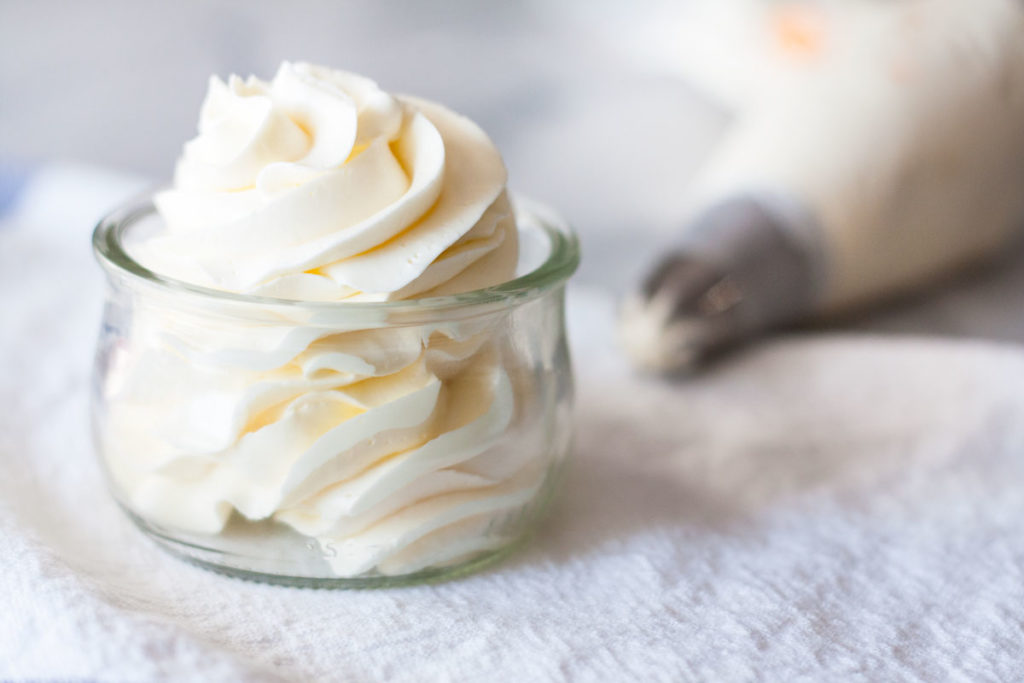
Swiss Meringue Buttercream can be stored in an air-tight container in the fridge for up to 7 days or in the freezer for up to 2 months. Thaw frozen buttercream in the fridge. Bring the buttercream to room temperature then remix it again until it is smooth and silky. Let the mixer run on low speed for a few minutes to remove any air bubbles.

Swiss Meringue Buttercream
INGREDIENTS
- 150 milliliters egg whites (approximately from 5 large eggs)
- 250 grams granulated white sugar
- 450 grams unsalted butter at room temperature ((cut into small cubes))
- 2 ½ teaspoons pure vanilla extract
INSTRUCTIONS
- In a metal bowl, put the egg whites and sugar. Whisk by hand. Put the bowl over a saucepan (to create a double boiler) with simmering water. Whisk until it registers 160 F or 70 C on a candy thermometer.
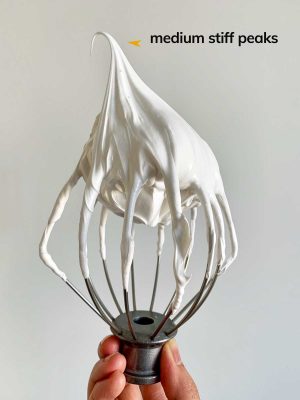
- Transfer the mixture in a stand mixer bowl and beat with whisk attachment on high speed for about 8-10 minutes or until medium-stiff peaks.
- Switch to paddle attachment and on low speed, add the vanilla extract then the cubes of butter a few at a time. Once incorporated, turn up the speed to medium-high until smooth and silky, about 3-5 minutes. Please see recipe notes about curdling.

Hi Trish! Planning on making your vanilla cake recipe and this buttercream for a gender reveal party – how well does this buttercream hold it’s shape? I’m looking to do some big fluffy shell borders with a star tip and just want to make sure the buttercream won’t fall or deflate!
Yes — this Swiss meringue buttercream holds its shape very well. 🙂 I’ve used it for piping borders, swirls, and stacked cakes without issues. Just make sure the buttercream is at the right consistency before piping — soft and smooth, but not too warm. If your kitchen is warm, you can chill it briefly and rewhip if needed. I’d also recommend keeping the finished cake refrigerated until closer to serving time for the cleanest details.
how much fruit puree would I add if I wanted to make it raspberry flavored?
For raspberry flavor, I recommend starting with about 2–4 tablespoons (30–60g) of raspberry purée for this full batch of buttercream. For the best results, make sure to strain out the seeds and reduce the purée on the stove until thick and jam-like, then let it cool completely before adding it at the end once your buttercream is fully whipped.
I’ve actually updated the recipe with a detailed section on how to add fruit purées (plus other flavor variations!), so you can easily customize it depending on what you’re craving 😊 Let me know if you try the raspberry version—I’d love to hear how it turns out!
love that, thank you!
I made this to frost your chocolate layer cake, and flavored it with orange extract and zest – it was phenomenal, and the frosting was so easy to work with! I got a ton of compliments, and almost the entire cake was eaten. Thank you!
Molly, I’m so glad the buttercream worked well for you and was easy to handle—that’s exactly what I was hoping for. And almost the whole cake gone? That’s the best kind of feedback! 😄 Thank you so much for taking the time to share—I really appreciate it!
at what point of the recipe would I add chocolate if I wanted to make it chocolate flavor? and what type of chocolate?
Great question! You’ll want to add the chocolate at the very end of the recipe — after the butter has gone in and your buttercream is already smooth and silky. At that point, switch the mixer to low speed and slowly pour in your melted and cooled chocolate (make sure it’s room-temp but still pourable so it doesn’t melt the butter). Then whip again until fully combined and fluffy. I recommend a good-quality dark or semisweet bar (around 60–70% cocoa), chopped and melted. Use about 225g for a balanced chocolate flavor, or up to 350g if you want it extra rich and truffle-like.
I’m loving your website…. I have made your 3 tier Fluffy and Buttery Vanilla Cake for my cousin’s wedding. The sponges are in the freezer so now I need to turn to this Swiss Meringue Buttercream. Do you recall how many batches of this recipe you needed to frost the whole 3 tier cake? Thank you 🙂
I’m so glad to hear that—thank you! I used 1.5 batch of this Champagne Swiss Meringue Buttercream. Although note that I only use this to frost the sides of my naked cake so I didn’t really need that much. I used a strawberry cream cheese filling for in between the cake layers. The amount will vary depending on the type of cake you’re making. As a guide, 1 batch of this Swiss Meringue buttercream should be enough to fill and frost a 3-layer 8-inch cake.
I need to make 3, possibly 4 batches to frost a large 2 tier cake… do you know how many batches would fit into a 6 quart stand mixer? Could I get away with doubling the recipe and only making it twice?
Hmmm, I do have a 5-quart mixer and it’s at about 2/3 full when I make a batch of this recipe.