

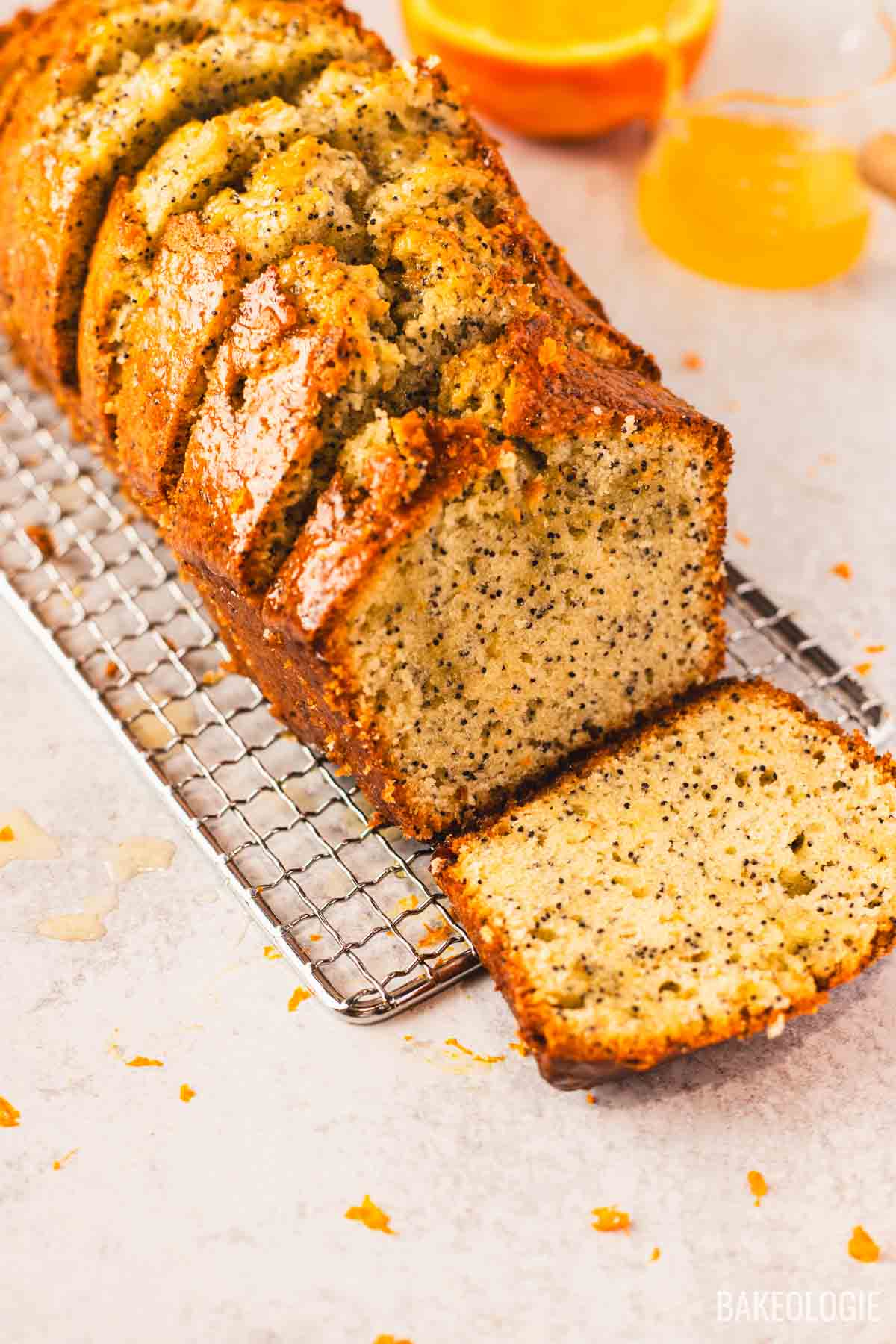
The Loaf Cake I Bake When I Want Bright Citrus Without the Pucker
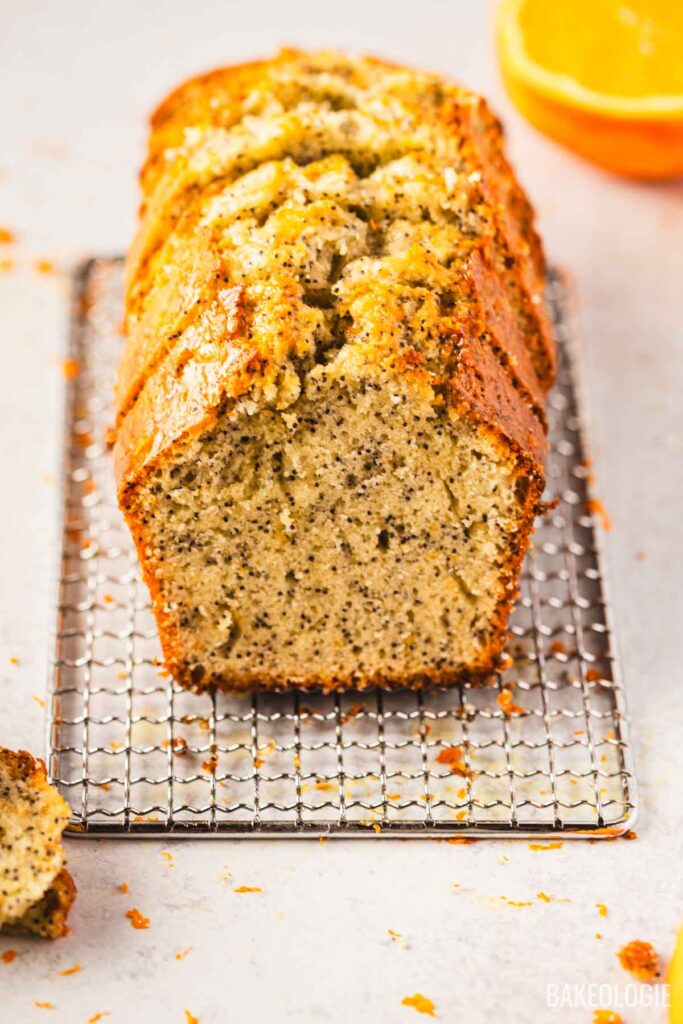
Orange poppy seed loaf cake is one of those recipes I keep coming back to whenever I want something simple but still a little different.
The orange flavor comes from real zest, so it tastes bright and fresh without feeling overpowering or overly sweet. It’s the kind of cake that feels familiar at first bite but has enough going on to keep you reaching for another slice.
And then there are the poppy seeds. They add a subtle crunch that breaks up the softness in the best way and give each bite just enough texture without making the loaf feel heavy.
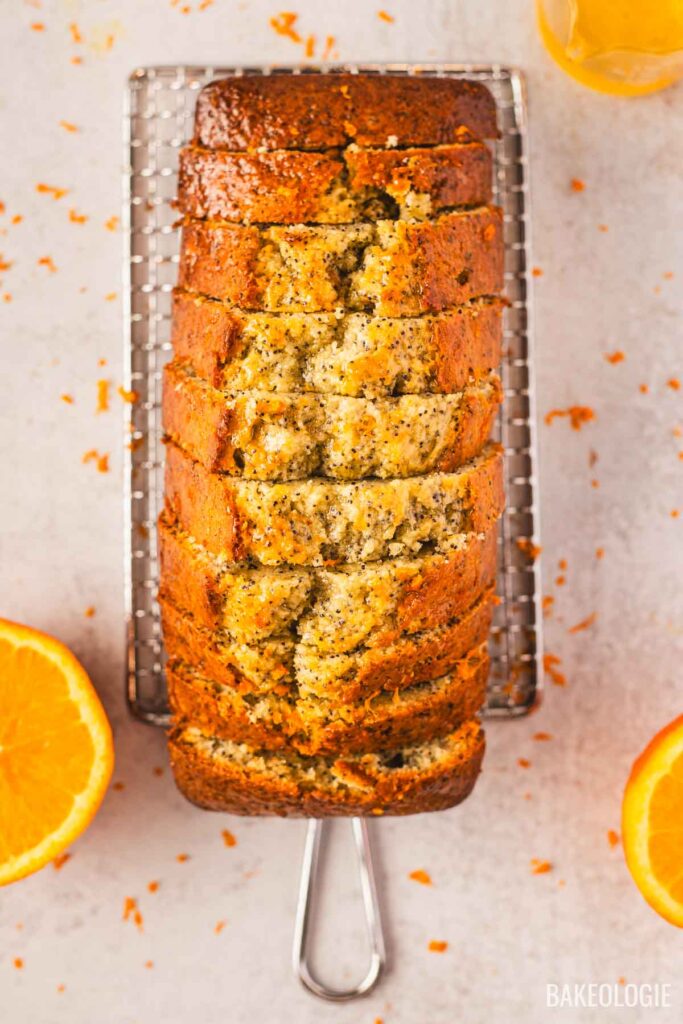
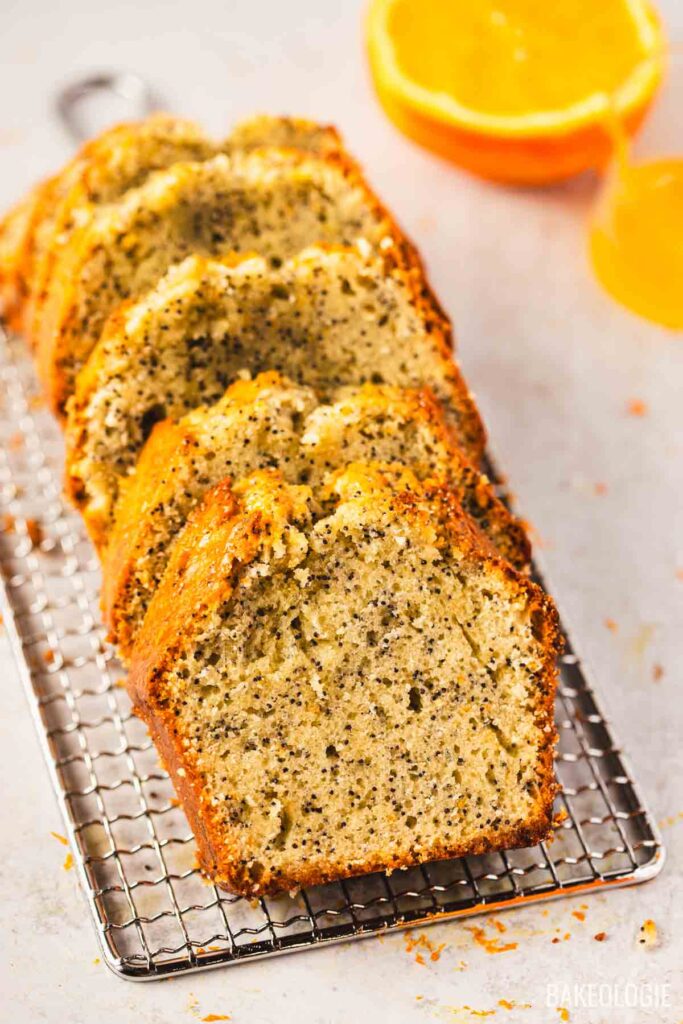
The crumb bakes up soft, moist, and evenly structured with clean slices and beautifully golden edges while the inside stays tender.
Once the loaf cools, everything gets finished with a simple orange glaze.
The glaze is thin, glossy, and just sweet enough to highlight the citrus without pushing this into full dessert territory. It settles into the cracks on top and adds a little extra moisture — which somehow makes the loaf even better the next day.
If it lasts that long.
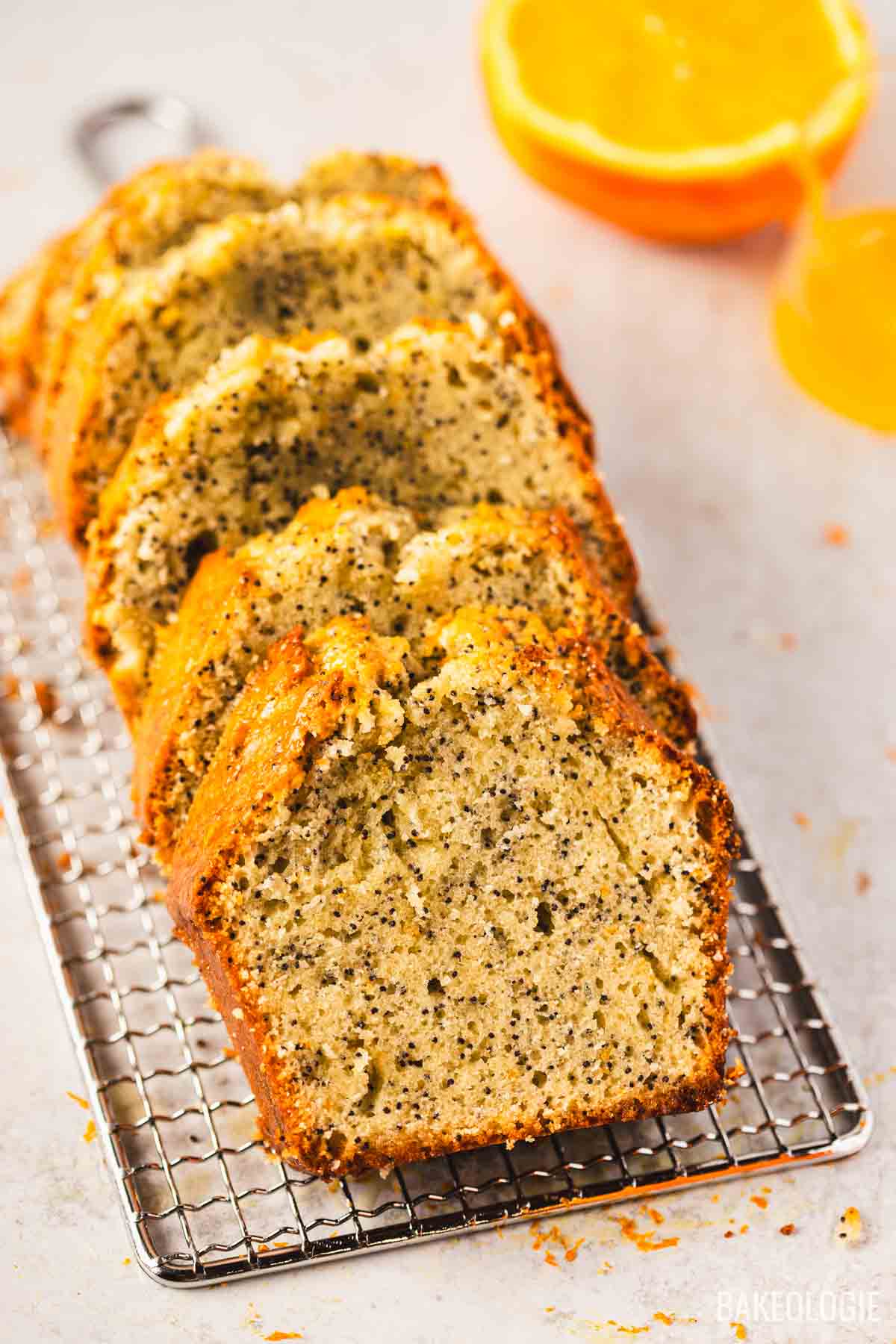
Orange Poppyseed Loaf Cake
INGREDIENTS
- 175g all-purpose flour/ plain flour (about 1½ cups, spooned and leveled — do not scoop from the bag)
- 81g (¾ cup + 1 tablespoon) blanched almond flour
- 30g (3 tablespoons) poppy seed
- ½ teaspoon baking powder
- ½ teaspoon fine sea salt
- 1 large orange, zested and juiced
- 200g (1 cup) granulated white sugar
- 200g (about 4 large eggs) eggs, at room temperature (weight is without shell)
- 120g (½ cup) heavy cream, at room temperature
- 56g (4 tablespoons) neutral oil (e.g. canola, avocado oil)
- 28g (2 tablespoons) unsalted butter, melted
For the Orange Glaze
- 120g (½ cup) freshly squeezed orange juice (from the zested orange)
- 100g (½ cup) granulated white sugar
VIDEO
INSTRUCTIONS
Make the cake:
- Preheat your oven to 350°F (177°C) and place the oven rack in the middle. Butter the bottom and sides of an 8 × 4.5 × 2.75-inch loaf pan. Line the pan with a strip of parchment paper so it covers the bottom and sides, leaving about 2 inches hanging over the long sides. This will help you lift the cake out later. You can also use a silicone loaf liner if you have one.
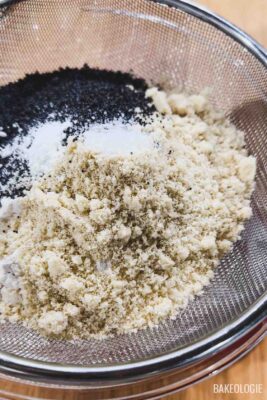
- To make the cake, start by mixing the dry ingredients. In a large bowl, sift together the all-purpose flour, almond flour, poppy seeds, baking powder, and salt. Set this bowl aside.175g all-purpose flour/ plain flour81g (¾ cup + 1 tablespoon) blanched almond flour30g (3 tablespoons) poppy seed½ teaspoon baking powder½ teaspoon fine sea salt
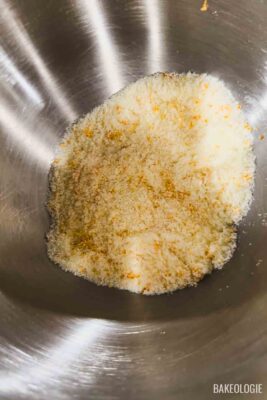
- Zest the orange directly into the bowl of a stand mixer. Be careful to only zest the orange part of the peel and avoid the white layer underneath, which tastes bitter. Add the sugar to the bowl. Use your fingers to rub the orange zest into the sugar until the sugar smells strongly like orange.1 large orange, zested and juiced200g (1 cup) granulated white sugar
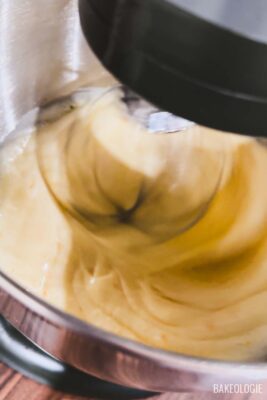
- Add the eggs to the sugar mixture. Using the whisk attachment, beat on medium-high speed until the sugar dissolves and the mixture looks pale and thick. The whisk should leave visible lines as it moves through the batter. This takes about 3 minutes.200g (about 4 large eggs) eggs, at room temperature (weight is without shell)
- Add the cream, oil, and melted butter and beat until blended, about 30 seconds. The batter will deflate a bit and liquefy.120g (½ cup) heavy cream, at room temperature56g (4 tablespoons) neutral oil (e.g. canola, avocado oil)28g (2 tablespoons) unsalted butter, melted
- Add the flour mixture to the bowl. Mix on the lowest speed just until no dry flour is visible. Do not overmix.
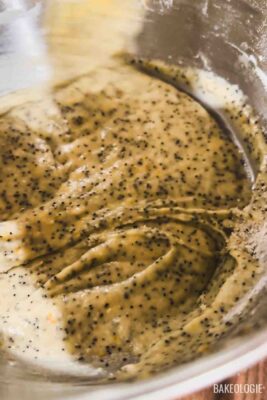
- Use a silicone spatula to scrape the sides and bottom of the bowl to make sure everything is evenly mixed. Pour the batter into the prepared pan and smooth the top. The pan will be almost full, with about ¼ inch of space at the top.
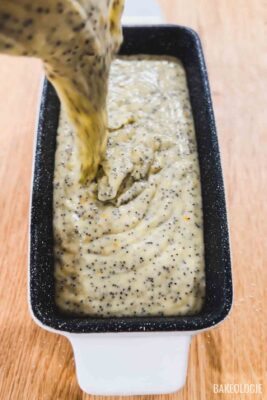
- Place the loaf pan on a small baking sheet, just in case the batter rises over the edge (this usually doesn’t happen, but it’s good insurance). Bake for about 60 minutes, or until a toothpick inserted in the center comes out clean. Halfway through baking, loosely cover the top with foil so it doesn’t get too dark. If using a thermometer, the cake is done when the center reaches 200–205°F (93–96°C).Once baked, use the parchment paper handles to lift the cake out of the pan. Place it on a wire rack and let it cool completely.
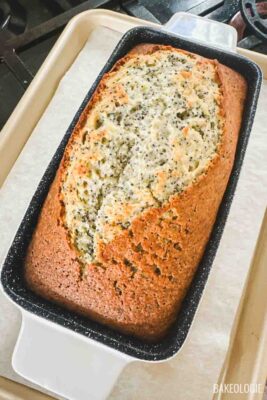
Make the glaze:
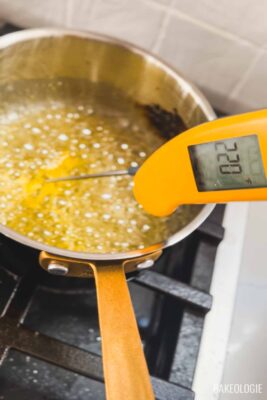
- To make the glaze, combine the orange juice and sugar in a small saucepan. Cook over medium-high heat, stirring constantly, until the sugar dissolves and the mixture comes to a boil. Lower the heat to medium and continue cooking until the glaze looks like a thin, runny jam or reaches 220°F (105°C) on a thermometer. This takes about 3–5 minutes. Pour the glaze into a small bowl and let it cool for 5 minutes.120g (½ cup) freshly squeezed orange juice (from the zested orange)100g (½ cup) granulated white sugar
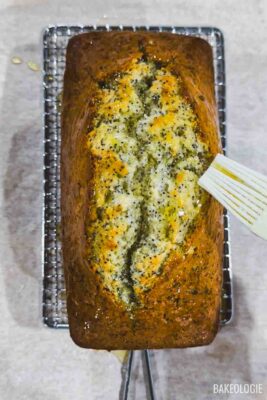
- While the cake is still warm, use a pastry brush to generously brush the glaze over the top so it can soak in. Brushing the glaze while the cake is still warm helps it sink into the top and keeps the loaf moist, instead of forming a thick layer on the surface.
Baker’s Notes
Whisk, Snap, and Share
This space isn’t just for our photos — We’d love to feature yours too! If you’ve made this recipe, tag us on Instagram @thebakeologie or email your photo to [email protected] with the recipe name in the subject line.
📸 By sending a photo, you’re giving permission to feature it here.

Your method and video leaves out the wet ingredients such as the orange juice, oil, butter and cream. If I include them, the batter is too runny. I ended up adding the same amount of flour. Hopefully it turns out ok.
Thank you for pointing this out, and I’m very sorry for the confusion. I went back and checked the recipe, and the oil, butter, and cream are indeed part of the cake batter, but I realized that the step for adding them was accidentally omitted from the written instructions. The orange juice, on the other hand, is intended for the glaze and is already included in that part of the instructions. I’ve updated the procedure so the ingredient list and instructions now match.
Such an easy cake to make but ooooooh soooo delicious. I don’t think it will last the day 😉
If it doesn’t last the day… that’s always a good sign! 🍊💛