
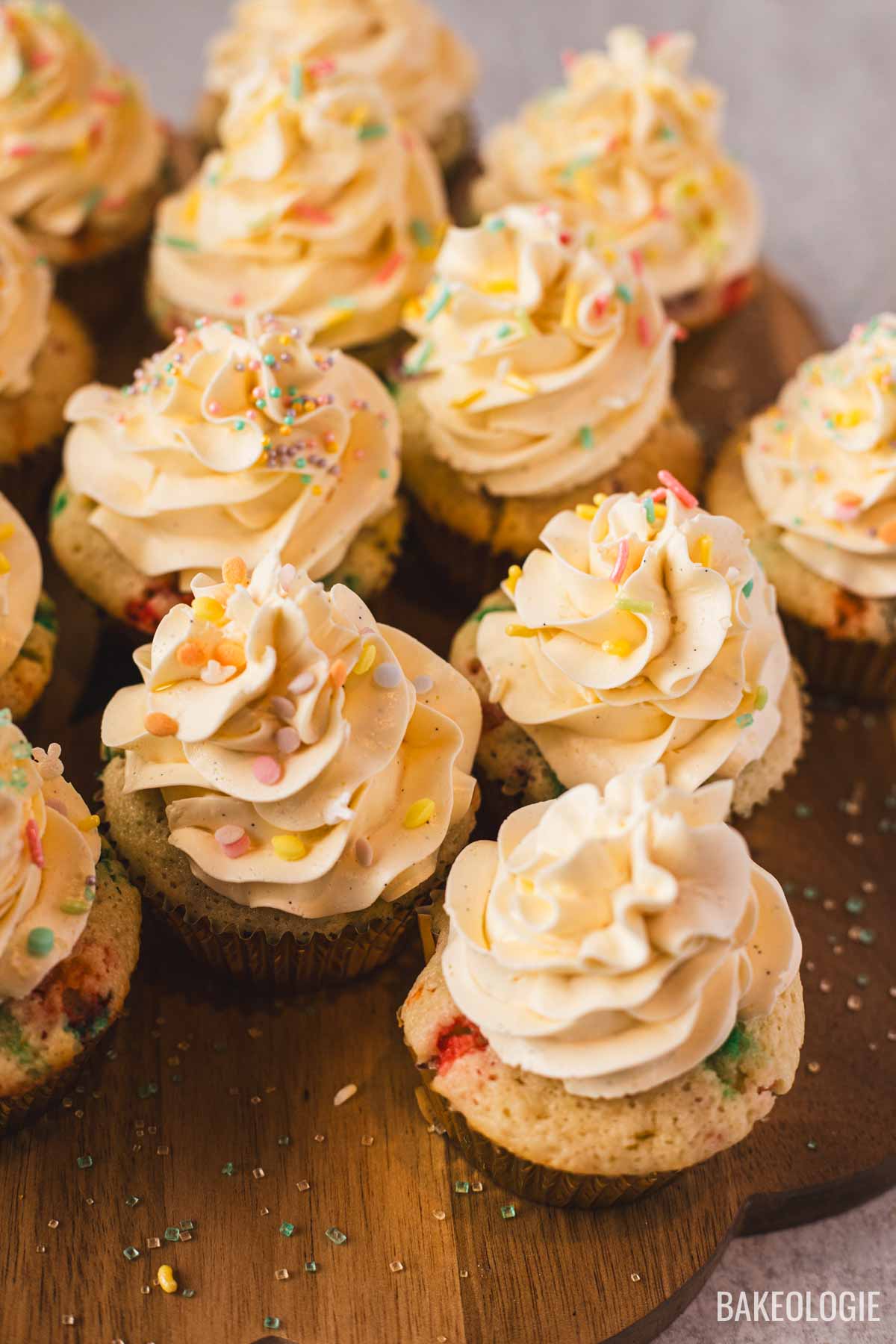
If you’ve ever wanted to make Swiss meringue buttercream but stopped at the thought of separating eggs… same.
So I finally tested it: can you use pasteurized egg whites for Swiss meringue buttercream—specifically the ones from a carton?
Short answer: yes… but there are a few things you need to know if you want smooth, stable results and not a bowl of frustration.
If you prefer the traditional method using fresh egg whites, you can check out my classic Swiss meringue buttercream recipe here: Swiss Meringue Buttercream. And if you want something quicker and more beginner-friendly, my Faux Swiss Meringue Buttercream is a great alternative that skips the double boiler entirely.
Recipe in a Glance
- Texture: Smooth, silky, stable (when done right)
- Flavor: Lightly sweet, buttery, not gritty
- Ease: Medium (slightly trickier than using fresh egg whites)
- Time: ~25–30 minutes
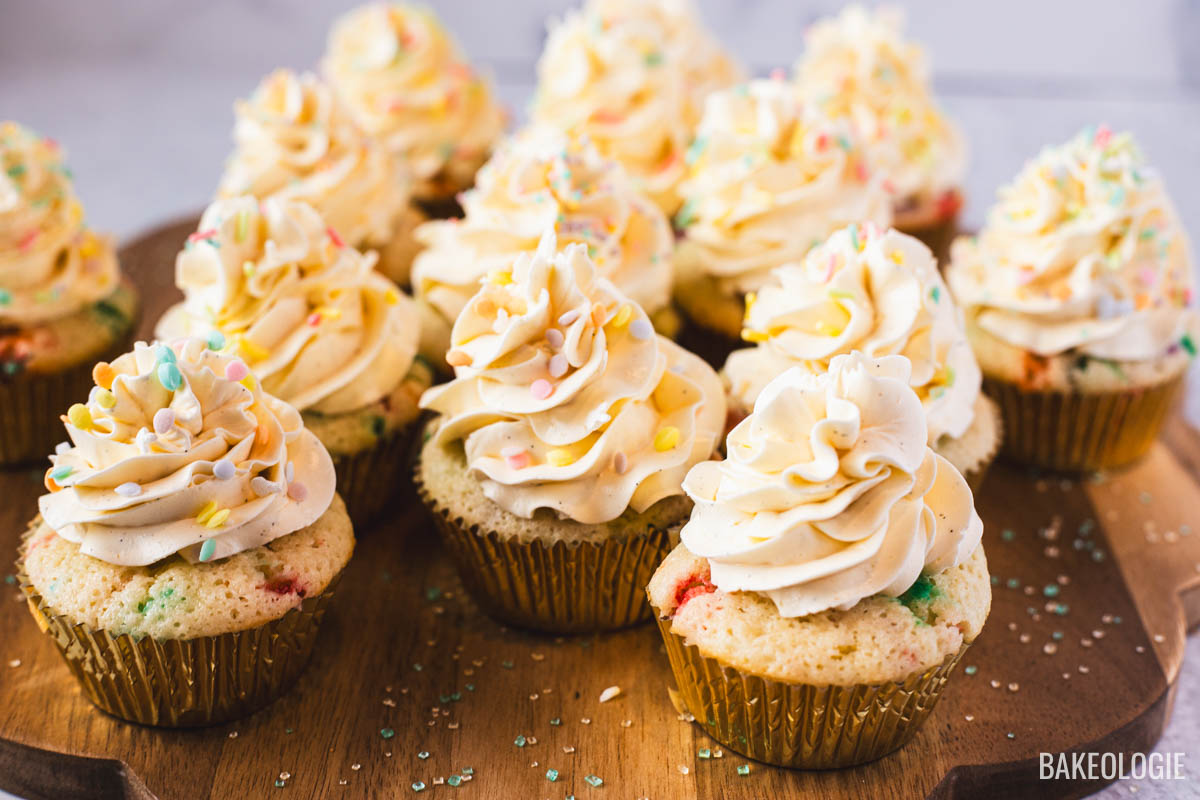
What Are Carton Egg Whites?
Carton egg whites are pasteurized liquid egg whites, meaning they’ve been heat-treated to make them safe to use without cooking.
This is convenient—but it also changes how they behave when whipping. If you’ve ever tried making a carton egg whites meringue, you may have noticed it takes longer or doesn’t whip as easily.
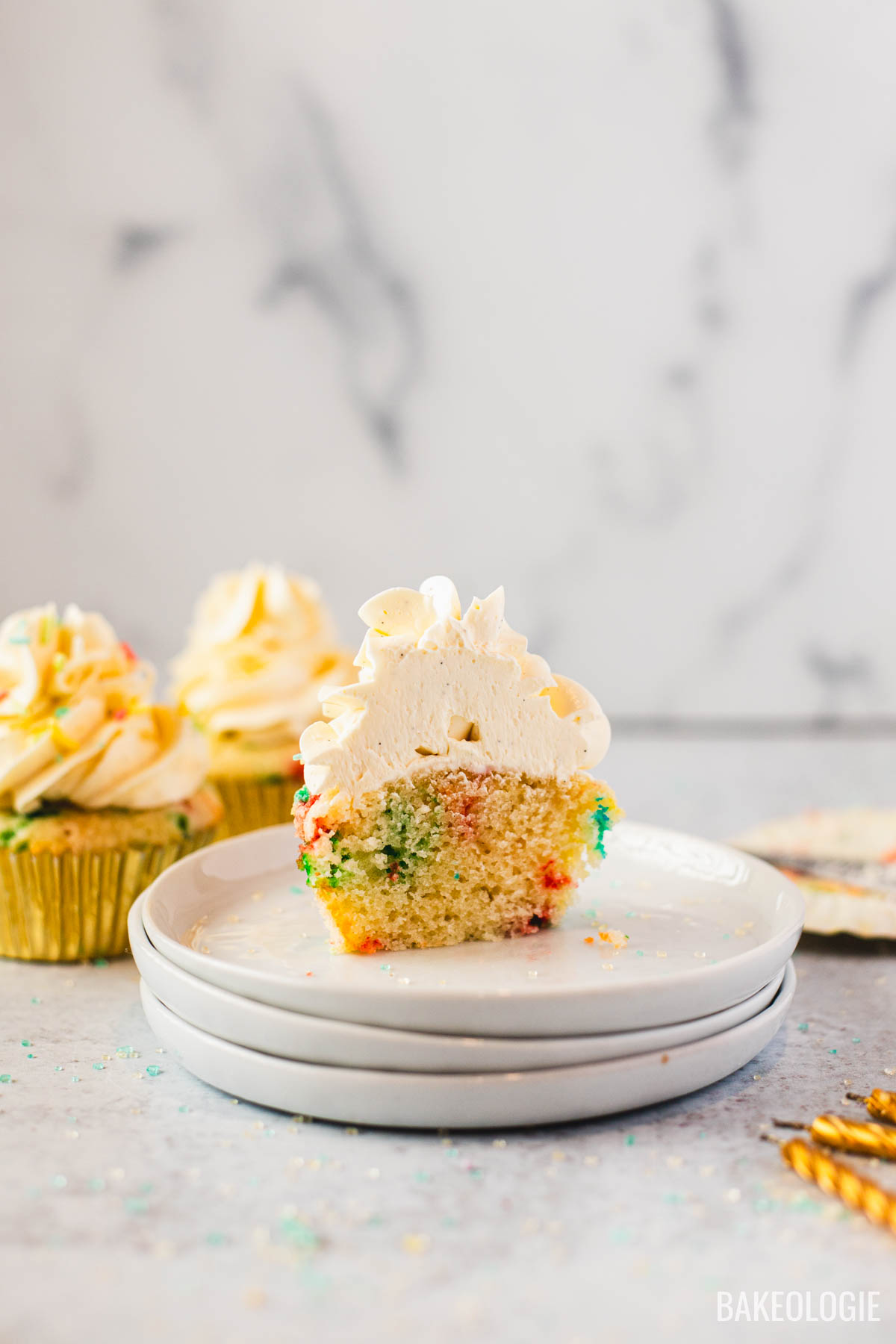
Can You Use Pasteurized Egg Whites for Swiss Meringue Buttercream?
Yes, you can absolutely make pasteurized egg whites buttercream, including Swiss meringue buttercream.
However, they whip slower, may need higher speed, and can be slightly less stable than fresh egg whites. The key is understanding how to work with them—not against them.
What to Look for in Carton Egg Whites
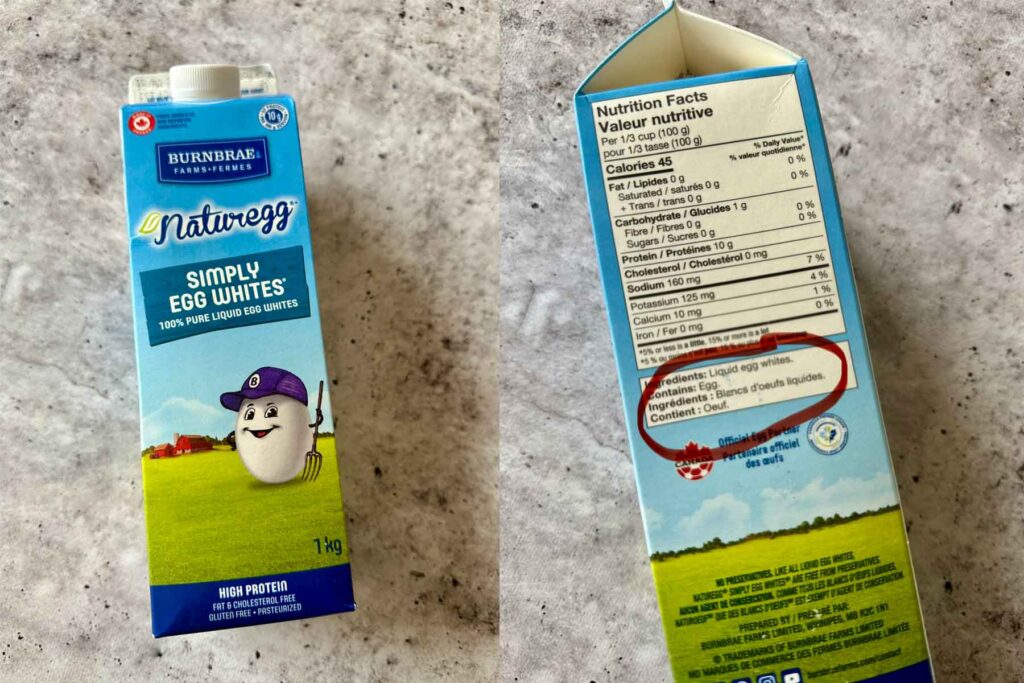
When using carton egg whites, it’s important to check the ingredient list on the carton, as some brands whip much better than others.
For the best results, look for products with minimal ingredients—ideally just egg whites and possibly a small amount of citric acid. Avoid cartons that contain added stabilizers or gums, such as xanthan gum, guar gum, or cellulose gum, as these can interfere with how the egg whites whip and make it difficult to reach stiff peaks.
If your egg whites are taking longer than expected or won’t fully whip, the reasons can be: the ingredients in the egg carton have additives OR it can also be due to grease or fat in your bowl or whisk. Even a small amount of residue can prevent the egg whites from building structure, so always make sure your equipment is completely clean before starting.
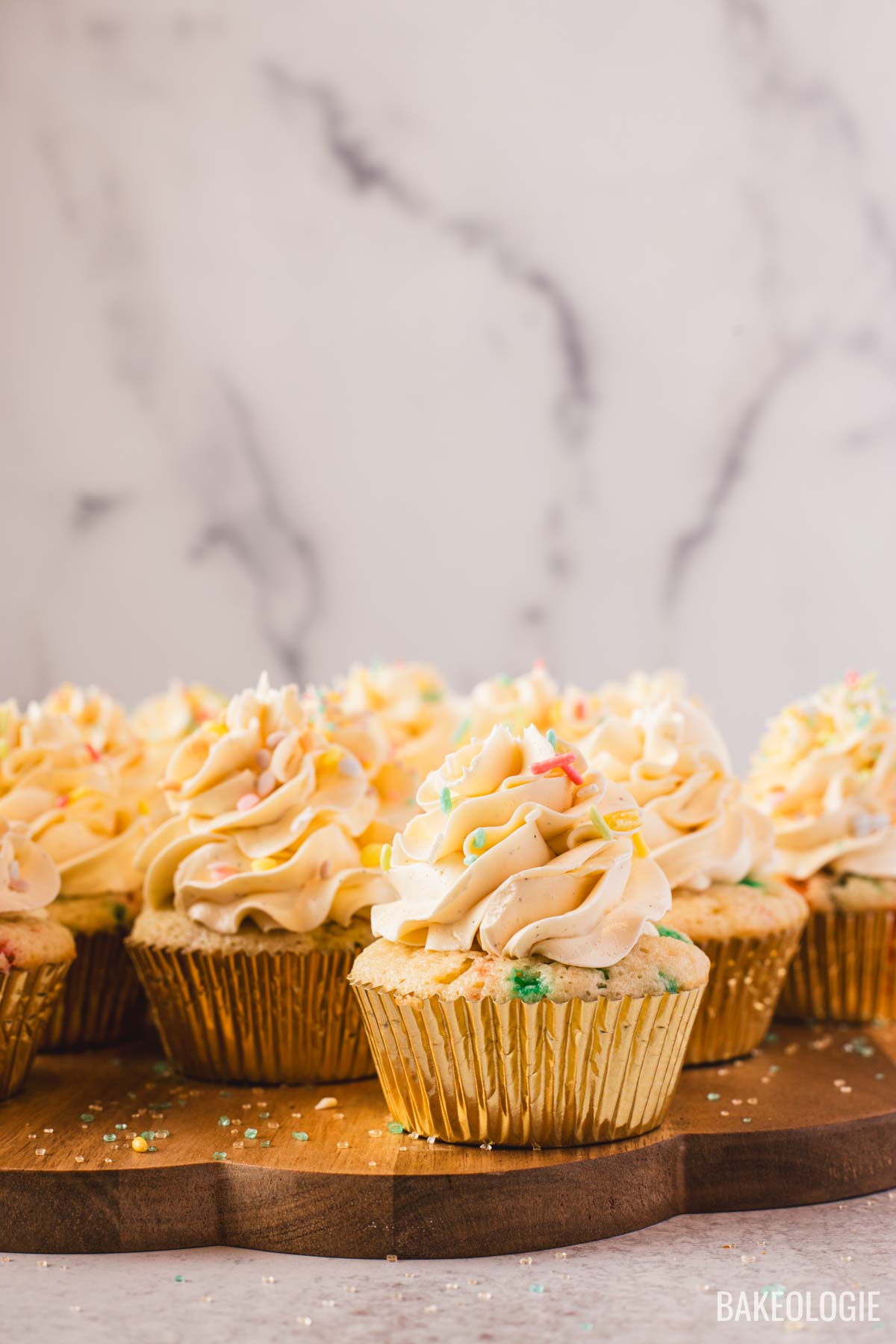
For the best results, look for products with minimal ingredients—ideally just egg whites and possibly a small amount of citric acid. Avoid cartons that contain added stabilizers or gums, such as xanthan gum, guar gum, or cellulose gum, as these can interfere with how the egg whites whip and make it difficult to reach stiff peaks.
Vanilla Bean Swiss Meringue Buttercream (Using Carton Egg Whites)
|
Yield |
Prep Time |
Cook Time |
|
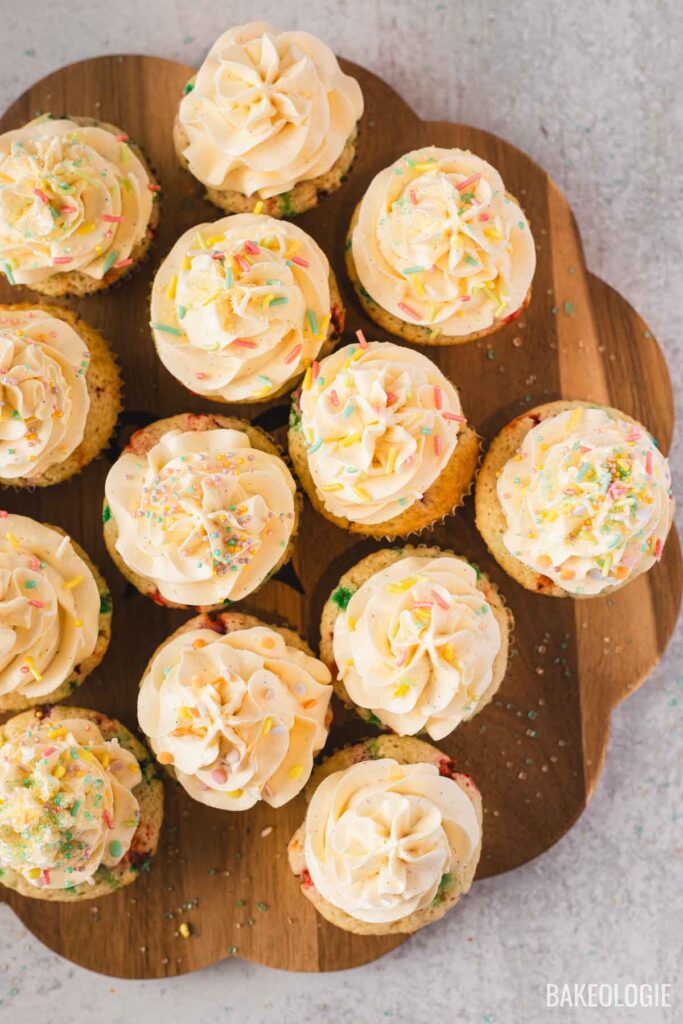
*** This recipe is enough to frost 12-16 cupcakes or an 8-inch two-layer cake.
Ingredients
- 150g (½ cup + 2 teaspoons) egg whites (from about 5 large eggs) weight is without shell
- 300g (1½ cups) granulated white sugar
- 454g (2 cups) unsalted butter, at room temperature (65°F – 67°F), cut into tablespoon pieces
- 15g (1 tablespoon) vanilla bean paste
Instructions
Step 1. Heat the Egg Whites and Sugar.
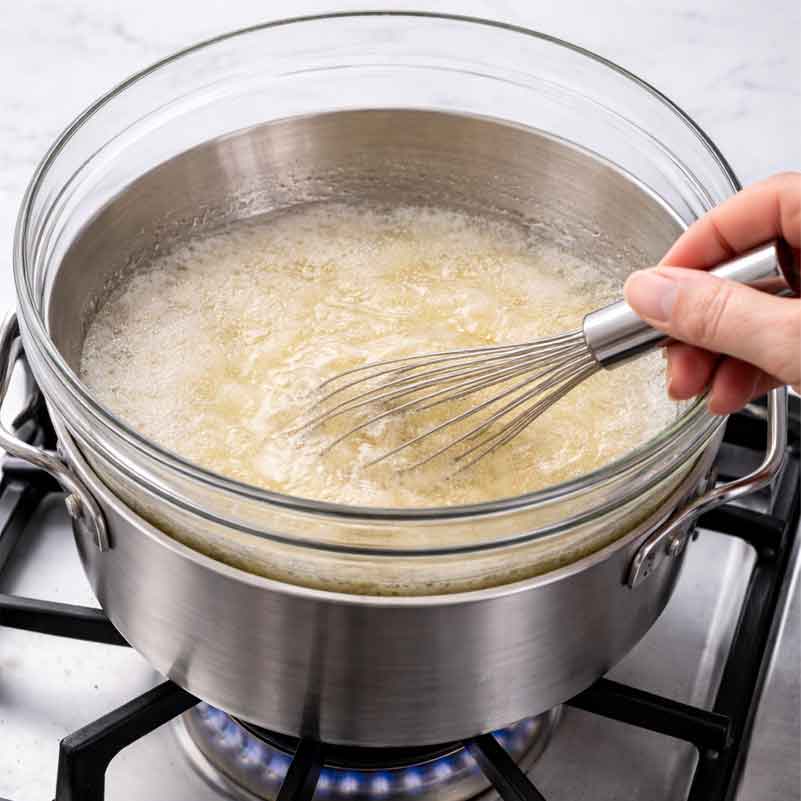
In a heatproof bowl set over a pot of simmering water (double boiler), whisk together the egg whites and sugar. Cook, whisking frequently, until: the sugar is fully dissolved (no grainy texture when rubbed between your fingers), and the mixture reaches 165°F (74°C).
- 150g (½ cup + 2 teaspoons) egg whites (from about 5 large eggs)
- 300g (1½ cups) granulated white sugar
Step 2. Whip the Meringue.
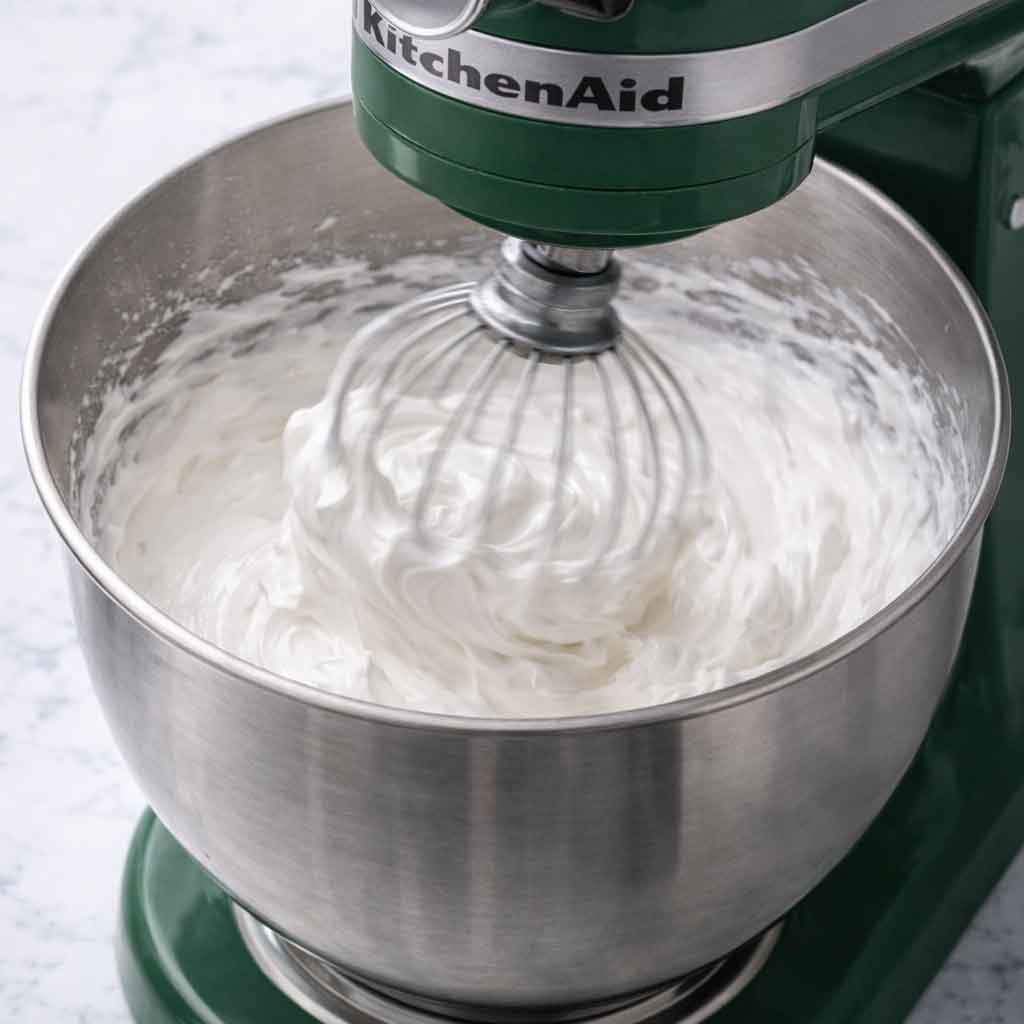
Transfer the mixture to the bowl of a stand mixer fitted with the whisk attachment. Whip on high speed until: the meringue is thick, glossy, and forms stiff peaks; the bowl has cooled to about 90–95°F (32–35°C).
TIP: This takes about 10–15 minutes, but may take longer when using carton egg whites—just keep going until you reach stiff peaks.
Step 3. Add the Butter.
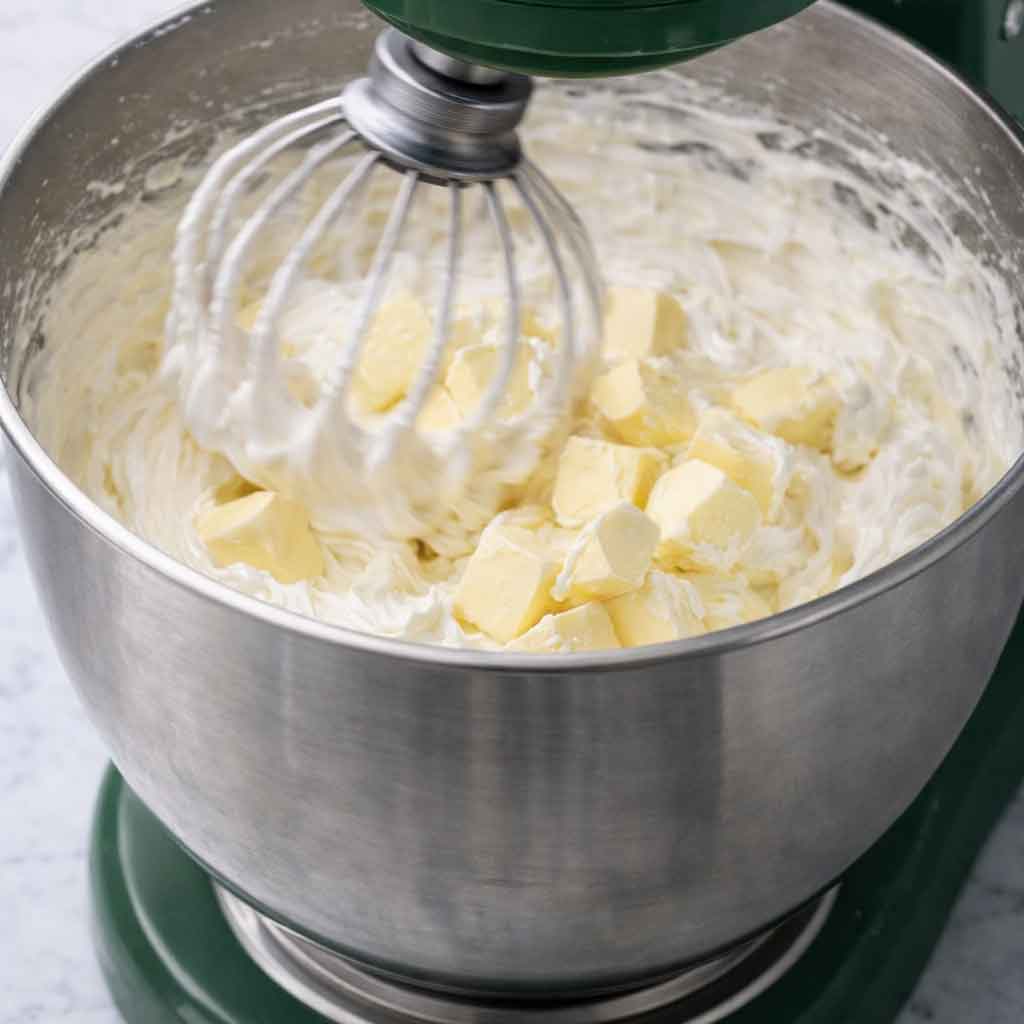
Reduce the mixer speed to low. Add the butter 1–2 tablespoons at a time, allowing each addition to incorporate before adding more.Once all the butter is added, increase the speed to medium-high and beat until the buttercream becomes light, smooth, and fluffy.
TIP: It may look curdled or soupy at first—this is completely normal. Keep mixing and it will come together.
Step 4. Finish with Vanilla.
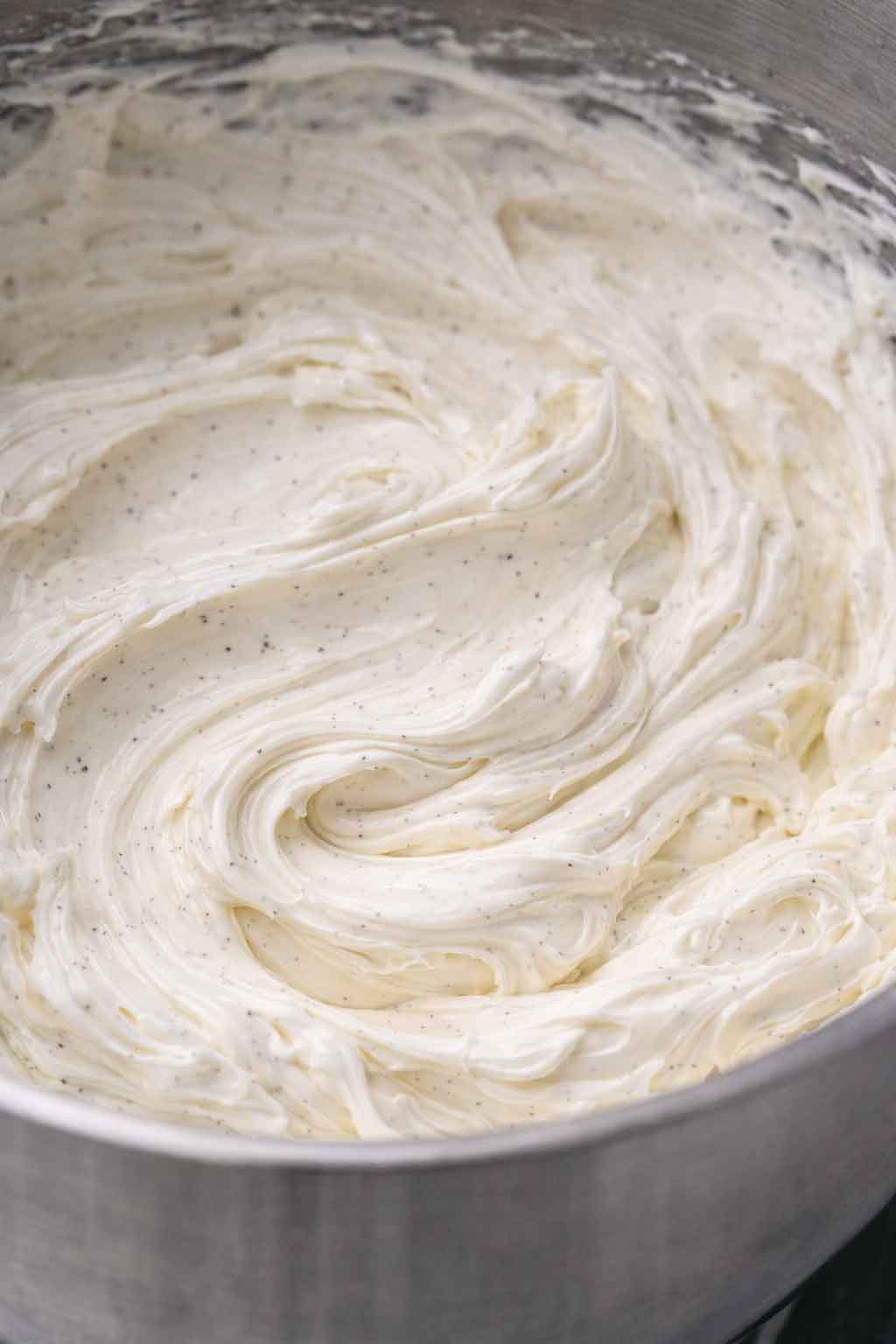
Add the vanilla bean paste and mix until fully incorporated and the buttercream is silky smooth.
- 15g (1 tablespoon) vanilla bean paste
Tips for Success
Whisk, Snap, and Share
This space isn’t just for our photos — We’d love to feature yours too! If you’ve made this recipe, tag us on Instagram @thebakeologie or email your photo to [email protected] with the recipe name in the subject line.
📸 By sending a photo, you’re giving permission to feature it here.