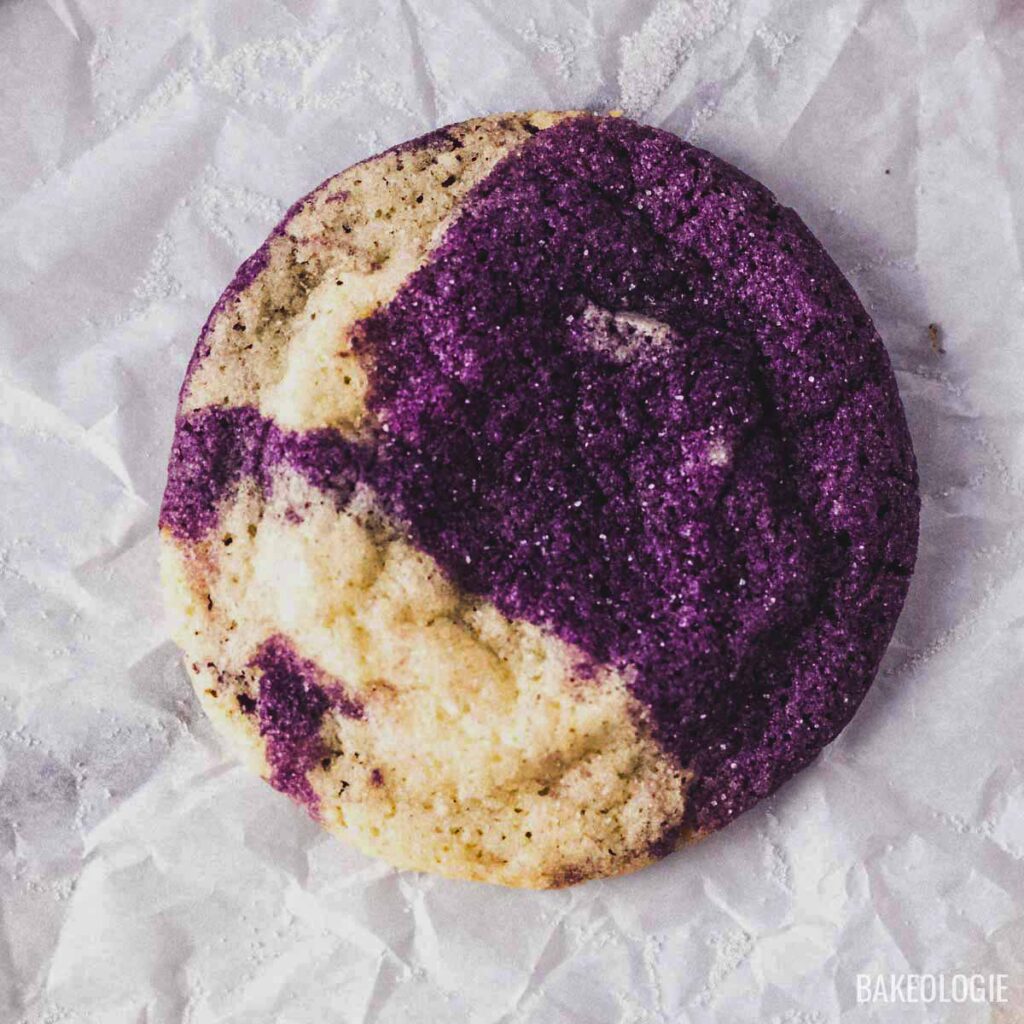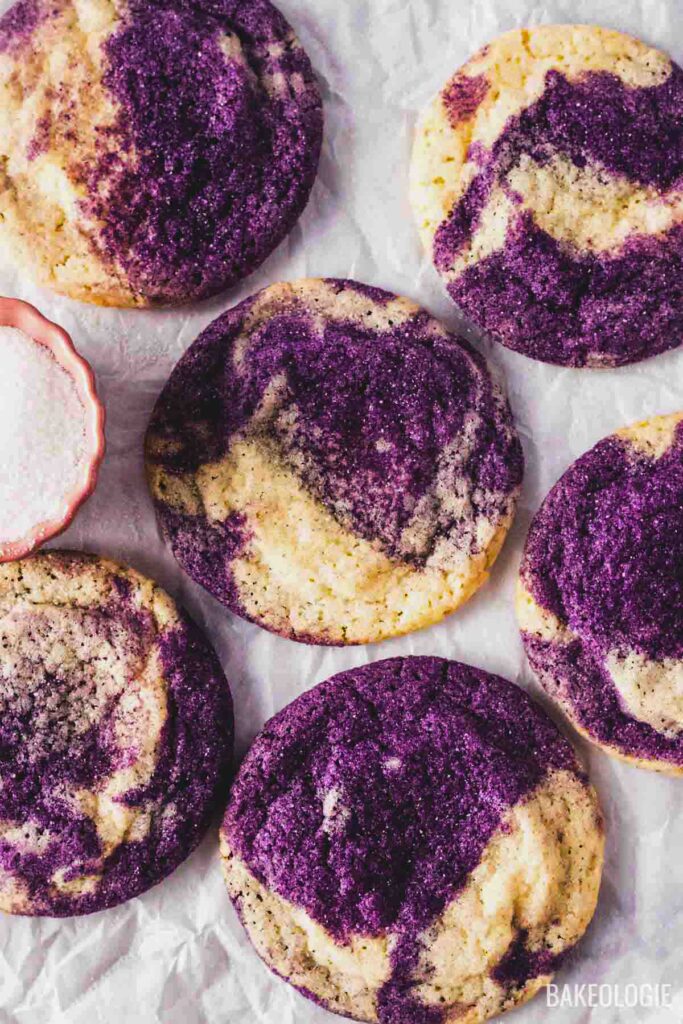

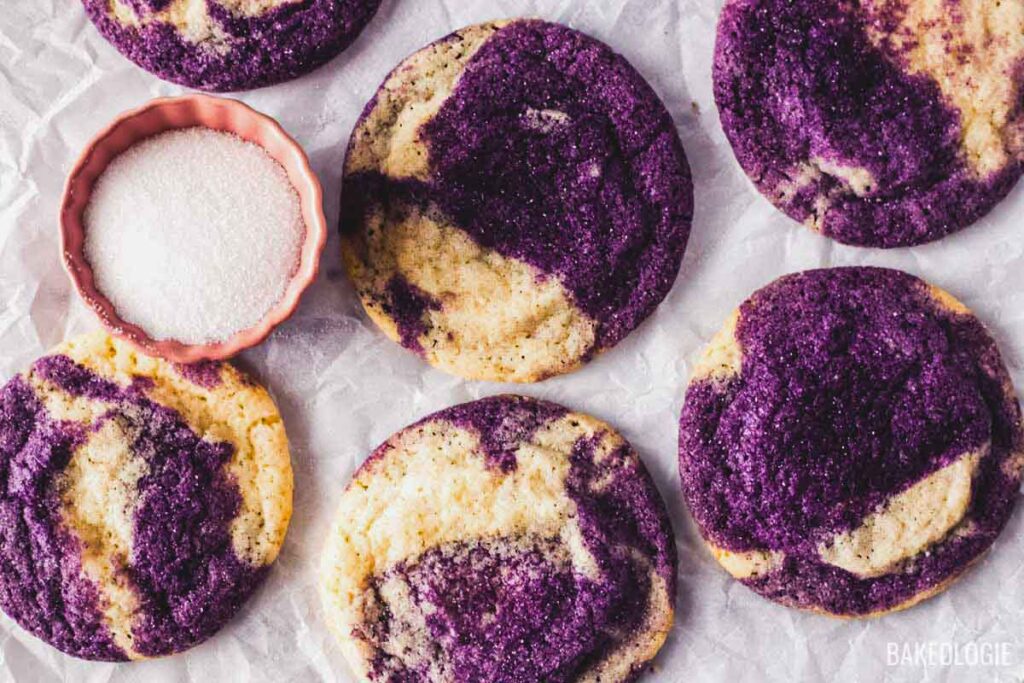
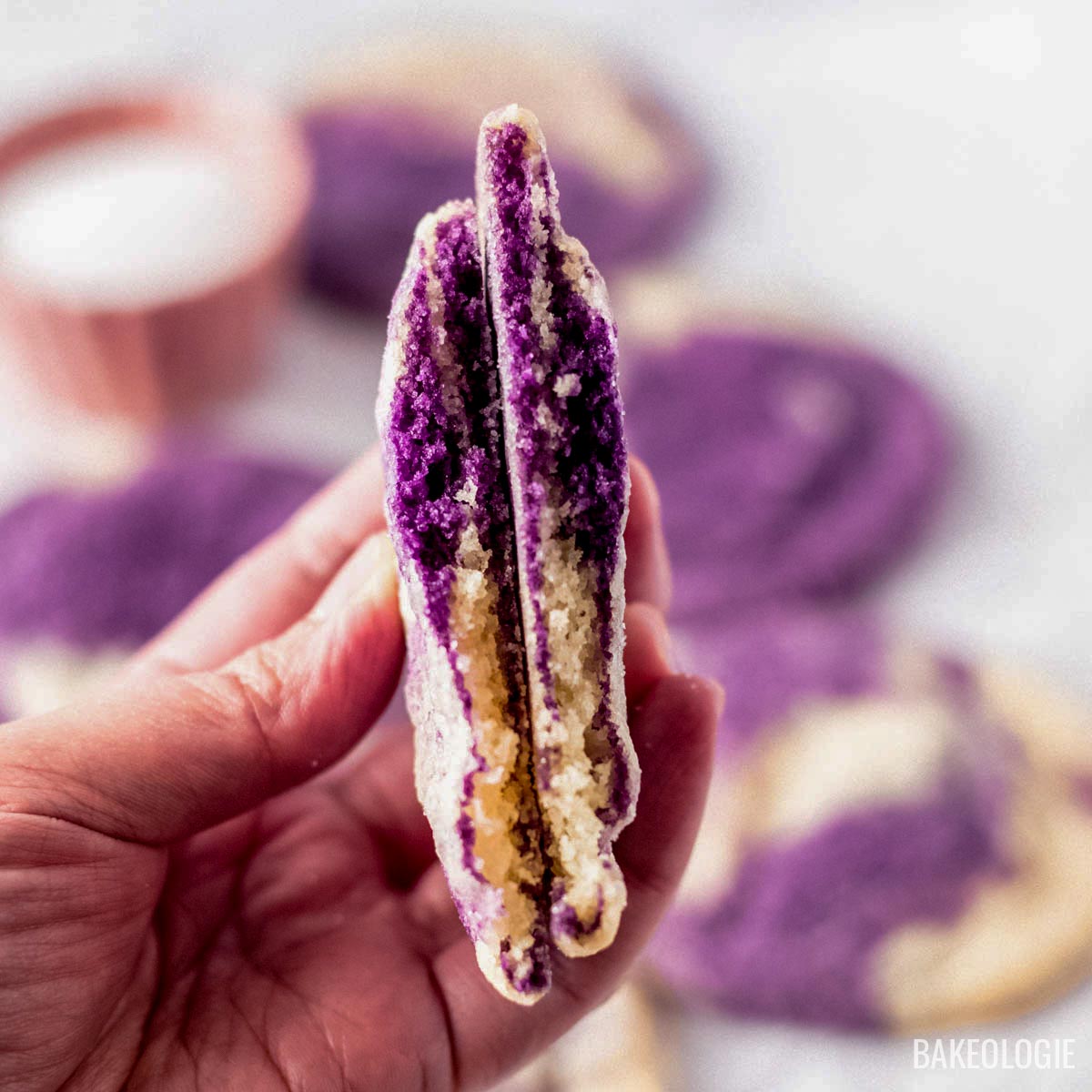
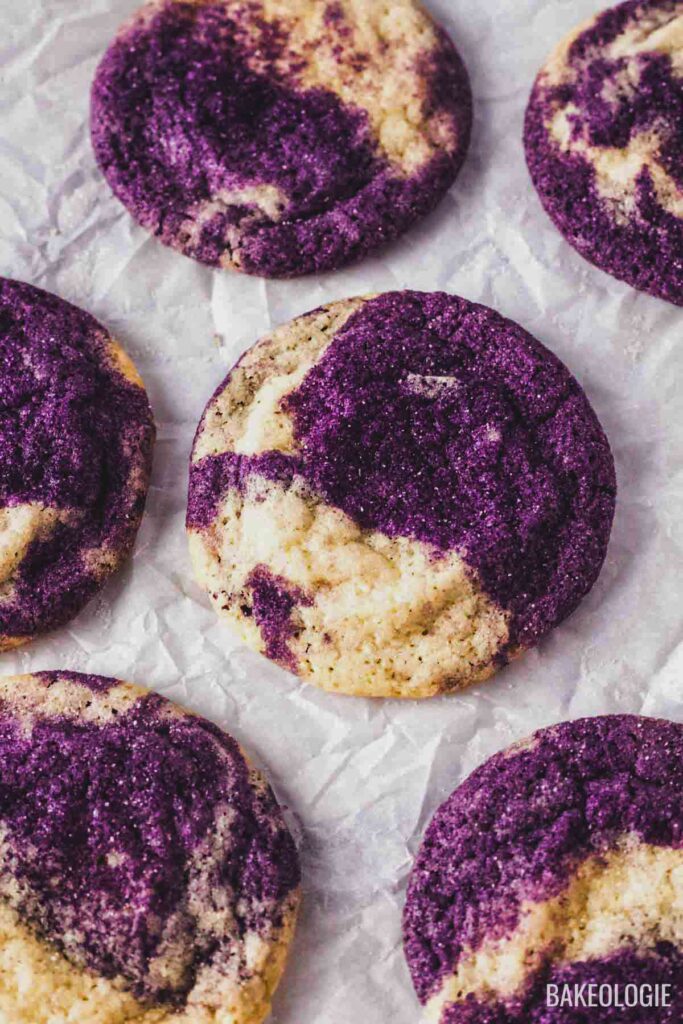
These marbled ube cookies are soft, chewy sugar cookies swirled with classic vanilla and vibrant ube. If cookies had a personality, these would be the fun one at the party. The purple marbling alone is enough to stop the scroll, but one bite and you’ll understand why these cookies won’t last long on the counter.
If you’ve never had ube before, it’s a purple root vegetable with delicate nutty and vanilla-like undertones. It’s subtly sweet and pairs incredibly well with buttery vanilla dough.
And if you’re curious about baking with ube or want to start with something simple, my classic ube cookies are a great place to begin before diving into this marbled version.
Ube Powder and Ube Extract: What They Do & Where to Find Them
Ube powder and ube extract work together to give these cookies their signature flavor and color. The ube powder adds a more natural purple yam flavor and helps deepen the color without adding extra liquid, while the ube extract boosts the aroma, sweetness, and that vibrant purple hue people expect from ube desserts.
Using both creates a more balanced ube flavor and richer color than relying on just one ingredient alone, without overpowering the cookie. You can usually find ube powder and ube extract at Asian grocery stores, especially Filipino markets, or online through retailers like Amazon and specialty baking shops.
Watch How To Make It
|
Yield |
Prep Time |
Chill Time |
Bake Time |
|
Ingredients
- 113g (½ cup) unsalted butter, at room temperature
- 150g (¾ cup) granulated white sugar
- 50g (1 large egg) egg (weight is without shell)
- ½ teaspoon pure vanilla extract
- 160g (1¼ cup + 1 tablespoon) all-purpose flour/ plain flour **If using cups, spoon the flour into the measuring cup and level it off. Scooping directly from the bag can pack in too much flour and lead to dense muffins.
- ½ teaspoon fine sea salt
- ¼ teaspoon baking soda
- 10g (1 tablespoon) ube powder
- 1 teaspoon ube extract
- 50g (¼ cup) extra granulated white sugar for rolling
Instructions
Step 1.
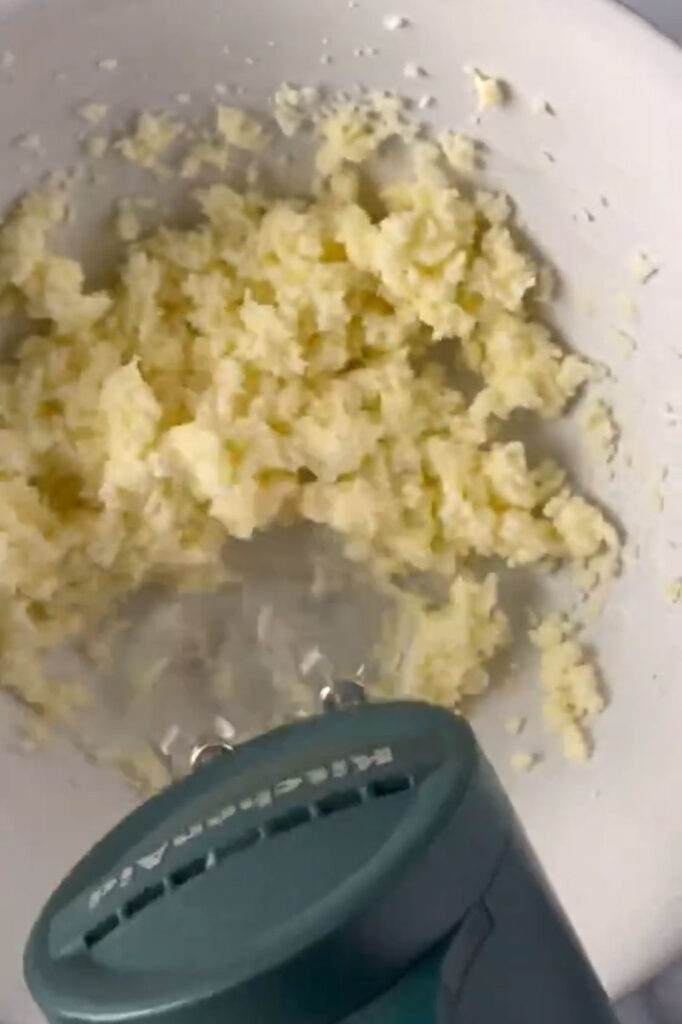
Cream the butter and sugar. In a medium bowl, add the butter and sugar. Using a hand mixer or stand mixer with a paddle, mix on medium speed for about 2 minutes, until the mixture looks light and fluffy.
- 113g (½ cup) unsalted butter, at room temperature
- 150g (¾ cup) granulated white sugar
Step 2.
Add the egg and vanilla. Add the egg and vanilla to the bowl. Mix on medium speed for about 30 seconds, just until everything is mixed together.
- 50g (1 large egg) egg (weight is without shell)
- ½ teaspoon pure vanilla extract
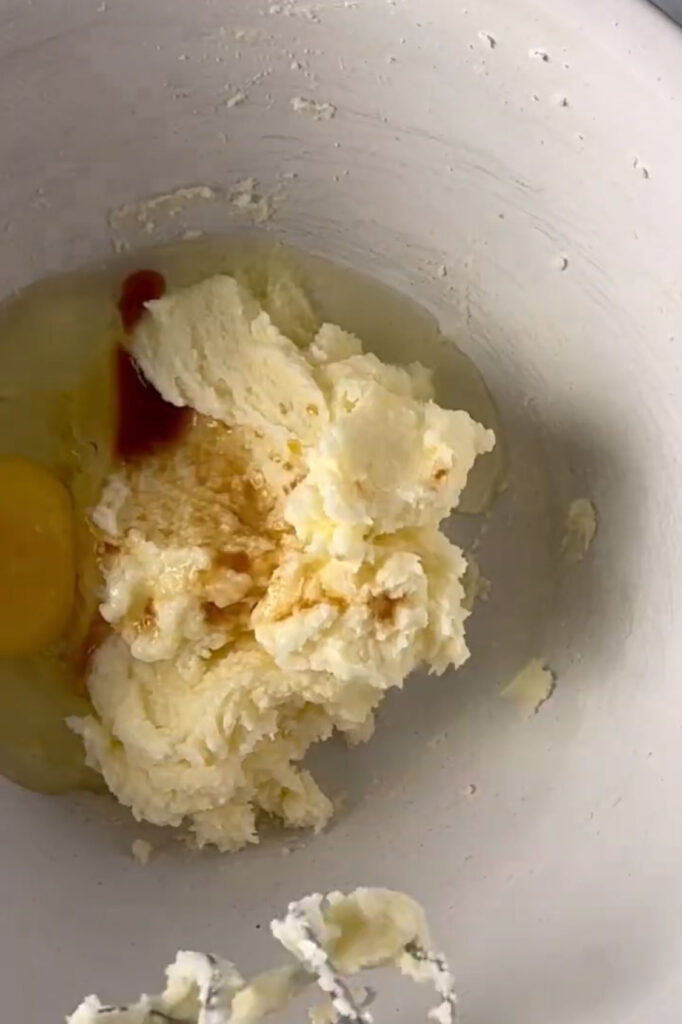
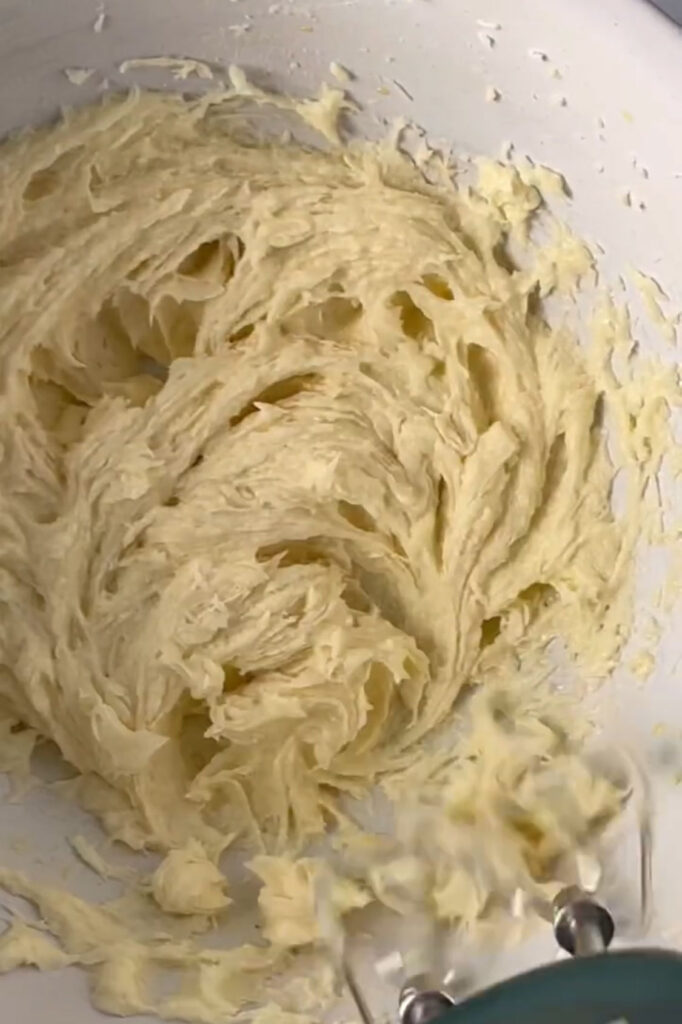
Step 3.
Add the dry ingredients. Add the flour, salt, and baking soda. Mix on low speed just until combined. Stop mixing when you still see a few streaks of flour, then finish mixing by hand with a rubber spatula. This helps keep the cookies soft. Do not overmix.
- 160g (1¼ cup + 1 tablespoon) all-purpose flour/ plain flour
- ½ teaspoon fine sea salt
- ¼ teaspoon baking soda
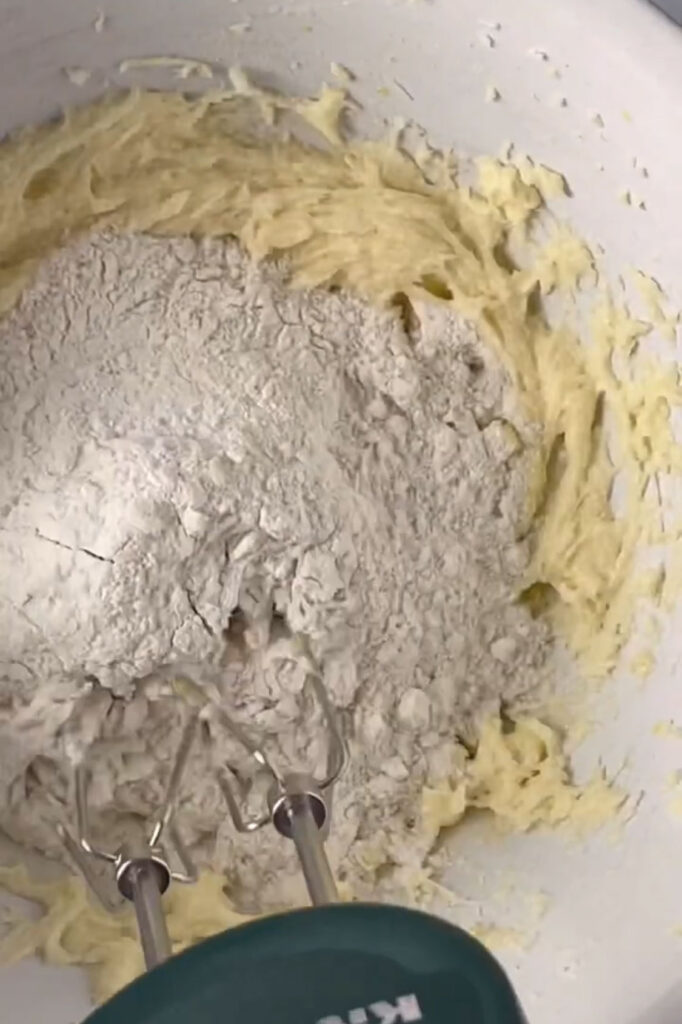
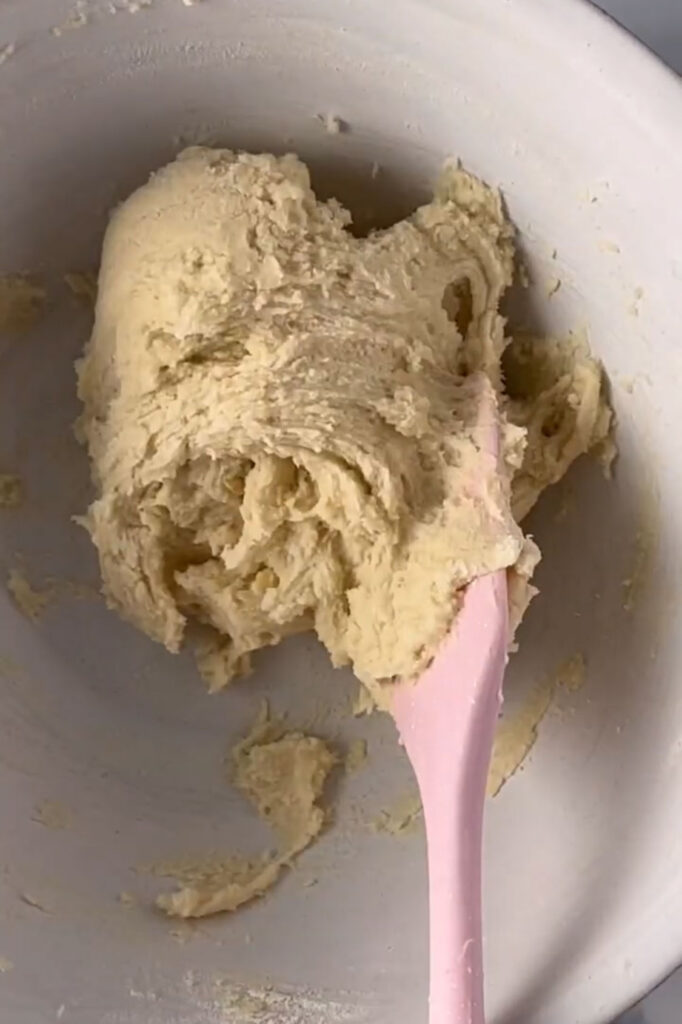
Step 4.
Divide the dough. Take half of the dough and set it aside. If you’re using a kitchen scale, this will be about 230 grams.
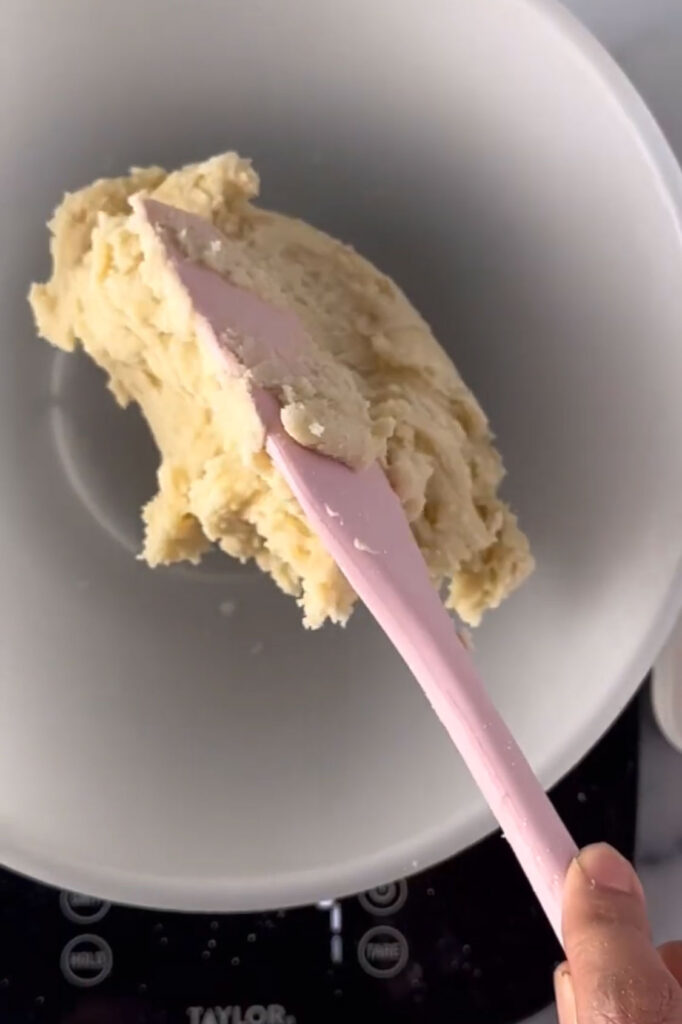
Step 5.
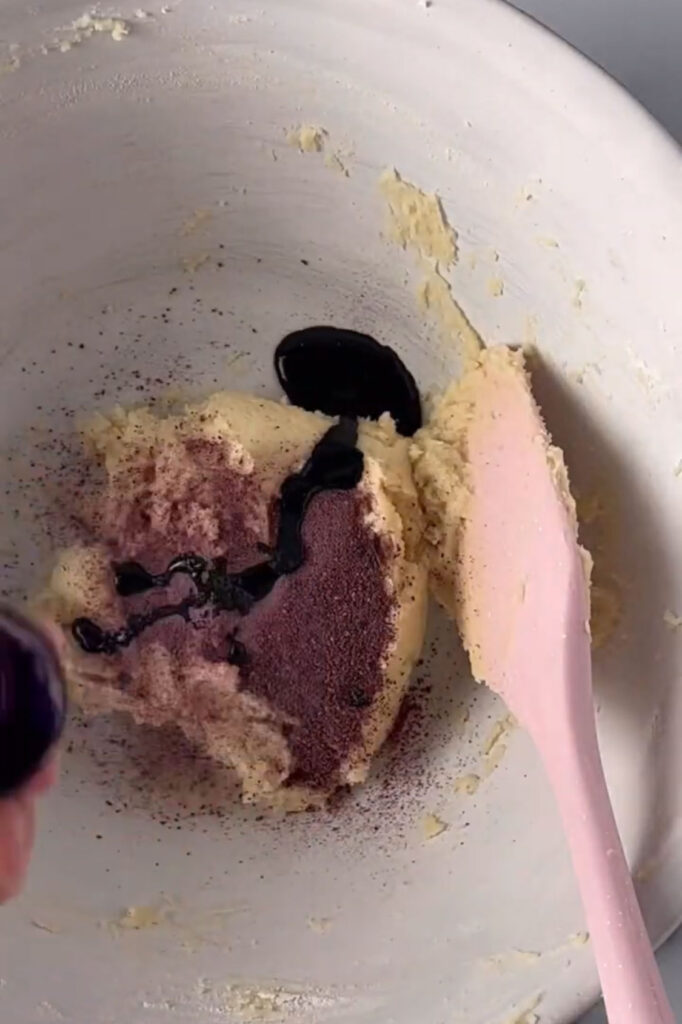
Make the ube dough. To the remaining dough in the bowl, add the ube powder and ube extract. Mix on low speed (or by hand) until the dough turns evenly purple.
- 10g (1 tablespoon) ube powder
- 1 teaspoon ube extract
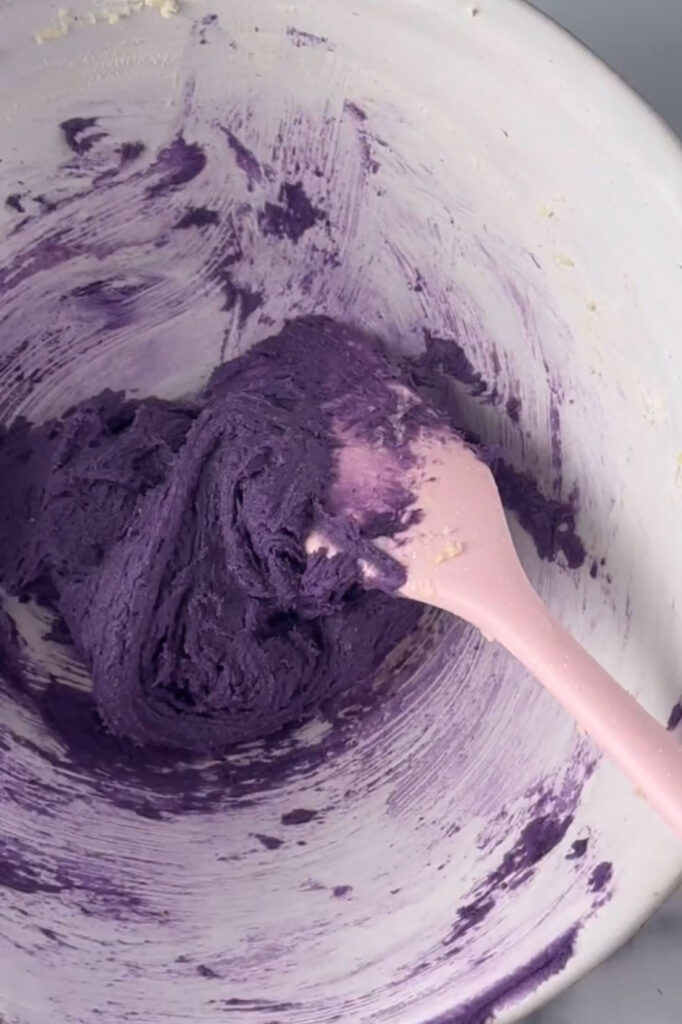
Step 6.
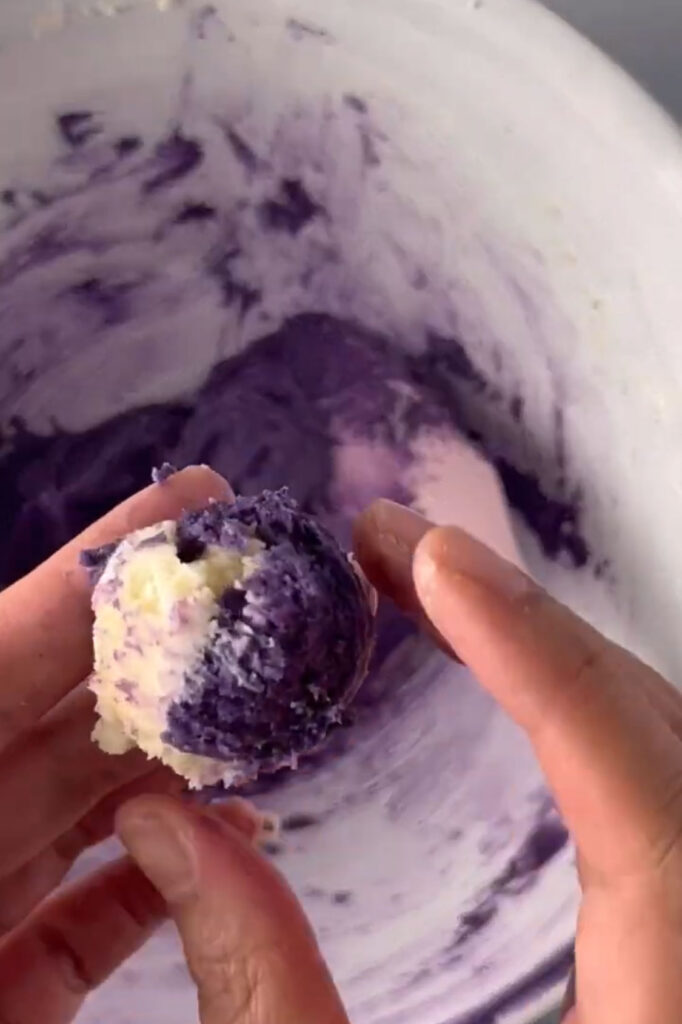
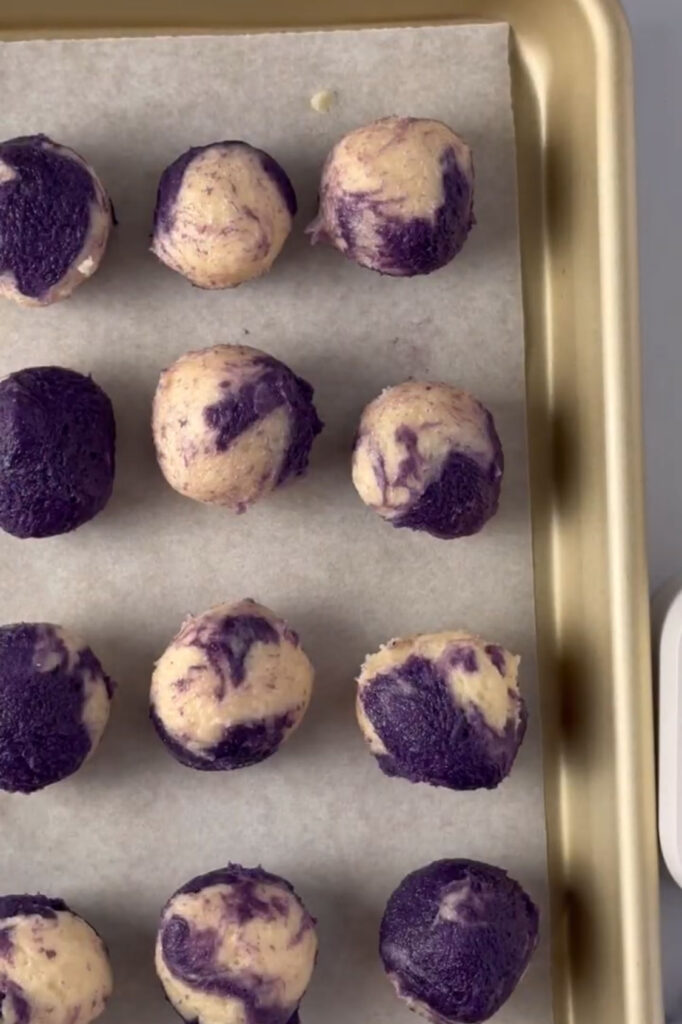
Form the marbled cookie dough. Take small pieces of vanilla and ube dough and gently press them together inside a small cookie scoop. Each cookie portion (vanilla and ube combined) should weigh about 28g, or be filled slightly over the rim so it looks a bit mounded if you’re not using a scale.
Scoop the dough out, then roll it gently between your hands to form a ball. Try to use about the same amount of vanilla and ube dough so you don’t run out of one before the other.
Tip: If dough starts sticking to your scoop, wipe it clean so the marbled pattern stays pretty.
Step 7.
Chill the dough. Place the dough balls on a parchment-lined tray or plate. Chill in the fridge for 30 minutes. This helps prevent the cookies from spreading too much.
Step 8.
Preheat the oven. While the dough chills, move an oven rack to the middle and preheat the oven to 350°F (177°C).
Step 9.
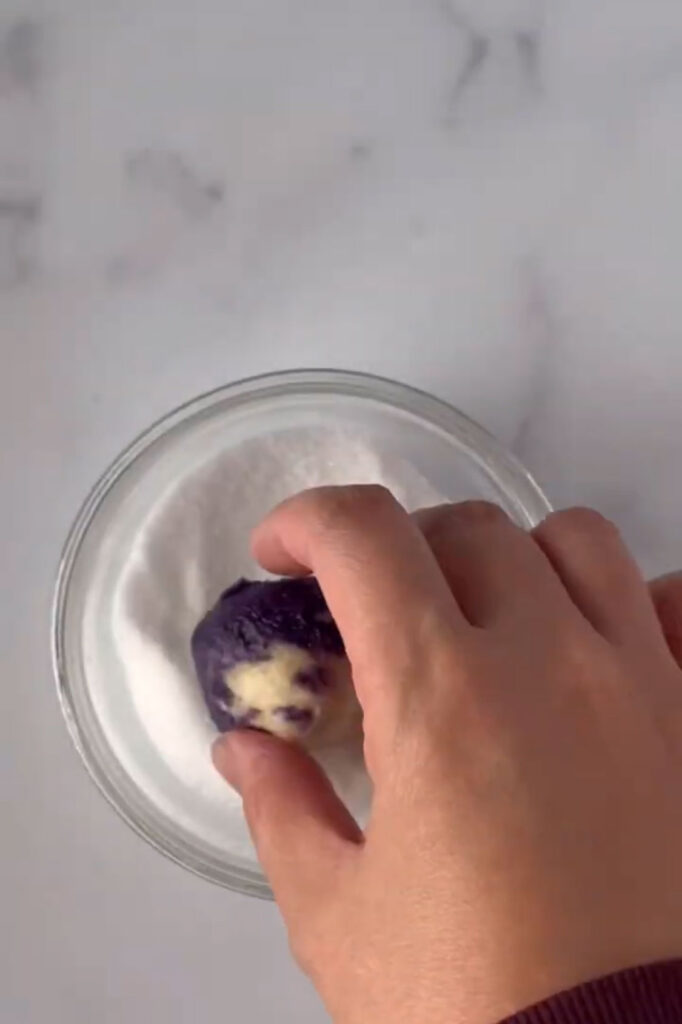
Roll in sugar. Pour the sugar into a small bowl. Roll each chilled dough ball in sugar, then place it on a baking sheet lined with parchment paper.
- 50g (¼ cup) extra granulated white sugar for rolling
Step 10.
Bake. Start with 6 dough balls per baking sheet so the cookies have room to spread. Keep the rest of the dough in the freezer and roll them in sugar just before baking.
Bake for 10–11 minutes, until the cookies look puffy and the edges are set. Let the cookies cool on the baking sheet for 10 minutes — they will flatten slightly as they cool. Then transfer to a wire rack to cool completely.
Bake the remaining cookie dough the same way.
Baker’s Notes
Whisk, Snap, and Share
This space isn’t just for our photos — We’d love to feature yours too! If you’ve made this recipe, tag us on Instagram @thebakeologie or email your photo to [email protected] with the recipe name in the subject line.
📸 By sending a photo, you’re giving permission to feature it here.