

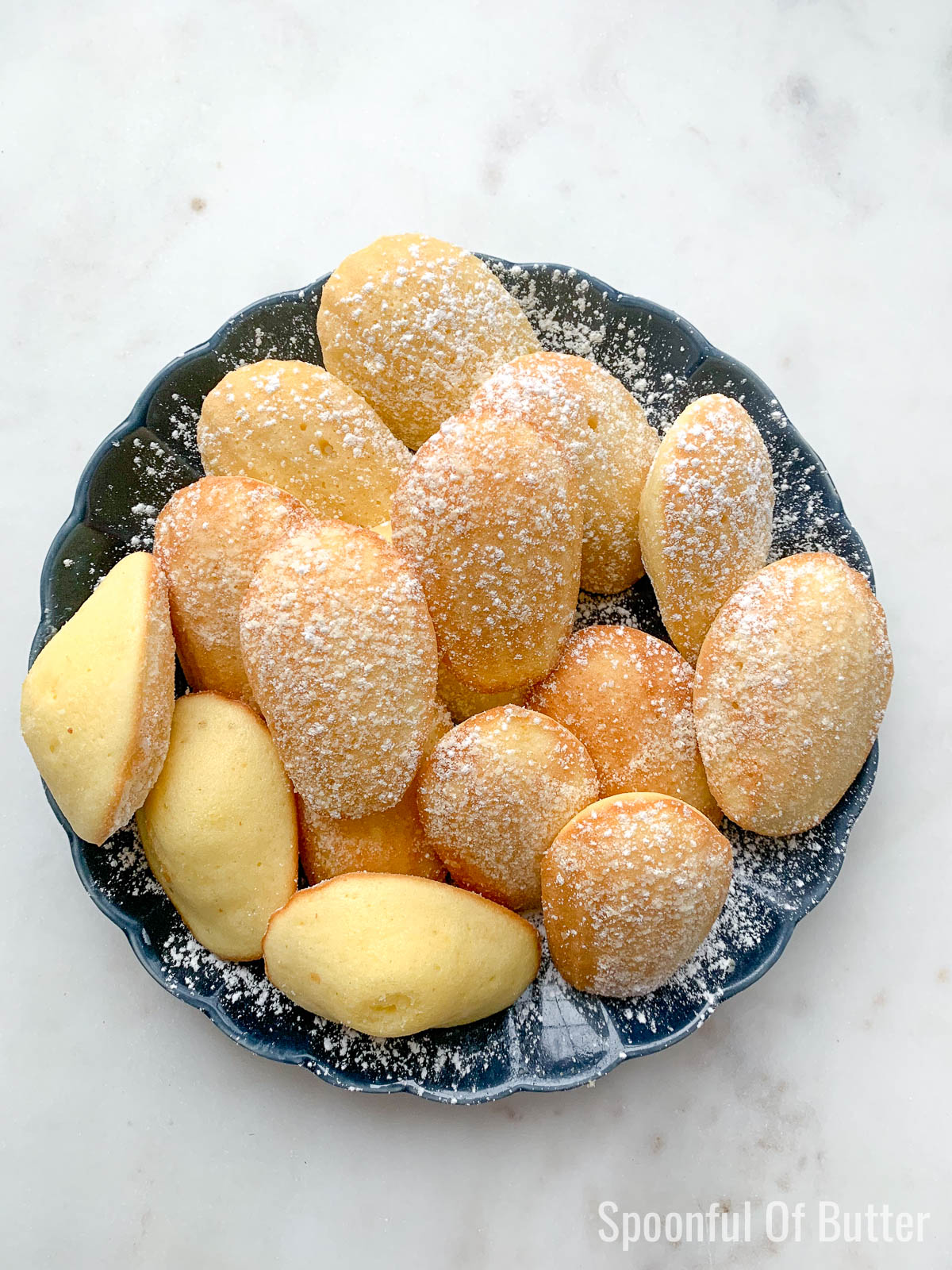
Classic French Madeleines – exquisite small, buttery cakes (with a hint of lemon) that are slightly crisp on the outside and spongy and soft on the inside. Almost too pretty to eat but they’re also too good not to eat!
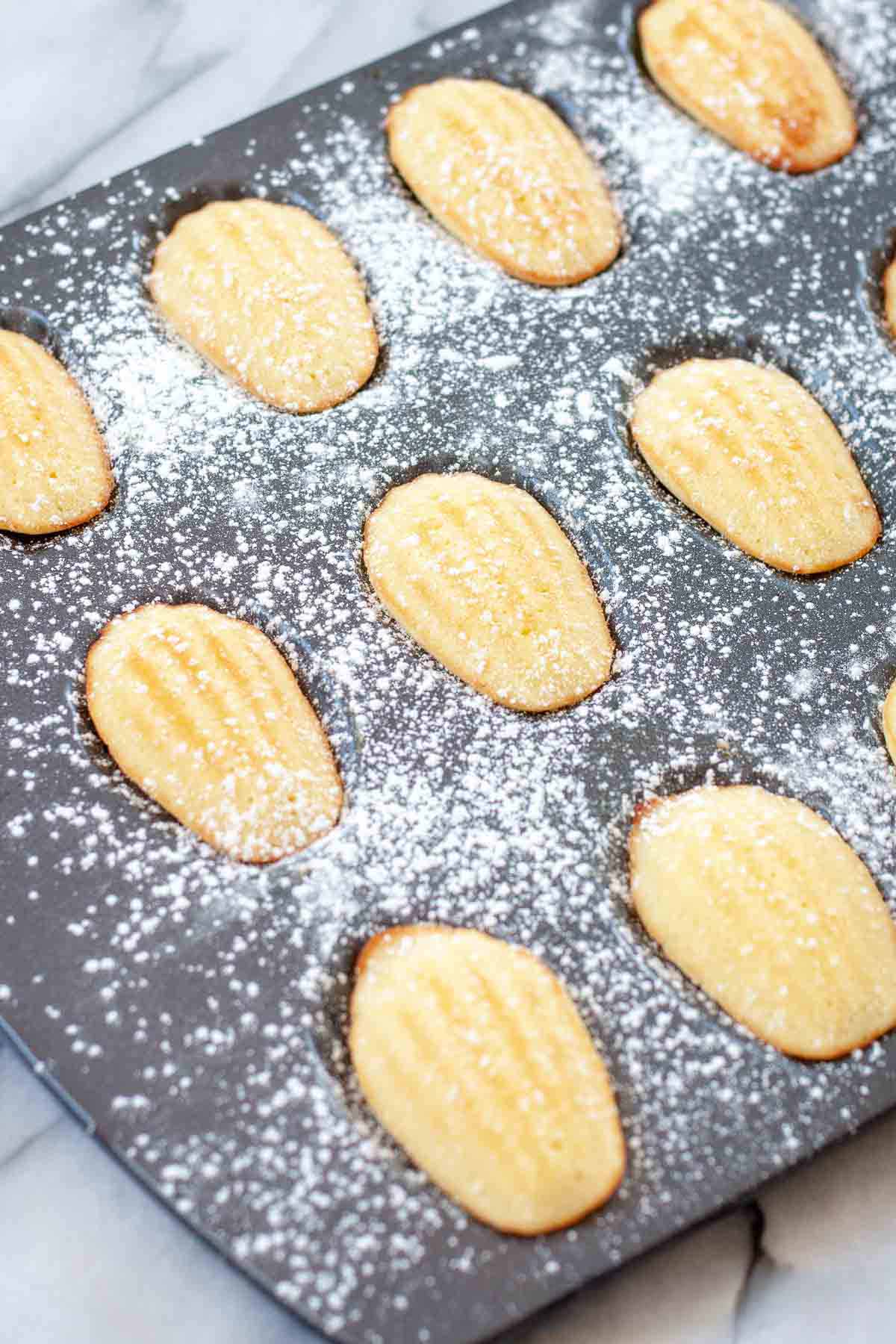
I first learned how to make Madeleines in pastry school and, at first thought, they look quite intimidating to make. The scalloped shells dusted with powdered sugar are so pretty, much like a jewel actually, but I can assure you, they are worth the effort.
I’ve lost count how many times I’ve made madeleines after being introduced to it, with each try using a different recipe and/ or adjusting the ingredients and other baking variables. In my opinion, this recipe which I’m sharing today yields the best classic French madeleines and it deserves to be in your arsenal!
Hump 101: How Madeleines Get Their Bump
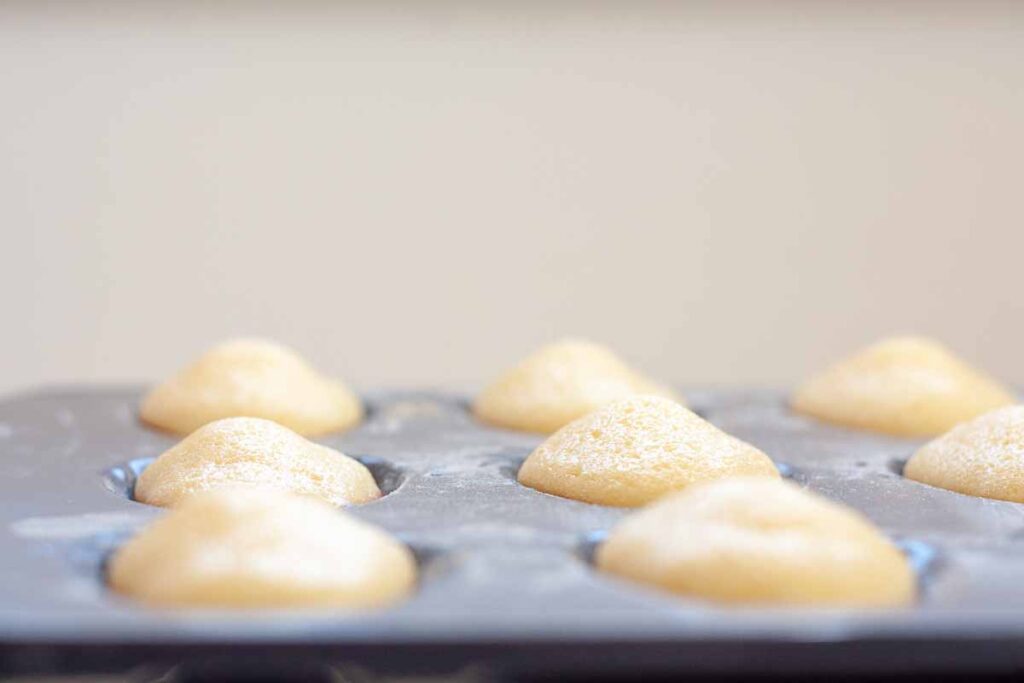
That classic madeleine hump comes from cold batter meeting a hot oven. Chilling the batter firms up the fat, and when it hits the heat, the outside sets quickly while the center rises upward. Whipping the eggs and sugar to a thick, ribbon-like stage adds air, which helps the madeleines lift as they bake. Once the flour is added, gentle folding is key—overmixing can knock out that air and lead to flatter cakes. For best results, use a chilled pan, fill each cavity about ¾ full, and make sure the oven is fully preheated before baking.
The Classic Madeleine Shape
To make madeleines you need a specific pan. They’re not madeleines if they don’t have the scalloped shell shape and the hump. The small hump at the back is actually called “the pearl” and, according to Dorie Greenspan, is the “holy grail” of Madeleine bakers.
Tips On Making Authentic French Madeleines
- It is important to use room temperature ingredients so they will combine easily. especially the eggs. Eggs act as binders or emulsifiers that marry fat and liquid into a smooth mixture. When you use cold eggs there is a possibility that the melted butter will re-solidify once it is mixed in the batter, which could break the emulsion and lead to a greasy batter.
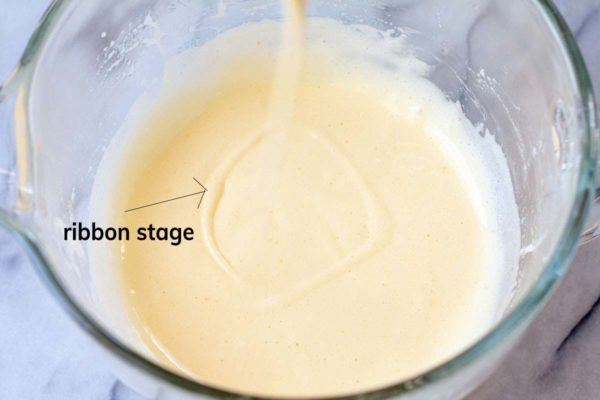
- The madeleine batter is made by beating the eggs and sugar until the mixture is pale yellow, thick and forms a ribbon, aka “the ribbon stage”. To test if you have reached the ribbon stage, lift the beaters to allow a bit of the mixture to fall from it. If it forms a ribbon that slowly dissolves on the surface, then you have reached the ribbon stage (yay!). See step-by-step photos to see how a ribbon stage looks like.
- Madeleine batter needs to be chilled before baking them. Allowing the batter to rest helps you achieve taller and fluffier madeleines. I’ve tried chilling the batter from 30 minutes to up to 12 hours, and I discovered that the most ideal time is 30 minutes up to a maximum of 1 hour. Why? Beyond that time, I find that the butter has started to solidify which makes it harder to pipe them into the molds. I also noticed that the madeleines didn’t rise up as tall, which defeats the purpose of chilling them in the first place.
|
Yield |
Prep Time |
Bake Time |
Tools and Equipment
- Madeleine Pan
- Pastry brush
- Stand Mixer fitted with whisk attachment
- Flour sifter or fine mesh strainer / sieve
- Large piping bag / large ziploc bag as alternative
Ingredients
- 150 grams (2/3 cup) unsalted butter, melted
- 15 grams (1 tablespoon) freshly squeezed lemon juice
- 3 grams (1 tablespoon) freshly grated lemon zest
- 150 grams (3/4 cup) white granulated sugar
- 150 grams (3 eggs) large eggs, at room temperature (weight is without the shell)
- 19 grams (1 egg yolk) egg yolk from a large egg, at room temperature
- 1 teaspoon salt
- 190 grams (1 1/2 cups, spooned and leveled — do not scoop from the bag) all-purpose flour/ plain flour
- 5 grams (1 teaspoon) baking powder
- confectioner’s sugar, for dusting
- extra all-purpose flour/ plain flour for dusting the pan
Instructions
Step 1.
Measure your ingredients and make sure your eggs are at room temperature before you begin. This helps the batter mix smoothly.

Step 2.
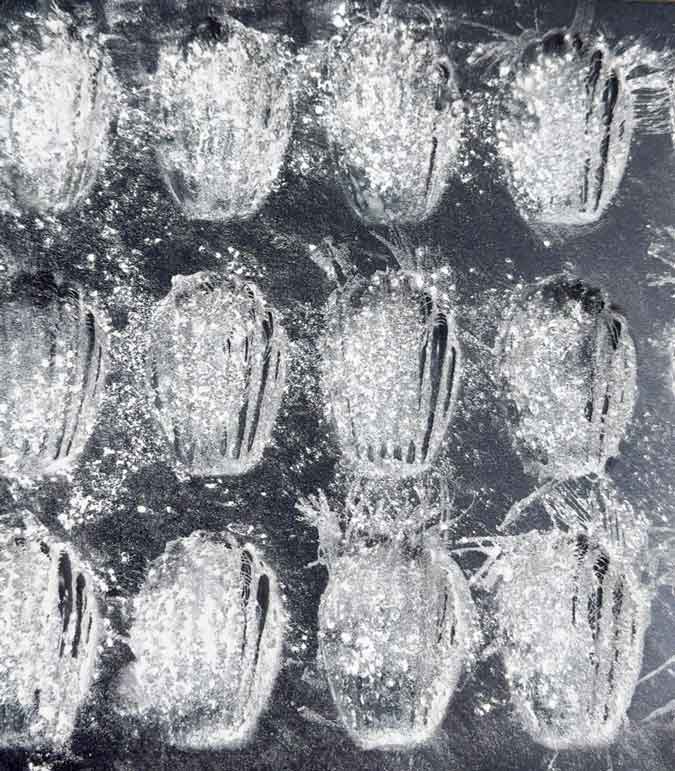
Use a pastry brush to coat the madeleine pan with some of the melted butter. Dust lightly with flour, tap out the extra, then place the pan in the fridge to chill.
Step 3.
Flavor the sugar. In the bowl of a stand mixer fitted with a whisk, add the sugar and lemon zest. Rub them together with your fingertips until the sugar feels slightly damp and smells lemony.
Step 4.
Whip the eggs. Add the eggs and egg yolk. Beat on medium-high speed for about 4 minutes, until the mixture is pale, thick, and falls back into the bowl in soft ribbons when you lift the whisk. This is also called the “ribbon stage”.


Step 5.
Add the dry ingredients. Sift the flour, baking powder, and salt into the bowl. Use a rubber spatula to gently fold until no dry flour remains.

Step 6.
Fold in the butter.
Slowly drizzle in the melted butter and lemon juice while gently folding, until the batter is smooth and glossy.


Step 7.
Chill the batter.
Transfer the batter to a piping bag. Refrigerate for 30 minutes to 1 hour. This helps the madeleines hold their shape and bake evenly.
TIP: No piping bag? Use a zip-top plastic bag.
Step 8.
Preheat the oven after chilling. Once the batter has finished chilling, preheat the oven to 375°F (190°C) and set the oven rack in the middle.
Step 9.
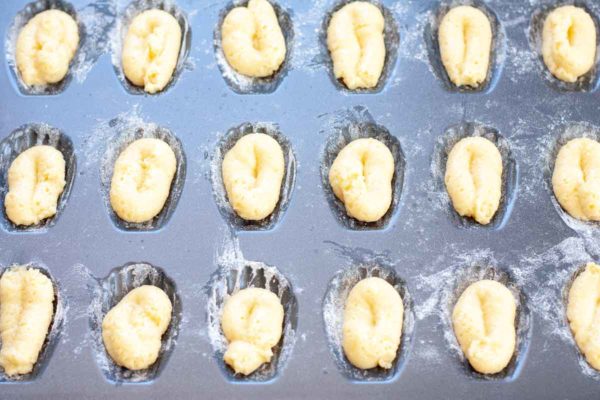
Fill the madeleine pan. While the oven is preheating, remove the batter from the fridge. Snip off the tip of the piping bag to make an opening about ½ inch (1.25 cm) wide. Hold the piping bag straight up (90° angle), about ½ inch above the pan, and pipe batter into each mold until ¾ full.
Do not spread the batter—it will level out on its own as it bakes.
Note: Madeleine pans are not all the same size. Fill each mold about ¾ full. The pan used here needed about 16 g per mold, but your pan may need a different amount.

Step 10.
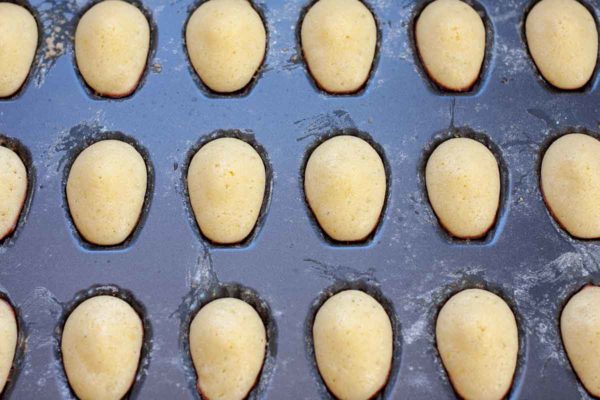
Bake on the middle rack for 8–9 minutes, until a small hump forms, the tops look matte, and the edges are lightly golden. Internal temperature should read 195–200°F (90–93°C).

Baker’s Notes
More Classic French Recipes


❤️ Tried this recipe and loved it? If you made this recipe or any other recipe on this site, please leave a ⭐️⭐️⭐️⭐️⭐️ rating + review below – or tag @thebakeologie on Instagram and hashtag it #bakeologie !
Classic French Madeleines
INGREDIENTS
- 150 grams (2/3 cup) unsalted butter
- 15 grams (1 tablespoon) freshly squeezed lemon juice
- 3 grams (1 tablespoon) freshly grated lemon zest
- 150 grams (3/4 cup) white granulated sugar
- 150 grams eggs, at room temperature (about 3 large eggs in North America region)
- 19 grams 1 egg yolk egg yolk from a large egg, at room temperature
- 1 teaspoon salt
- 190 grams (1 ½ cups) all-purpose flour, plus more for dusting the pans *if measuring by cups, use the spoon and level method
- 5 grams (1 teaspoon) baking powder
- confectioner’s sugar for dusting
INSTRUCTIONS
- PREPARATIONMeasure all the ingredients. About 1 hour before baking, let the eggs come into room temperature.
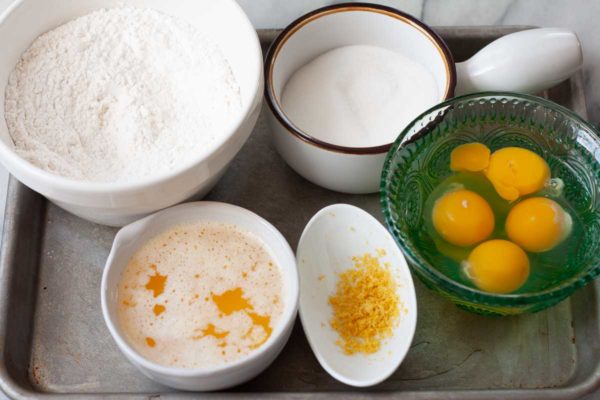
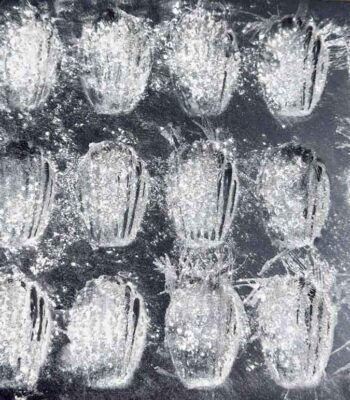
- In a small saucepan, melt the butter over low heat. Let it cool slightly, then coat your pan with butter using a pastry brush. Dust the pans with flour, tapping out any excess, then refrigerate the pan. Add the lemon juice into the remaining cooled melted butter, then set aside as you prepare the rest of the batter.150 grams (2/3 cup) unsalted butter15 grams (1 tablespoon) freshly squeezed lemon juice
- MAKE THE MADELEINE BATTER:In the bowl of a stand mixer fitted with a whisk attachment, combine sugar and lemon zest and rub them together using your fingertips until the sugar is moist and fragrant.3 grams (1 tablespoon) freshly grated lemon zest150 grams (3/4 cup) white granulated sugar
- Add in the eggs, egg yolk, and salt. Beat on medium-high speed until the mixture is pale and thick and has a ribbon-like consistency when the batter is picked up with a whisk, about 5 minutes.150 grams eggs, at room temperature19 grams 1 egg yolk egg yolk from a large egg, at room temperature1 teaspoon salt
- Sift the flour and baking powder into the egg mixture and use a rubber spatula to gently fold until just combined. Slowly drizzle the melted butter into the batter, folding gently until fully incorporated.190 grams (1 ½ cups) all-purpose flour, plus more for dusting the pans5 grams (1 teaspoon) baking powder
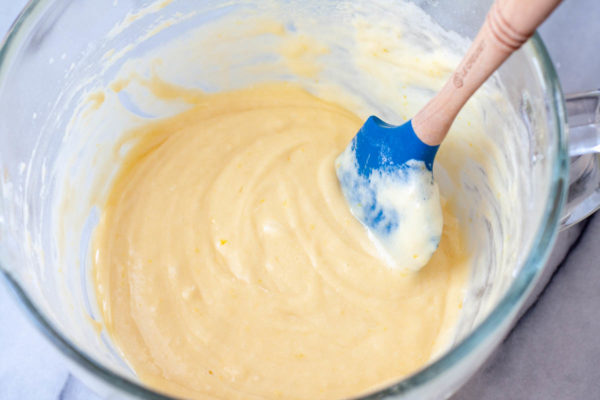
- Transfer the batter into a piping bag fitted with a large plain piping tip, then refrigerate for at least 30 minutes up to 1 hour.
- PIPE AND BAKE THE MADELEINESPreheat the oven to 375 F (190 C) and set a rack in the upper third of the oven.
- Get the madeleine pan and the batter from the fridge. Holding the piping bag at a 90-degree angle about 1⁄2 inch (1.25 cm) above the pan, pipe the madeleine batter into the cavities so that it fills each about three-quarters of the way to the top. No need to spread it to the edges. If you don't have a piping bag, then spoon the batter into each mold.
- Bake in the middle rack of the oven until the madeleines are set, about 7-8 minutes. They are done when the tops spring back after lightly pressed with your finger.
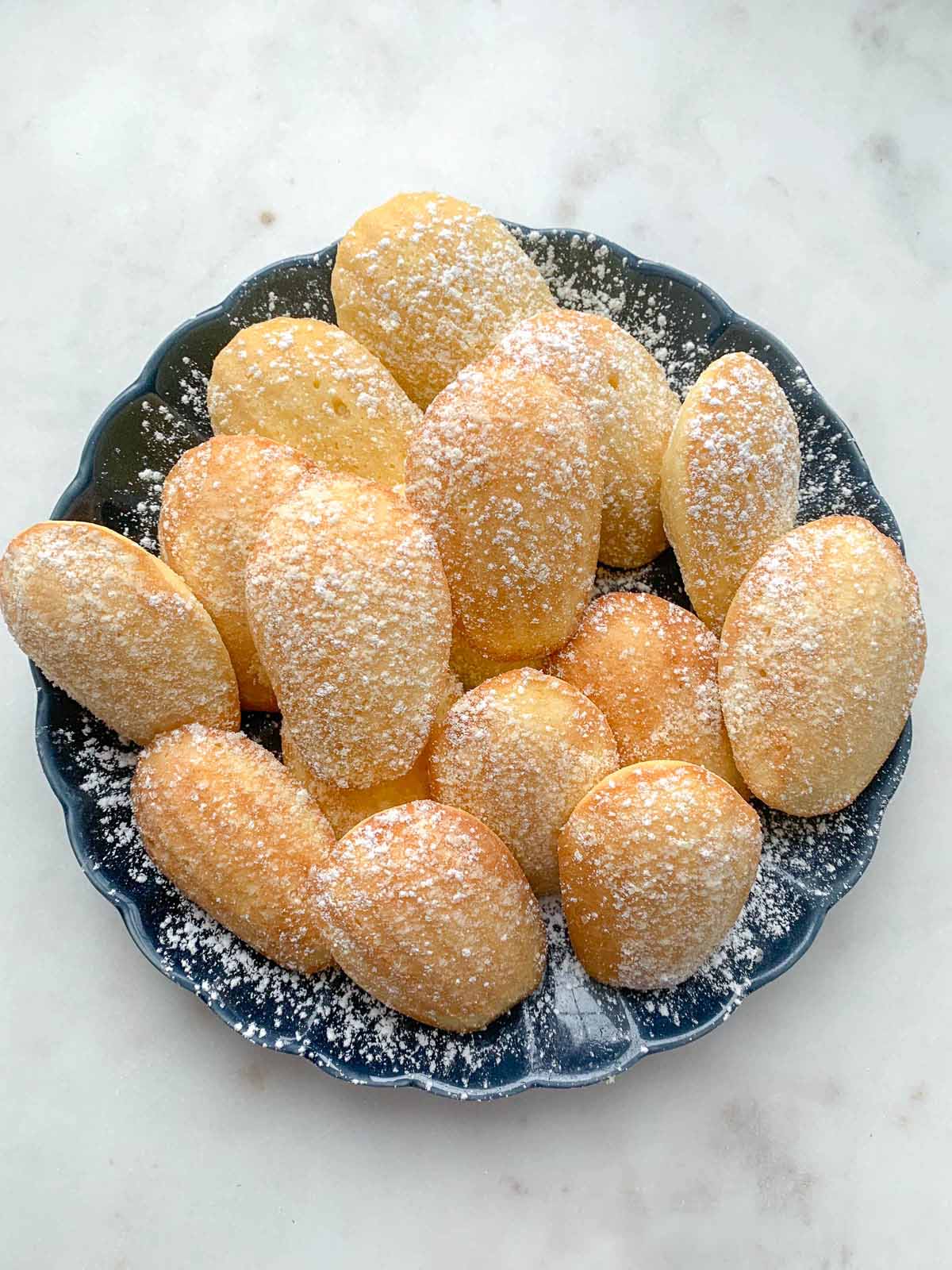
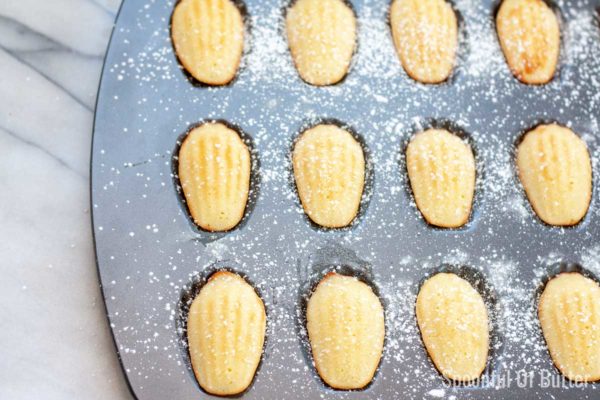
- SERVING AND STORINGUsing a small sieve, sprinkle confectioners’ sugar evenly over the fresh-baked madeleines, before serving. Madeleines are best enjoyed right after baking. But if there are leftovers, store them in an airtight container in the fridge for up to 2 days. Reheat in the microwave using LOW heat (I use defrost mode) for about 1 minute.confectioner’s sugar




Wonderful easy to follow recipe! they came out perfect! I dipped mine in a lemon powdered sugar glaze! thank you for sharing this!
Glad you liked it, Mary! Thank you so much for taking the time to let me know. 🙂