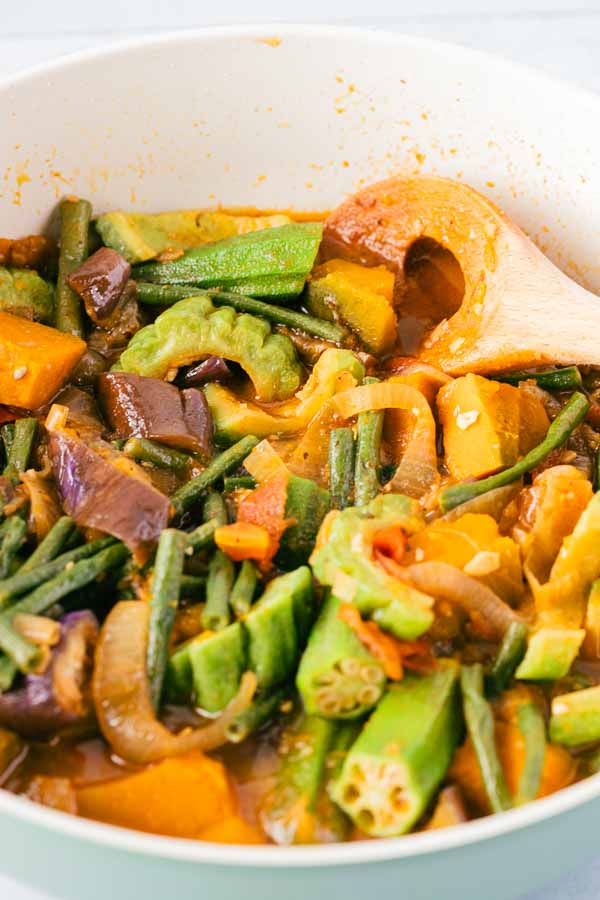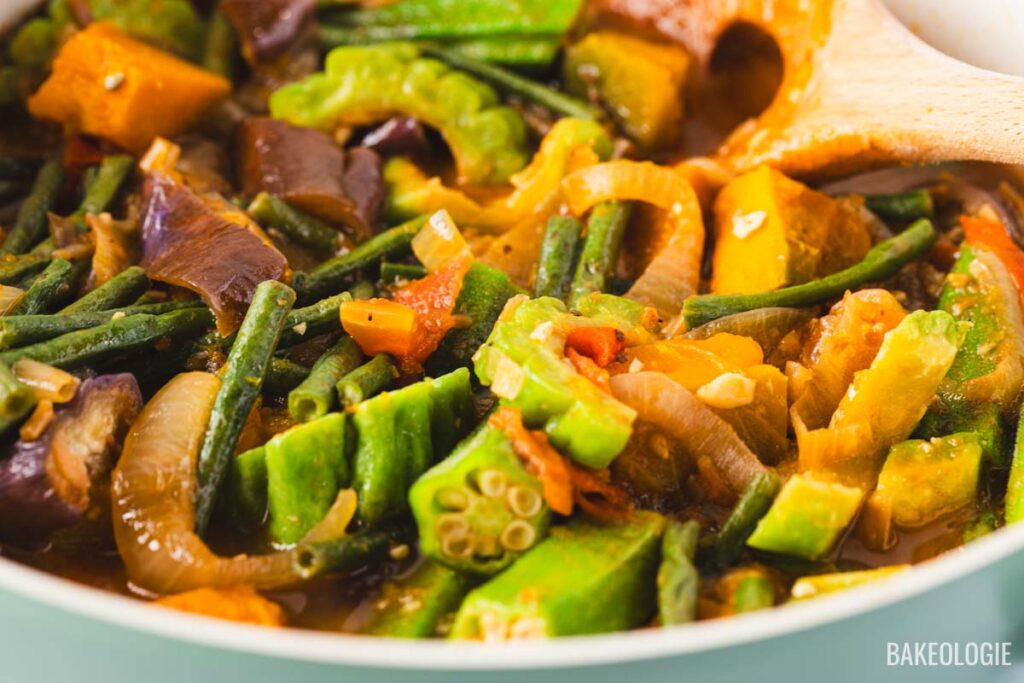

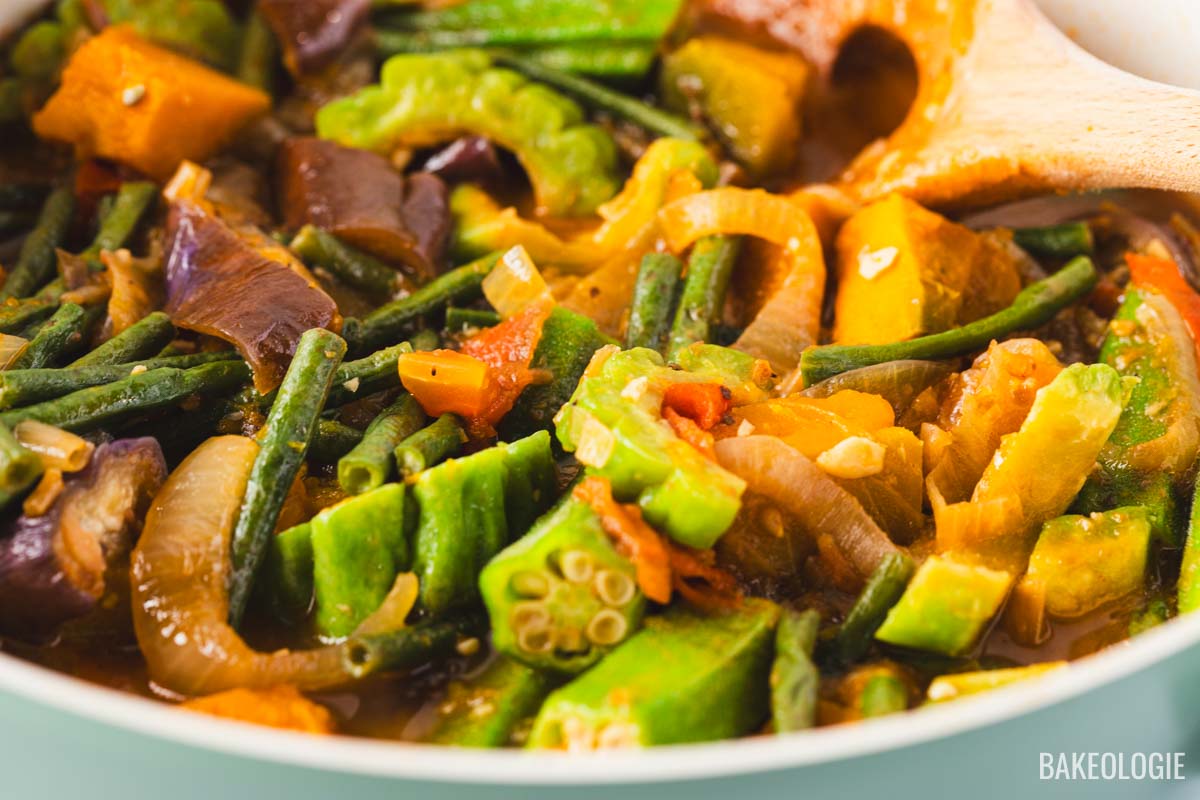
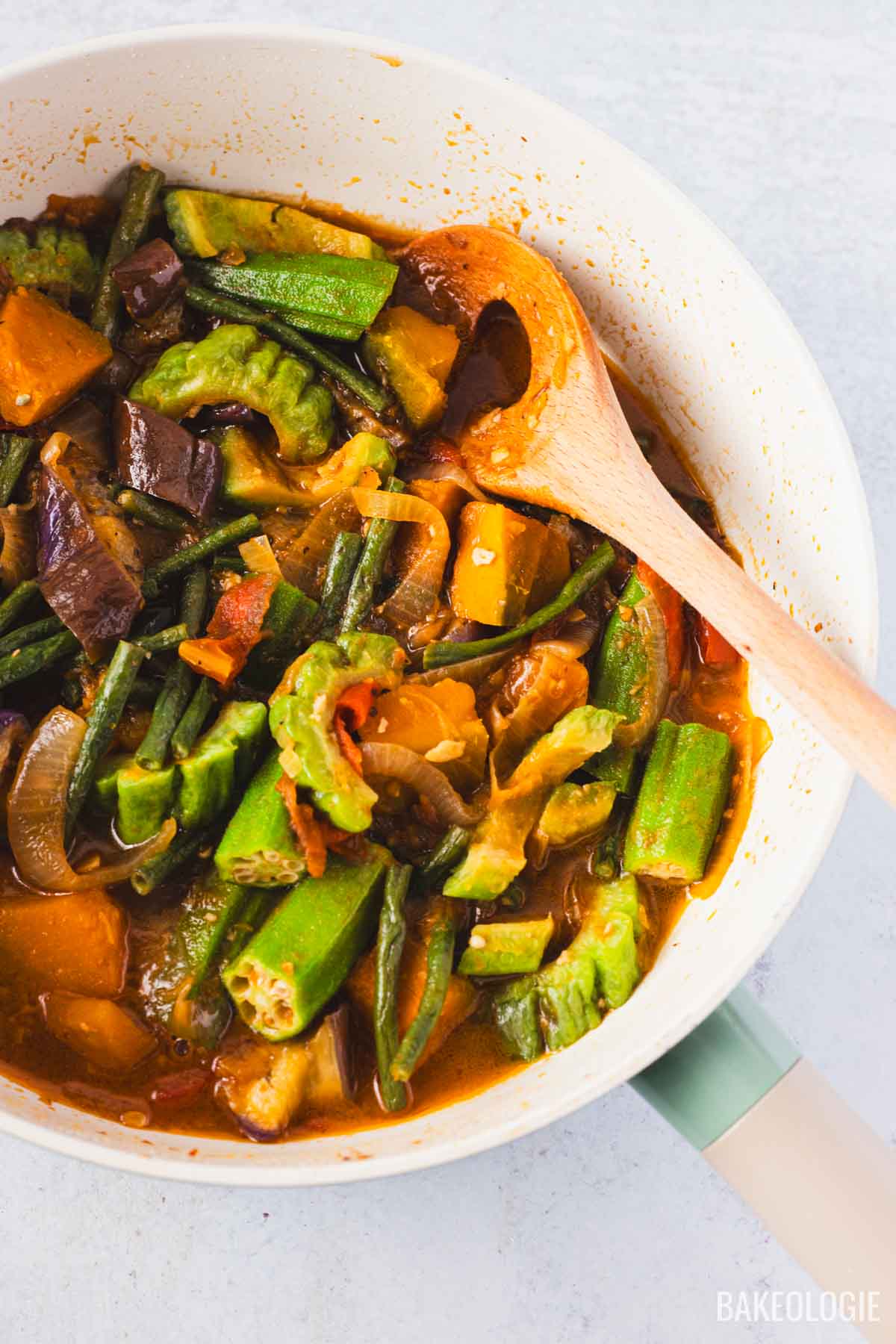
There’s something deeply comforting about a pot of Pinakbet simmering on the stove — that unmistakable aroma of sautéed garlic and bagoong (shrimp paste) weaving through tender vegetables like squash, eggplant, okra, and ampalaya. It’s a humble Filipino dish, but one that carries the heart of home-cooked meals — umami-packed, and best enjoyed with a steaming bowl of rice.
|
Yield |
Prep Time |
Cook Time |
|
Ingredients
- 2 tablespoons cooking oil (canola or vegetable oil)
- 3 cloves garlic, minced
- 1 medium onion, sliced
- 2 medium tomatoes, chopped
- 2 tablespoons bagoong alamang (shrimp paste), or to taste
- 1 cup kalabasa (squash), peeled and cubed (about 150g)
- ½ cup water
- 1 medium eggplant, cut into chunks (about 150g)
- 1 small ampalaya (bitter melon), sliced thin (about 100g)
- 1 cup okra, trimmed and halved (about 8 pieces)
- 1 cup sitaw (long beans), cut into 2-inch lengths (about 100g)
- Pinch of black pepper, to taste
- Optional: 100g pork belly or shrimp, for a heartier version
- Optional: 1 teaspoon fish sauce (patis), for added umami
Instructions
Step 1.
*If adding protein, stir-fry pork belly or shrimp before sautéing the aromatics for a richer flavor.
Sauté the aromatics: Heat oil in a wide pan over medium heat. Add garlic and onion, and cook until fragrant and softened. Stir in chopped tomatoes and cook until they start to break down and release juices.
- (optional) 100 grams pork belly or shrimp
- 2 Tbsps cooking oil (canola or vegetable oil)
- 3 cloves garlic, minced
- 1 medium onion, sliced
- 1 medium tomatoes, chopped
Step 2.
Add the bagoong: Stir in the shrimp paste and cook for 1–2 minutes to enhance the flavor and remove raw saltiness.
- 2 Tbsps bagoong alamang (shrimp paste), or to taste
Step 3.
Start with the squash:Add the cubed squash and pour in water. Cover and simmer for about 5 minutes, or until the squash begins to soften.
- 1 cup kalabasa (squash), peeled and cubed (about 150g)
- ½ cup water
Step 4.
Add the remaining vegetables: Add the eggplant, ampalaya, okra, and sitaw. Gently stir to combine, cover, and cook for another 10–12 minutes or until vegetables are tender but not mushy.
- 1 medium eggplant, cut into chunks (about 150g)
- 1 small ampalaya (bitter melon), sliced thin (about 100g)
- 1 cup okra, trimmed and halved (about 8 pieces)
- 1 cup sitaw (long beans), cut into 2-inch lengths (about 100g)
Step 5.
Season and serve: Taste and adjust seasoning with black pepper or a splash of fish sauce, if desired. Serve hot with steamed rice.
- Pinch of black pepper, to taste,1 tsp fish sauce (patis), for added umami
Cook’s Notes
Whisk, Snap, and Share
This space isn’t just for our photos — We’d love to feature yours too! If you’ve made this recipe, tag us on Instagram @thebakeologie or email your photo to [email protected] with the recipe name in the subject line.
📸 By sending a photo, you’re giving us permission to feature it here.