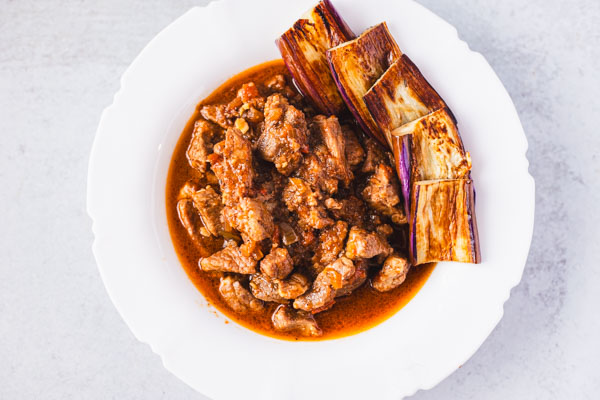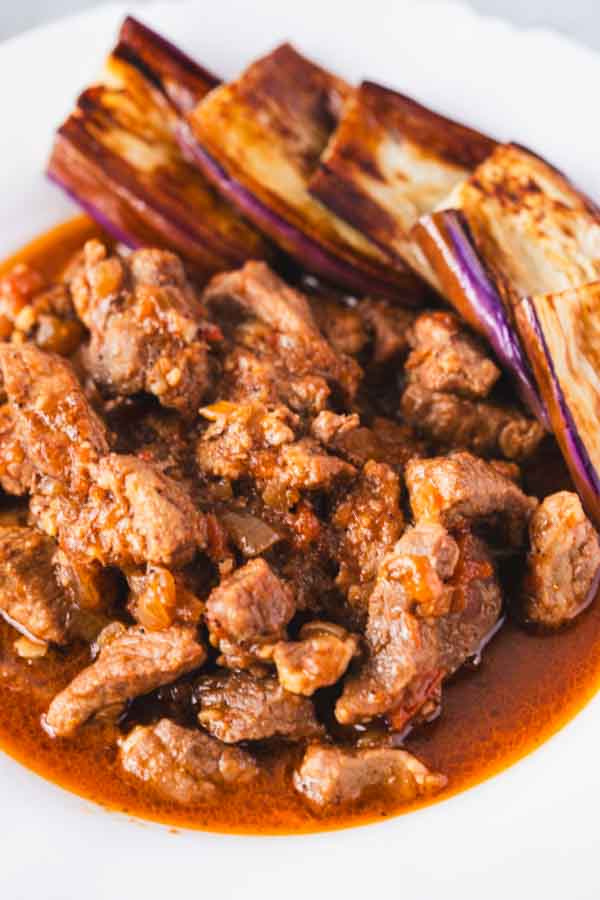

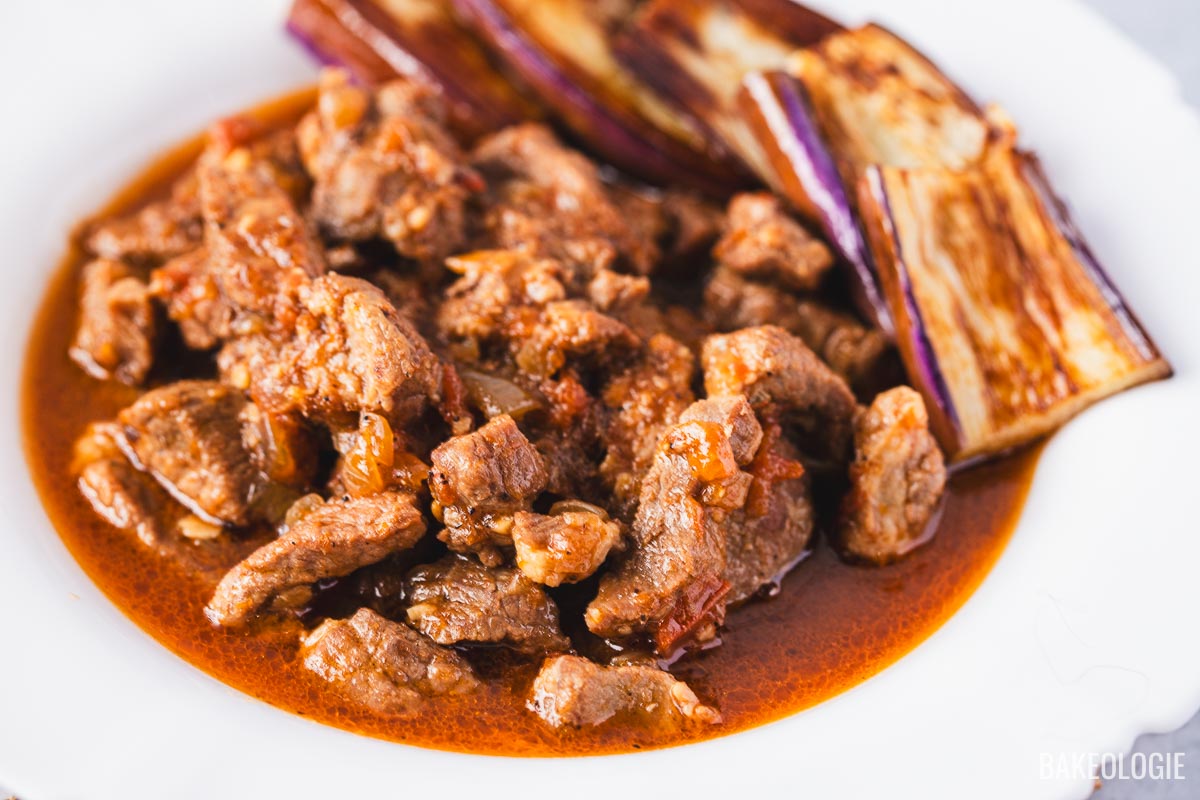
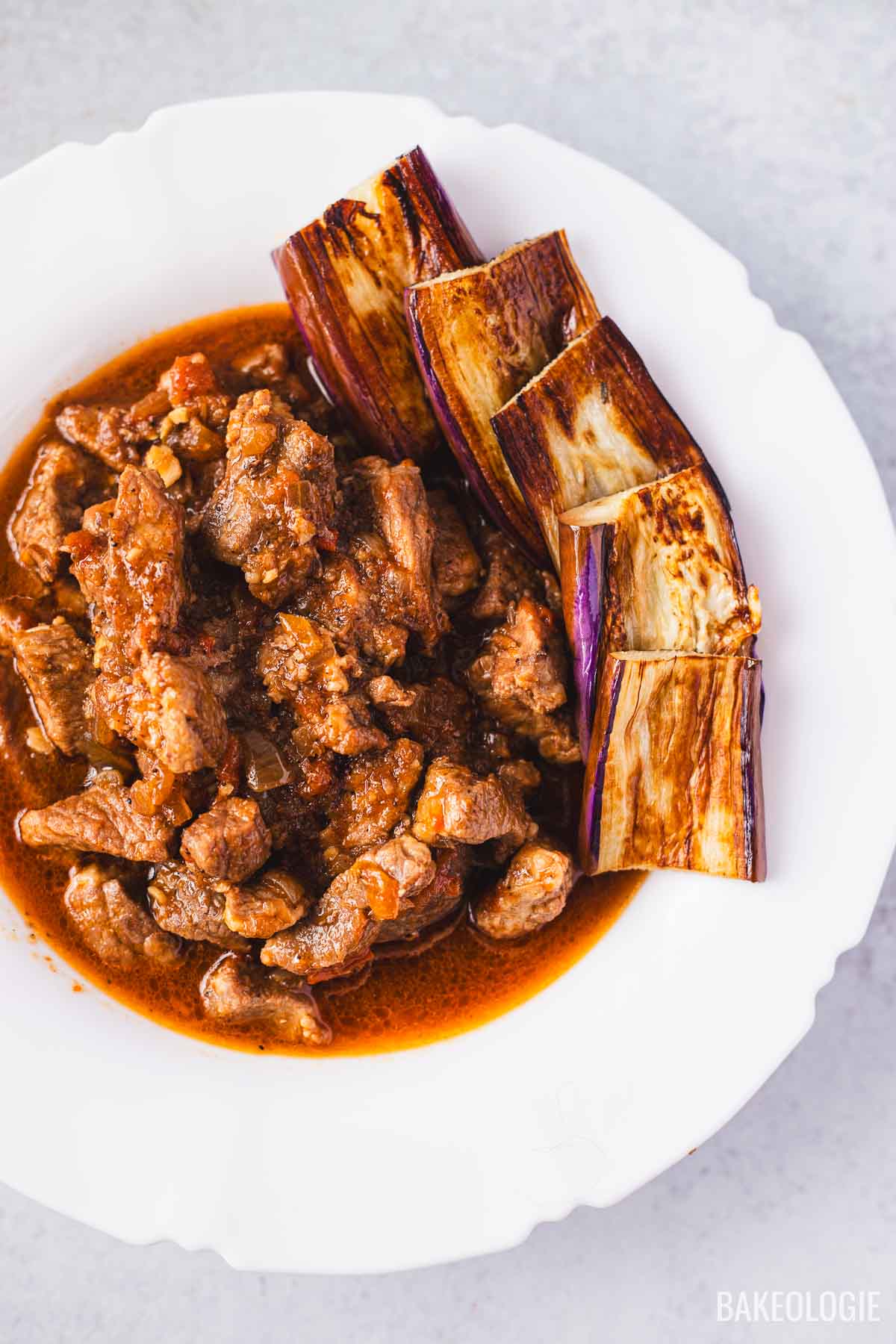
There are few dishes that taste as unmistakably Filipino as pork binagoongan. The moment pork meets bagoong (fermented shrimp paste), you get that savory-salty aroma that instantly reminds you of home. It’s rich, bold, and unapologetically flavorful — the kind of dish that begs for a big bowl of hot steamed rice.
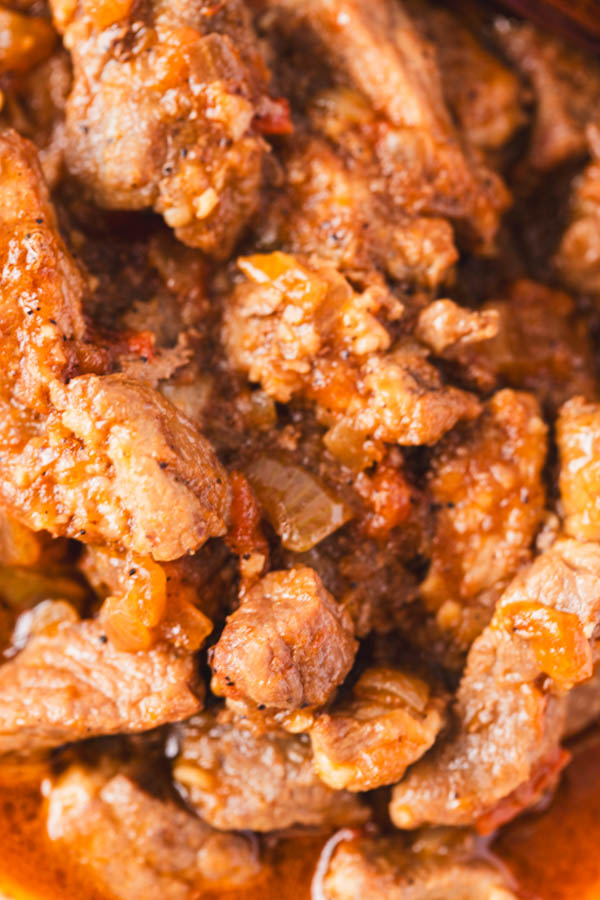
Traditionally, pork belly (liempo) is used in binagoongang baboy for its juicy, tender layers of fat and meat. In this version, I used pork collar — a slightly leaner cut that still turns tender with just the right amount of bite after simmering. The pork soaks up all the bagoong goodness, balanced with a little vinegar for tang and a touch of sugar for sweetness. Every spoonful is a harmony of salty, savory, and slightly sweet.
|
Yield |
Prep Time |
Cook Time |
|
Ingredients
- 450g /1 pound pork collar (or belly/shoulder), cut into cubes
- 1 tbsp neutral oil (15 ml)
- ½ medium onion ( about 75 g), chopped
- 3 cloves garlic, minced
- 1 medium tomato (about 100 g), chopped
- 1 heaping tbsp bagoong alamang (15–20g; sautéed shrimp paste)
- 1 tbsp cane or white vinegar (15 ml)
- 1 tbsp brown sugar (12g), adjust to taste
- ¾–1 cup water (180–240 ml)
- Ground black pepper, to taste
- Optional: 1–2 red chilies, sliced; fried eggplant for serving
Instructions
Step 1.
Brown the pork: Heat oil in a wide pan over medium-high. Add pork cubes in a single layer and sear until lightly browned, 6–8 minutes. Spoon off excess fat if needed.
- 450g (1 pound) pork collar (or belly/shoulder), cut into bite-sized cubes
- 1 Tbsp neutral oil (15ml)
Step 2.
Sauté aromatics: Add onion and cook 2 minutes until translucent. Stir in garlic (30 seconds). Add tomato, plus about 1 tablespoon of water to help them soften. Cover the pan and cook 3–4 minutes until the tomatoes break down and turn jammy.
- 1 medium onion, chopped (about 75 g)
- 3 cloves garlic, minced
- 1 medium tomato, chopped (about 100 g)
Step 3.
Add bagoong: Stir in the shrimp paste and sauté 1–2 minutes until its raw sharpness mellows and it clings to the pork.
- 1 heaping Tbsp (15–20g) bagoong alamang (fermented shrimp paste, sautéed variety),
Step 4.
Deglaze with vinegar: Pour vinegar around the pan. Do not stir for 1 minute to let the acidity cook off.
- 1 Tbsp cane or white vinegar (15 ml)
Step 5.
Simmer the pork: Add sugar, pepper, and ¾ cup (180 ml) water (plus chilies if using). Stir, cover, and lower heat. Simmer gently for 30–40 minutes, until pork is tender. Add more water if the sauce dries out too quickly.
- 1 Tbsp granulated white sugar, adjust to taste
- ground black pepper, to taste
- ¾–1 cup water (180–240 ml)
- Optional: 1–2 red chilies, sliced
Step 6.
Reduce the sauce: Uncover and cook another 5–10 minutes, letting the liquid reduce to a thick, glossy sauce that coats the pork. Taste and adjust: Too salty → a little more sugar and water; Too sweet → a splash of vinegar; Needs more flavor → another spoon of bagoong, sautéed for 1 minute.
Step 7.
Best enjoyed with hot steamed rice, fried eggplant or green mango on the side. Flavors deepen by Day 2. Refrigerate up to 4 days.
- fried eggplant for serving
Cook’s Notes
Whisk, Snap, and Share
This space isn’t just for our photos — We’d love to feature yours too! If you’ve made this recipe, tag us on Instagram @thebakeologie or email your photo to [email protected] with the recipe name in the subject line.
📸 By sending a photo, you’re giving us permission to feature it here.